German design students turn coffee waste into compostable cup sleeves
German design students turned used coffee grounds into GoBean, a sleeve that composts in about three weeks and targets disposable cup waste.
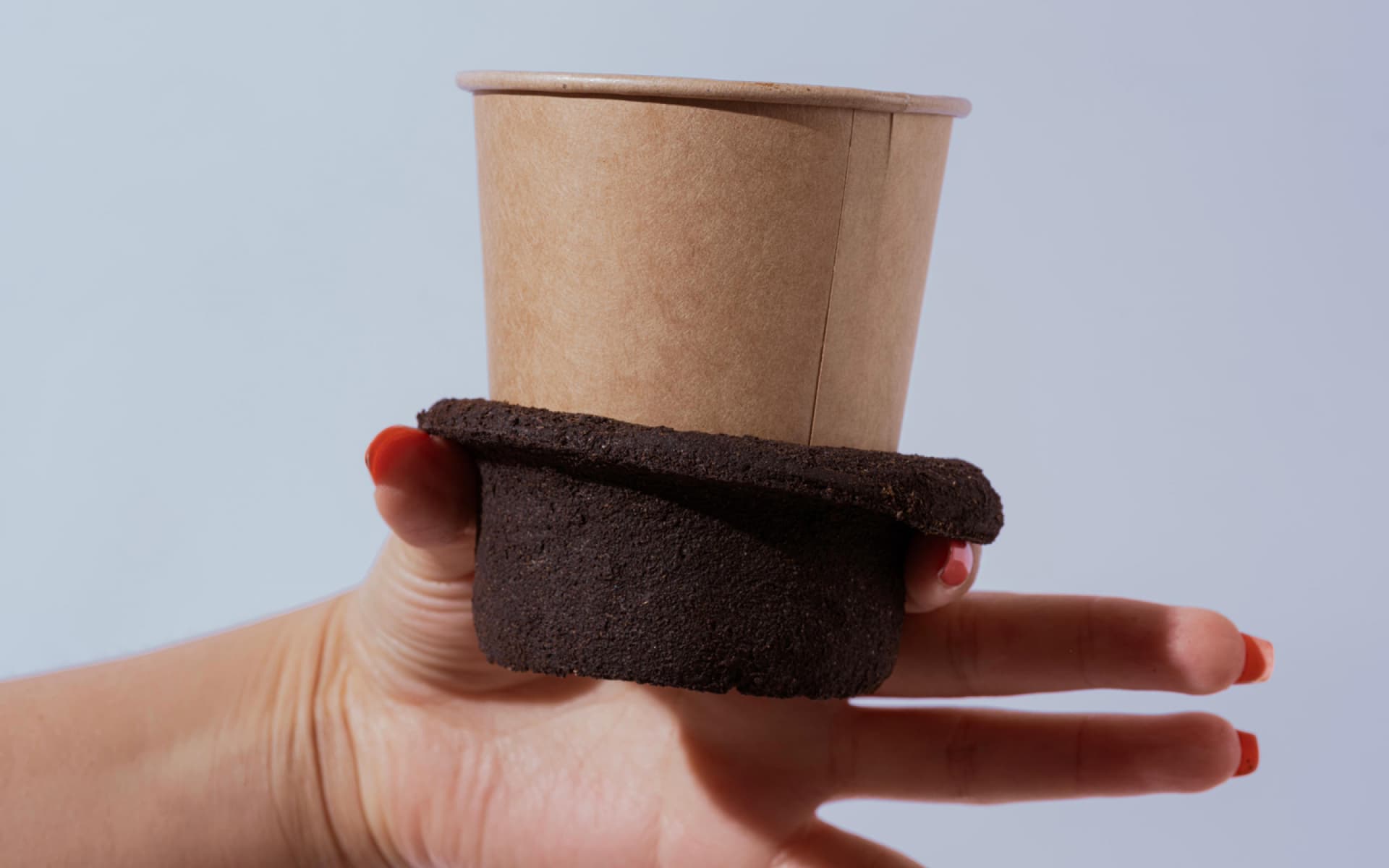
GoBean turns spent coffee grounds into a 100% compostable cup sleeve, a small-format product with a bigger waste-to-value logic behind it. The concept was created by Aranza V. Sanchez and Song Yeon Lee, design students at Hochschule für Gestaltung Offenbach, and developed at the HfG Offenbach Institute for Material Design in the Höchster Porzellan Manufaktur under the supervision of Prof. Dr. Markus Holzbach. The project has been nominated for the Green Product Award Concept Award.
The sleeve is made from locally collected coffee grounds waste mixed with natural binders and is described as ergonomically designed, water-resistant and heat-resistant. According to the Green Product Award listing, GoBean fully decomposes in about three weeks, or can be used for planting after it breaks down. That gives the concept a direct circular-bioeconomy pitch: the same biomass stream that would otherwise be discarded becomes a consumer-facing material with a defined end of life.
The business model is built around cafés, which would supply their used coffee grounds for production. That structure is meant to create a second life for a ubiquitous food and beverage residue while replacing conventional single-use cardboard sleeves, a category that has long sat in the shadow of the larger cup-disposal problem. By tying collection, material processing and product use together, the project tries to show how a low-value wet waste can be standardized into a commercial input.

The scale of the opportunity is not trivial. In the United Kingdom alone, more than 3.2 billion single-use cups are thrown away each year, and only 2.8% are recycled, according to Biffa. Academic research also estimates that spent coffee grounds amount to about 60 million tons a year worldwide, underscoring why coffee waste keeps surfacing in materials research, packaging trials and bio-based product design. GoBean remains in the conceptual phase, but its nomination signals how designers are pushing waste streams toward applications that can move beyond prototypes and into repeatable supply chains.
This article was produced by Prism’s automated news system from verified source data, official records, and press releases, then run through automated quality and moderation checks before publishing. The system is built and supervised by the people who set the standards it runs under. Read our full AI policy.
Know something we missed? Have a correction or additional information?
Submit a Tip