Jain Irrigation launches large-scale farm waste-to-energy project in Jalgaon
Jain Irrigation’s Jalgaon plant is turning more than 50 tonnes of crop residue a day into 90 MWh of heat and nearly 12 tonnes of biochar.
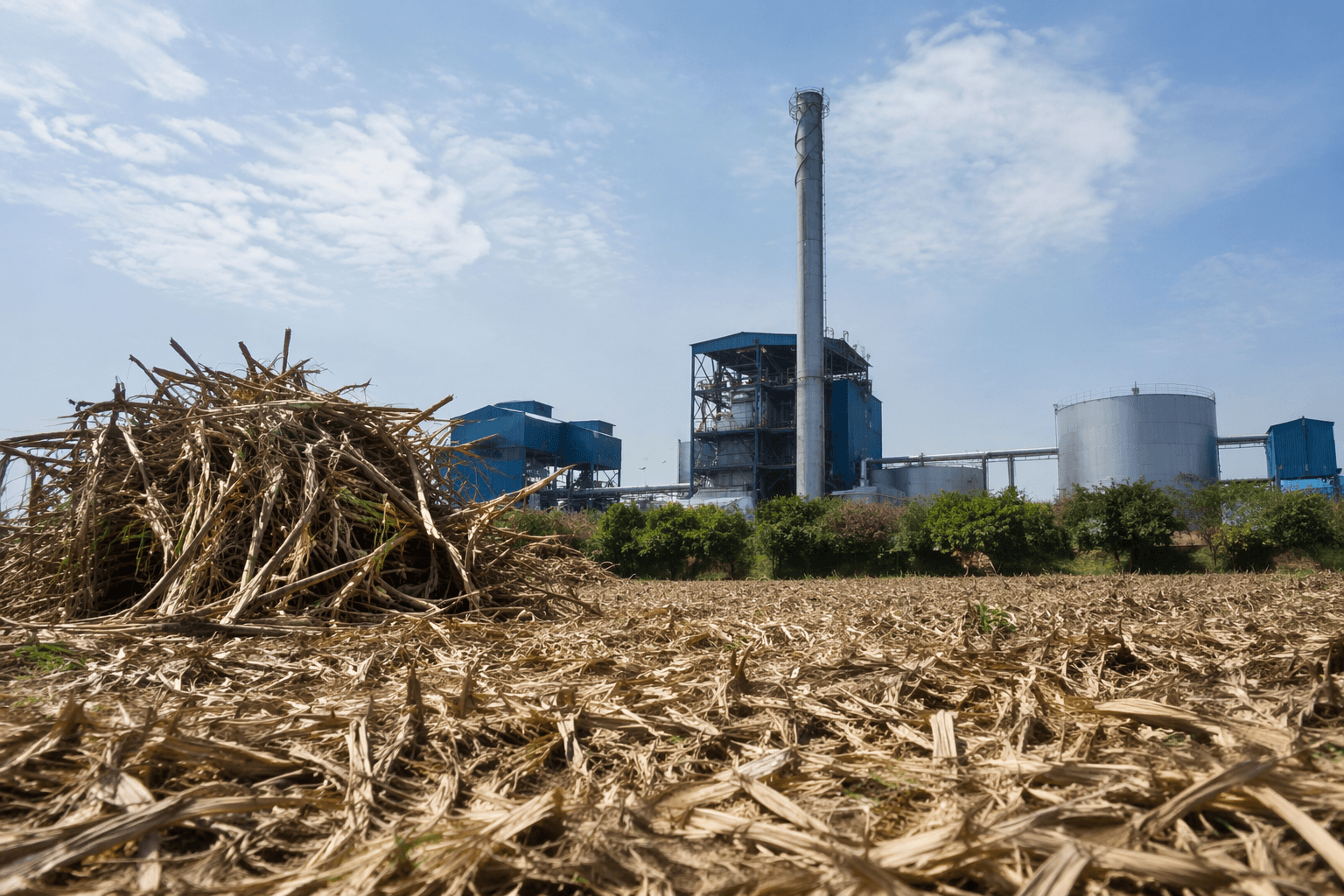
Jain Irrigation Systems and Ankur Scientific launched a large-scale farm waste-to-energy and biochar project in Jalgaon district that processes more than 50 tonnes of agricultural biomass a day and is designed to deliver about 90 MWh of thermal energy plus nearly 12 tonnes of biochar. The plant, commissioned June 2 and described by Jain as an industrial-scale facility of about 20,000 tonnes a year, is built around multi-feedstock gasification and is intended to convert farm residues into a usable energy stream instead of leaving them in fields or burning them openly.
The project matters because it gives residue a price. For farmers and local aggregators, the value proposition is no longer just disposal relief, but a route to cash from material that often carries little or negative value in conventional markets. Jain has said the facility is linked to verified carbon credits via Puro.earth, which adds a second revenue leg to the heat output and biochar sales. That makes the economics look more layered than a simple biomass boiler: feedstock handling, thermal offtake and carbon monetisation all sit in the same model.
The policy and environmental backdrop is strong. The Government of India’s crop residue management portal says burning crop residue is meant to be reduced because it causes air pollution and strips nutrients and micro-organisms from soil. A February 2026 Press Information Bureau note said India generates an estimated 350 million tonnes of agricultural waste a year and that residues could generate more than 18,000 MW of power. Jalgaon, a district long tied to banana, cotton and sugarcane, offers a dense residue base that can support collection at scale.
Jain said the Jalgaon unit is the first of multiple planned biochar reactors and described it as one of the world’s largest single-unit biochar reactors. The company also said the plant was developed with global experts, which suggests the technology stack is being treated as a template rather than a one-off demonstration. Ankur Scientific, founded in 1986, says it has delivered more than 1,000 projects in 35 countries across biomass gasification, waste-to-energy, green process heating, biochar and green power.
The practical test now is durability. Biochar can create soil benefits if there is a repeatable market for application, and thermal energy can support industrial users that need heat rather than electricity. But the Jalgaon model still leans on project-specific technology partnerships and carbon-credit infrastructure to sharpen returns. If the plant runs consistently and the residue supply holds, it could show that crop leftovers can become a dependable income stream instead of a seasonal waste problem.
This article was produced by Prism’s automated news system from verified source data, official records, and press releases, then run through automated quality and moderation checks before publishing. The system is built and supervised by the people who set the standards it runs under. Read our full AI policy.
Know something we missed? Have a correction or additional information?
Submit a Tip