Japan proposes GHG scores for Brazilian and Thai ethanol imports
Japan moved to set default carbon scores for Brazilian corn and Thai ethanol, a step that could decide which cargoes fit its planned E10 market.
Japan's Ministry of Economy, Trade and Industry proposed default greenhouse gas scores for ethanol made from Brazilian corn, Thai sugarcane and Thai cassava, a move that could shape which cargoes qualify for the country's next round of low-carbon fuel blending. The April 17 proposal widens Japan's approved pathways beyond U.S. corn ethanol and Brazilian sugarcane ethanol, and gives importers a carbon-accounting benchmark before any shipment lands.
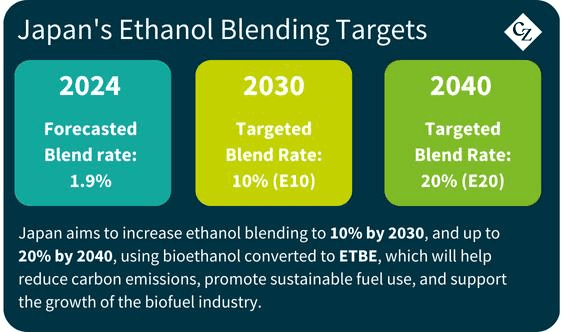
The new values matter because Japan is moving from a narrow biofuel supply base toward broader recognized feedstocks. Japan's June 2025 biofuels action plan said the default values were expected to be folded into policy by spring 2026, as METI prepares a smaller-scale introduction of E10 gasoline in 2028 and a wider rollout of nationwide direct blending by fiscal year 2030. The same policy track keeps ETBE in use while Japan tests regional E10 blends in Okinawa Prefecture in fiscal 2028.
Japan's fuel demand math is still tight. The country met its annual bioethanol target of 824 million liters in both 2024 and 2025, but its average ethanol blend rate in 2025 remained 1.9 percent. That leaves room for imported ethanol to gain ground if it can clear Japan's greenhouse gas thresholds, especially as METI also proposed a revised gasoline baseline emissions value.
The carbon framework is not static. Japan has proposed raising its biofuel greenhouse gas reduction target from 55 percent to 60 percent versus conventional gasoline once a new lifecycle assessment for gasoline is completed, and a public comment period is due before that change is finalized. That makes the default scores commercially important: producers in Brazil and Thailand may use plant-specific data to argue for lower carbon intensity than the defaults, while exporters that cannot beat the benchmark could find themselves at a disadvantage in Japan's market access calculus.
Japan's earlier regulatory updates show the same pattern. In 2023, Tokyo sought comments on updated biofuel standards for fiscal years 2023 through 2027, including revised carbon-intensity values for U.S. corn-based ethanol and Brazilian sugarcane-based ethanol. The April 2026 proposal extends that process to Brazilian corn, Thai sugarcane and Thai cassava, and a later correction to Table 1 in the USDA report underscores how closely the market is tracking each shift in the rulebook.
This article was produced by Prism’s automated news system from verified source data, official records, and press releases, then run through automated quality and moderation checks before publishing. The system is built and supervised by the people who set the standards it runs under. Read our full AI policy.
Know something we missed? Have a correction or additional information?
Submit a Tip