Japan races to collect used cooking oil for SAF expansion
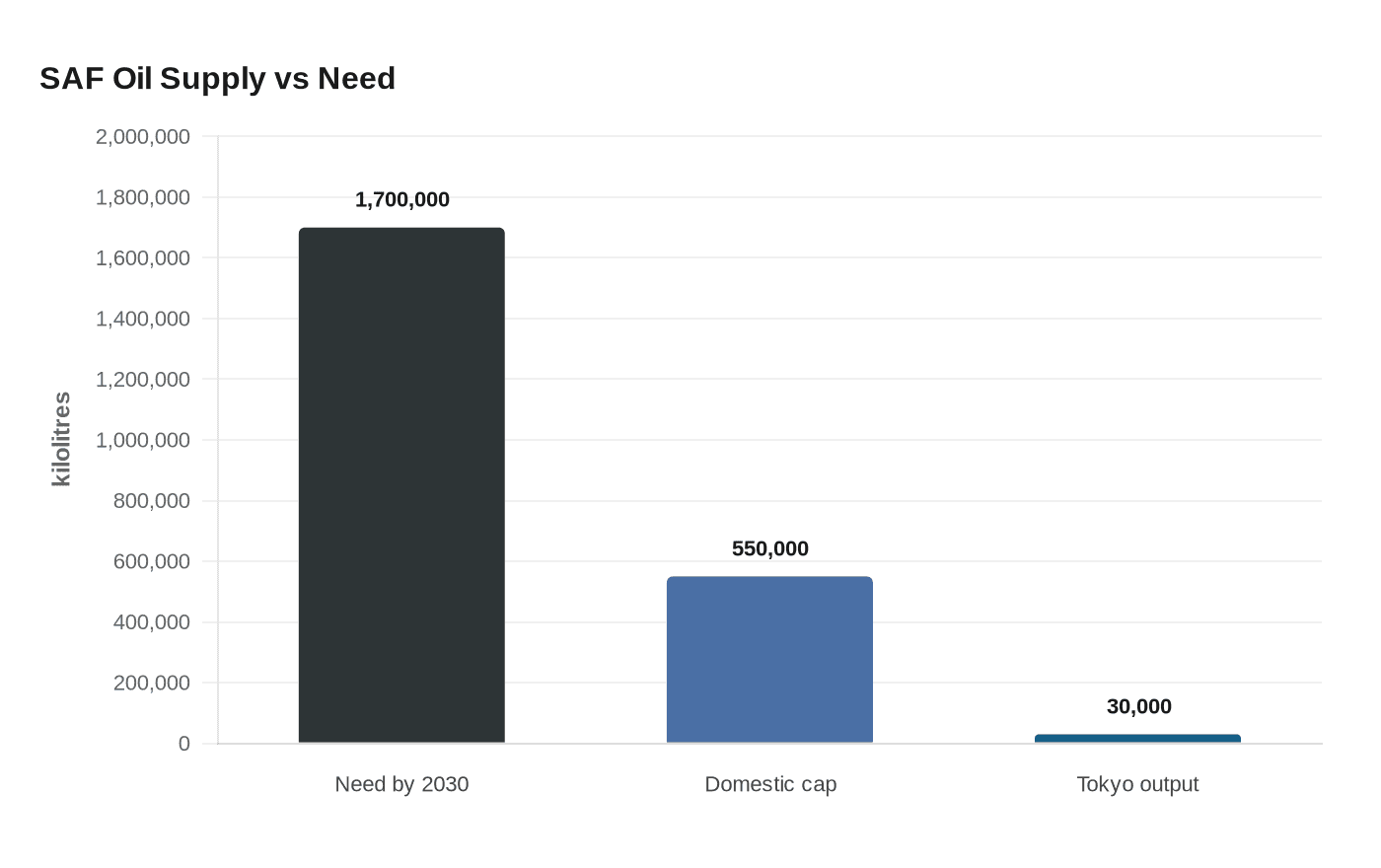
Japan can collect only about 550,000 kilolitres of used cooking oil, far below the 1.7 million kilolitres it says it needs for SAF by 2030.

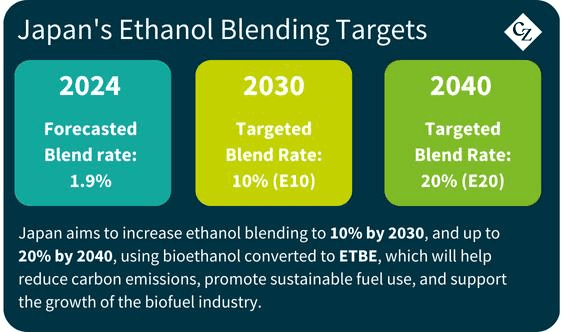
Japan is trying to turn used cooking oil into a national feedstock network for sustainable aviation fuel, but the math is brutal: even if every drop were collected, the country would still fall far short of the roughly 1.7 million kilolitres of waste oil it says it needs by 2030, versus a domestic ceiling of about 550,000 kilolitres.
That gap is why collection has moved from a recycling sideline to an industrial-policy priority. Tokyo’s environmental bureau says used cooking oil is now being collected at facilities across all 23 wards and many surrounding municipalities, as the city works to normalize household drop-off, restaurant sorting and municipal collection points. The aim is to build a dependable supply chain from kitchens to refiners, not simply to raise awareness.
Tokyo launched the Tokyo Fry to Fly Project in March 2024 with JGC Holdings Corporation, Cosmo Oil Co., Ltd. and Revo International Co., Ltd., and said it had become the first local government to join ACT FOR SKY. The coalition, founded in March 2022, was created to commercialize domestic SAF and expand the supply chain. Tokyo’s 2024 announcement said ACT FOR SKY had 38 organizations at the time, while one JGC page describes it as a voluntary organization of 16 companies, underscoring how quickly the group has been evolving.
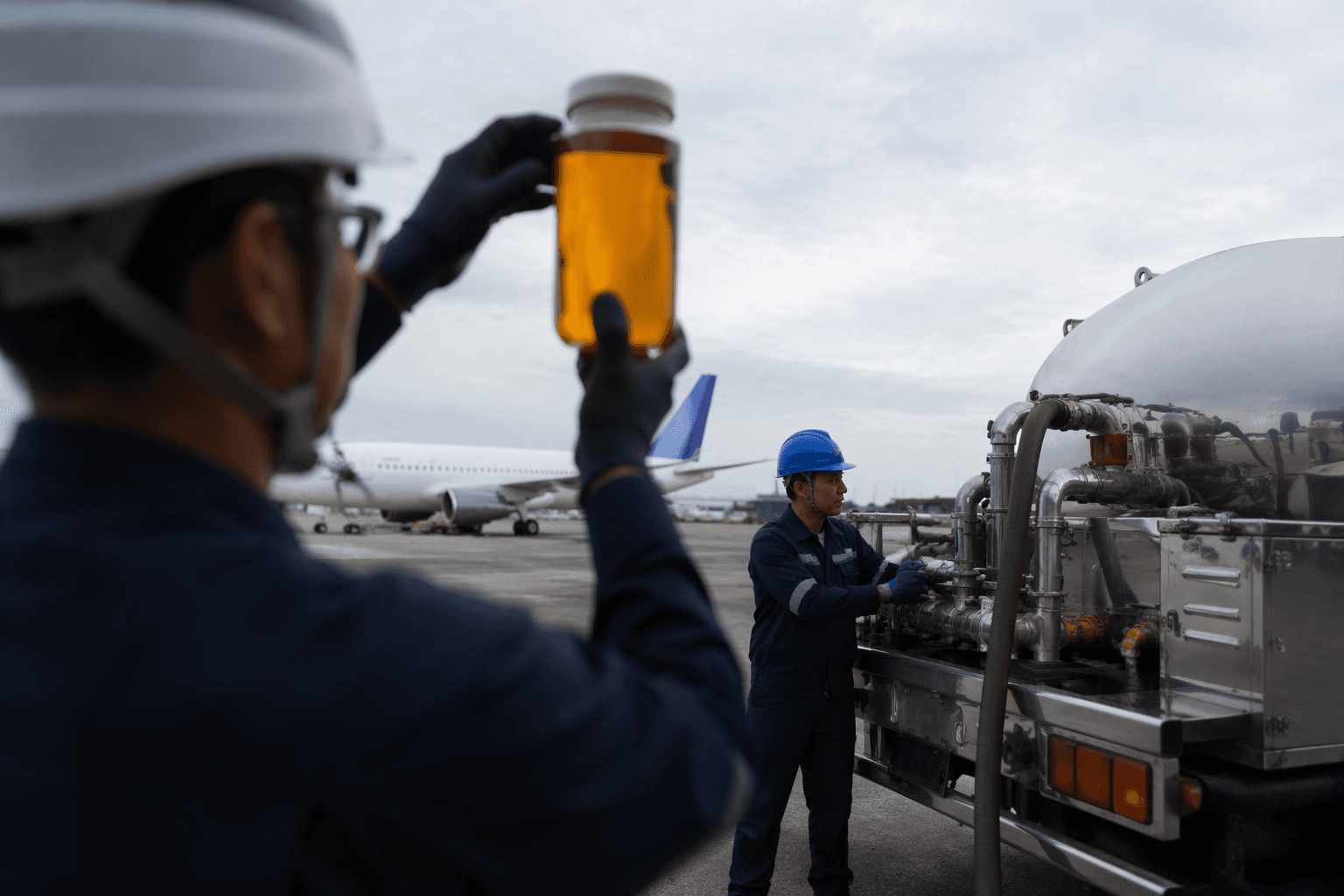
The policy backdrop hardened in February 2025, when the government approved the Seventh Strategic Energy Plan and placed SAF inside Japan’s broader decarbonization strategy through 2050. Tokyo said domestic SAF made from used cooking oil was expected to supply about 30,000 kilolitres a year, or roughly 0.3% of total jet fuel use, a reminder that the market is still at a pilot scale even as collection systems spread.
Airlines are also pushing the issue into procurement planning. Japan Airlines says it aims to replace 10% of onboard fuel with SAF by 2030. All Nippon Airways is urging the government to create policies that ensure stable SAF procurement, a sign that carriers see feedstock security, not just refining capacity, as the binding constraint.
For Japan, the challenge in 2026 is no longer proving that waste oil can be refined into SAF. The real test is whether municipalities, restaurants and households can be organized into a collection network large enough to support commercial volumes without forcing higher costs or distorting supply away from other industrial users.
This article was produced by Prism’s automated news system from verified source data, official records, and press releases, then run through automated quality and moderation checks before publishing. The system is built and supervised by the people who set the standards it runs under. Read our full AI policy.
Know something we missed? Have a correction or additional information?
Submit a Tip