LaHood meets Illinois soybean leaders on biofuels policy, farm competitiveness
LaHood met Illinois soybean leaders in Bloomington as the state’s B20 mandate hit full effect, putting farm income and soybean oil demand at the center of the policy fight.
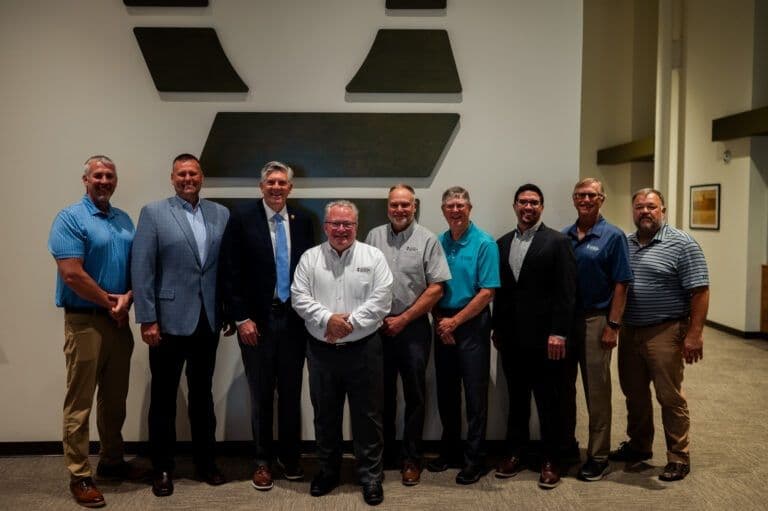
Rep. Darin LaHood on May 26 visited the Illinois Soybean Association headquarters in Bloomington to meet with ISA leaders, staff and Illinois soybean producers about biofuels and other issues affecting farm competitiveness across the state.
The meeting landed against a hard farm-economics backdrop. LaHood’s House agriculture page says Illinois’s 16th Congressional District is the 10th largest agriculture district in the nation. It also says current Illinois agri-food exports support 60,600 jobs and are worth $8 billion, with at least 20% of Illinois farmer income tied to agricultural exports. That makes biofuels policy more than an energy issue for the district, since soybean oil demand, crush margins and export exposure all feed into planting decisions and rural investment.
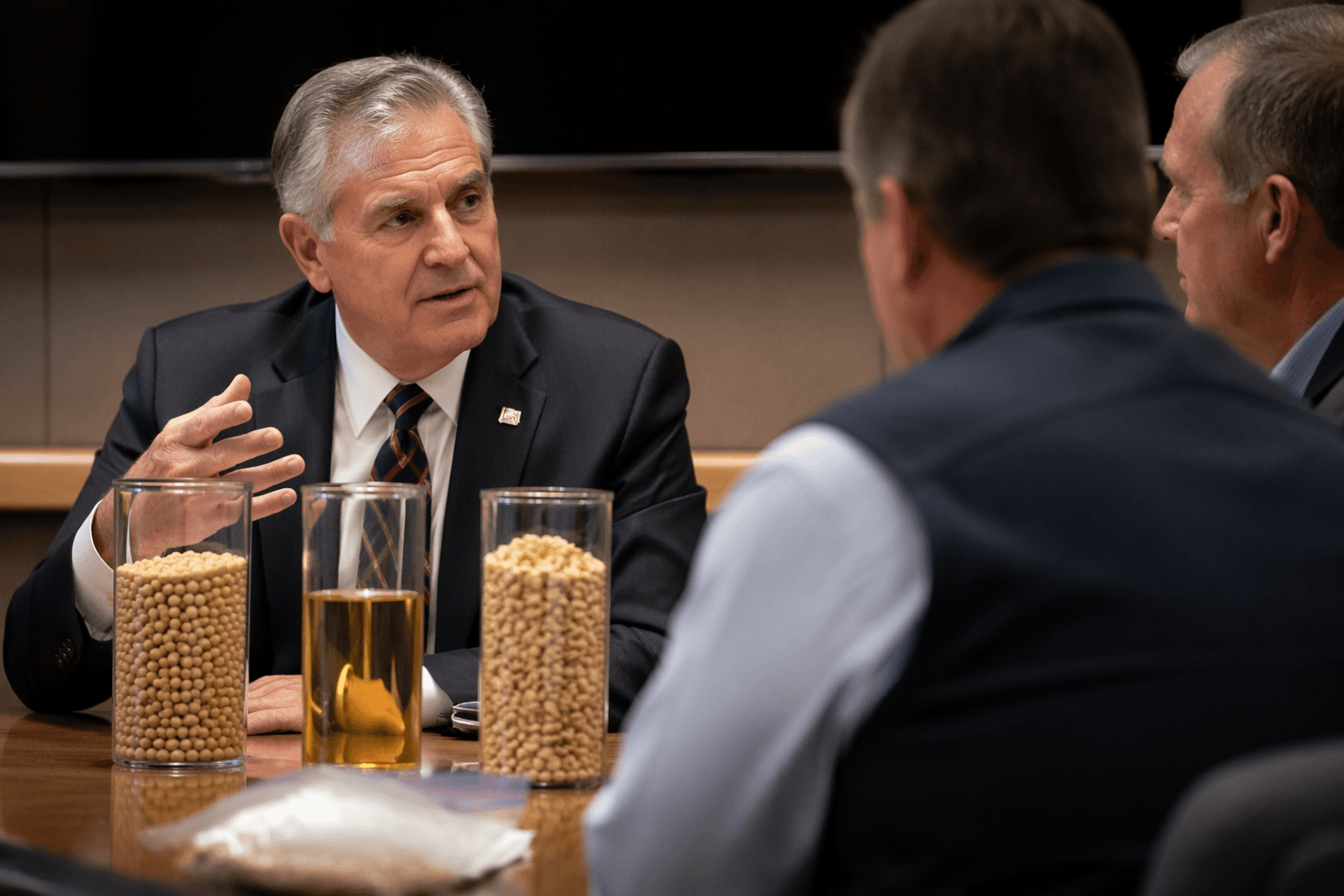
ISA said the discussion centered on the need for stronger domestic biofuels markets and more federal policy certainty. The association has argued that soybeans are not just a food and feed crop but a critical input into renewable diesel and other low-carbon fuel pathways, linking state and federal fuel policy directly to soy demand and rural growth. For growers, those markets can help stabilize soybean oil demand even as trade flows and policy incentives shift.
The association has already pressed that case in Washington. In June 2025, ISA praised LaHood and three other Illinois lawmakers for bipartisan support of H.R. 3137, the Biodiesel Tax Credit Extension Act, saying it would extend the biodiesel and renewable diesel blenders tax credit. LaHood said then that the measure would provide more certainty and opportunities for farmers, producers and rural communities.
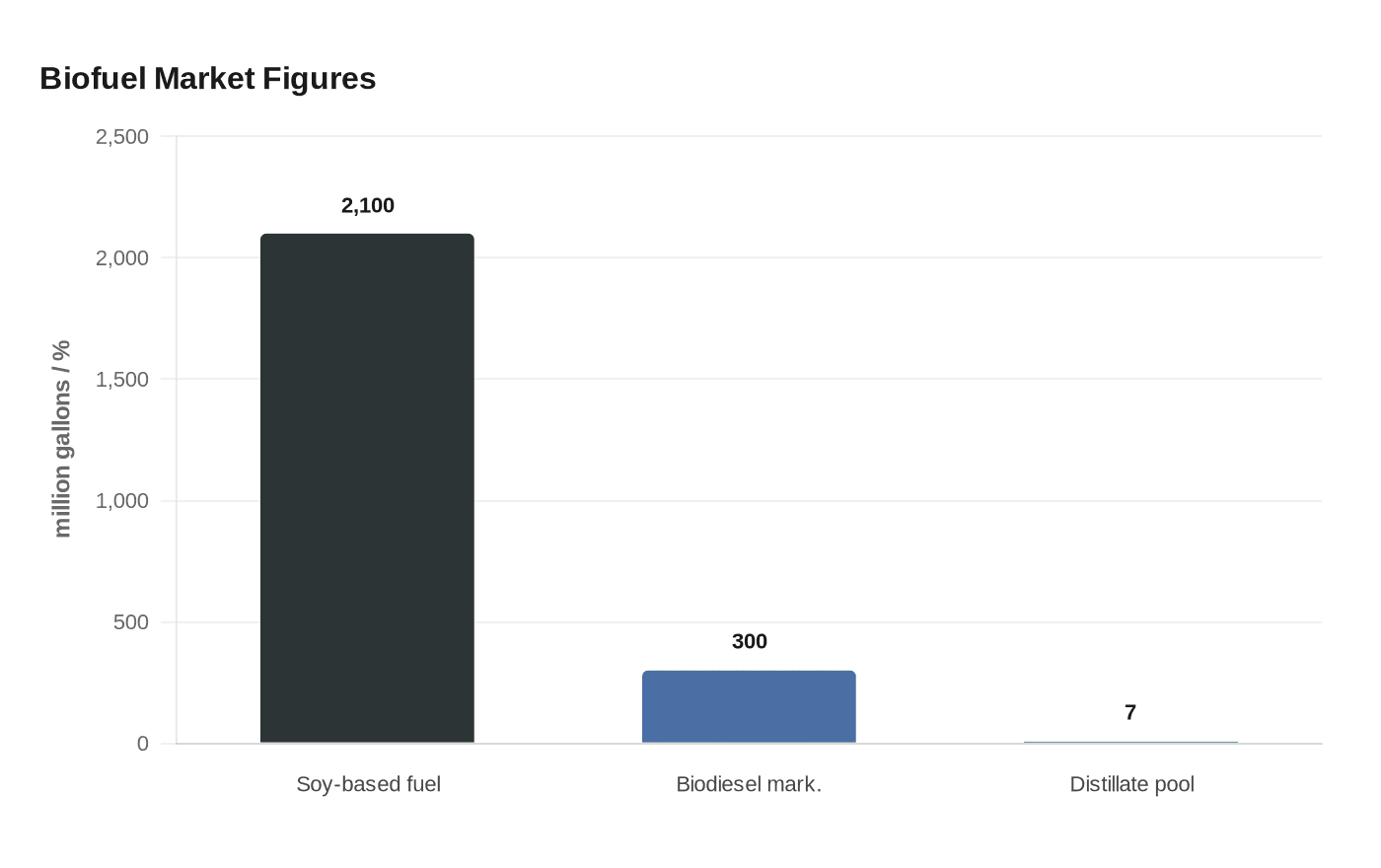
ISA has also been warning that carbon-intensity-based incentives could redirect demand away from domestic soybean oil. In an August 2025 analysis, the association said soy-based biofuels accounted for 2.1 billion gallons of fuel in 2023, equal to about 28 million acres of soybeans at typical yields. It said programs such as the federal 45Z credit and state LCFS and CFS rules could threaten the viability of Illinois-produced soybean oil by favoring waste feedstocks.
Illinois’s own fuel mandate is now adding to the market pull. ISA said the state’s B20 biodiesel law moved fully into effect on April 1, 2026, and that full implementation should bring the state’s biodiesel market close to 300 million gallons. ISA puts Illinois biodiesel and renewable diesel production at a $3.2 billion total economic impact, supporting 8,124 full-time equivalent jobs and $411 million in wages. The association says the fuels together account for about 7% of the U.S. distillate pool, a reminder that the soybean oil market is now firmly tied to mainstream diesel supply.
This article was produced by Prism’s automated news system from verified source data, official records, and press releases, then run through automated quality and moderation checks before publishing. The system is built and supervised by the people who set the standards it runs under. Read our full AI policy.
Know something we missed? Have a correction or additional information?
Submit a Tip