OPAL Fuels and GFL advance two RNG projects at Alabama, Georgia landfills
OPAL Fuels and GFL advanced two landfill RNG projects in Alabama and Georgia that could add 15 million gasoline-gallon equivalents a year. The fuel will flow through OPAL’s CNG/RNG network.
OPAL Fuels and GFL Environmental on June 3 advanced construction on two renewable natural gas projects at the Stones Throw Landfill in Tallapoosa County, Alabama, and the Grady Road Landfill in Polk County, Georgia, a buildout that is expected to add about 15 million gasoline-gallon equivalents of RNG supply capacity. The pair said the projects together represent nearly 2 million MMBtu of plant design capacity and will capture methane from landfill decomposition, upgrade it and turn it into low-carbon transportation fuel.
The projects are owned 50-50 by OPAL Fuels and GFL Environmental, and OPAL said it will market and distribute the full output through its CNG and RNG fueling network. That links production with downstream fuel sales in a way the company has been pushing across its vertically integrated platform, from landfill gas capture and upgrading to interconnection and dispensing for heavy- and medium-duty fleets.
The companies said the projects are positioned to serve accelerating fleet conversion activity in trucking, where higher and volatile diesel pricing, increasing regulatory clarity around combustion engines and newer natural gas engine platforms have improved the economics for some duty cycles. OPAL said natural gas engines can deliver better economics than diesel while also offering zero Scope 1 and Scope 2 emissions when fueled by RNG. GFL said the landfills would otherwise continue emitting methane, a potent greenhouse gas, and that the projects support its emissions reduction goals while creating stable returns from waste assets.
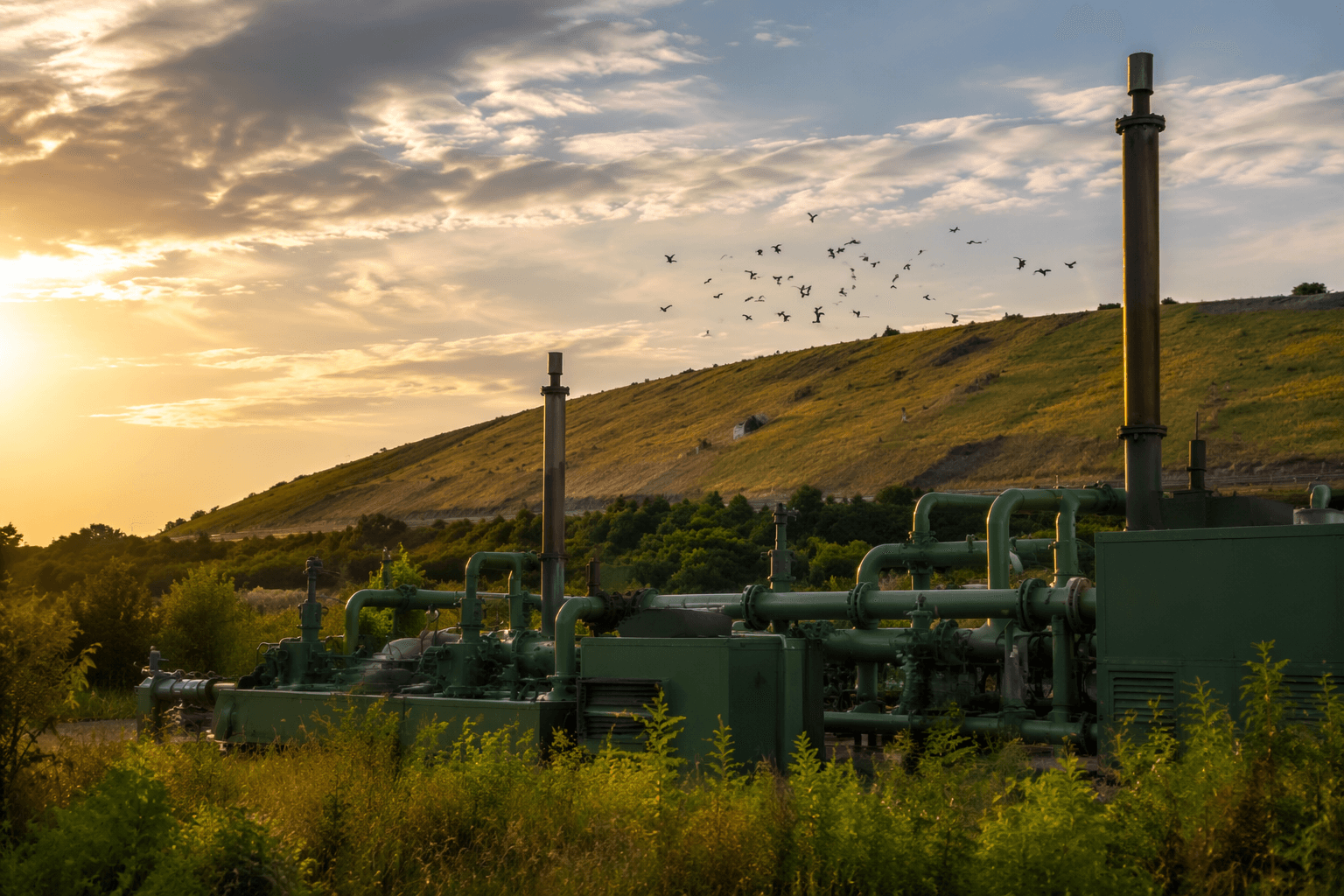
The policy case for the projects remains rooted in methane capture. The U.S. Environmental Protection Agency says landfill gas is about 50% methane and can be upgraded into pipeline-quality renewable natural gas with a methane content of 96% to 98%. EPA also says RNG can be used as vehicle fuel or for electricity and heating. The U.S. Department of Energy’s Alternative Fuels Data Center says heavy trucks account for a large share of U.S. transportation energy use and that natural gas can offer life-cycle greenhouse-gas advantages over conventional fuels depending on the application.
GFL has already been expanding in the sector. Its 2024 sustainability report said it opened an RNG facility southeast of Kansas City, Missouri, in December 2024 that was expected to produce enough RNG to power 7,200 homes and cut emissions by the equivalent of taking 17,500 gas-powered cars off the road for a year. The Alabama and Georgia projects extend that landfill-gas-to-fuel playbook and show RNG still attracting capital when it is tied directly to fleet demand, not just carbon accounting.
This article was produced by Prism’s automated news system from verified source data, official records, and press releases, then run through automated quality and moderation checks before publishing. The system is built and supervised by the people who set the standards it runs under. Read our full AI policy.
Know something we missed? Have a correction or additional information?
Submit a Tip