SAF shortages and policy gaps threaten aviation’s net-zero goals
Global SAF output is set to hit 2 million tonnes in 2025, just 0.7% of airline fuel use, while CORSIA credits and mandates still lag compliance needs.

Sustainable aviation fuel still covers only a sliver of jet demand, and the economics are getting harder before they get easier. IATA expects global SAF production to reach about 2 million tonnes in 2025, equal to roughly 0.7% of airlines’ total fuel consumption, after estimating 2024 output at 1 million tonnes. IATA also said the SAF premium could add about $3.6 billion to global airline fuel costs in 2025, underscoring how far the market remains from scale.
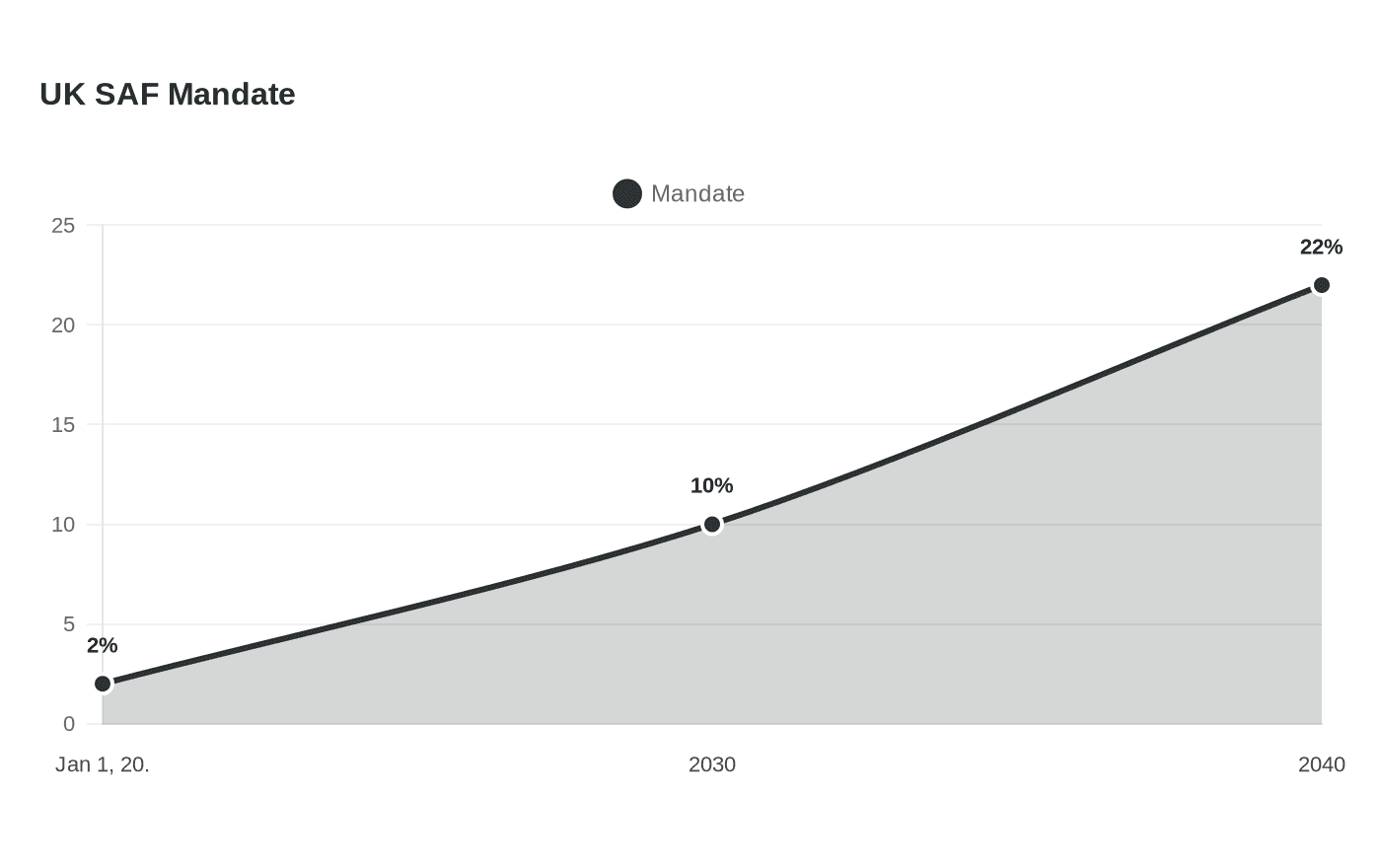
Europe’s blending mandates are providing the clearest near-term pull, but they are not solving the supply problem. ReFuelEU Aviation, part of the European Union’s Fit for 55 package, is intended to increase SAF use across the bloc, while the UK SAF Mandate took effect on January 1, 2025 at 2% of total UK jet fuel demand, rising to 10% in 2030 and 22% in 2040. IATA and industry analysts say those rules are already drawing most available volumes toward Europe, but the ramp remains too small to materially cut aviation’s carbon footprint.
The carbon-credit side is no cleaner. ICAO describes CORSIA as the first global market-based scheme applied to a sector, designed to support carbon-neutral growth in international aviation and complement operational improvements, technological change and SAF. But ICAO’s 2025 review showed the pilot phase from 2021 to 2023 required no offsetting because the baseline was set against 2019 emissions and traffic was crushed by the pandemic. CORSIA’s first phase runs from 2024 to 2026, and ICAO has approved only a limited number of emissions-unit programmes for the scheme’s credit supply.
That leaves airlines facing a timing mismatch that is already shaping compliance strategy. Market participants say demand for eligible credits is likely to outstrip supply because project approvals are slow and the pool of qualifying projects remains thin, while airlines worry the credits will not arrive fast enough to match their CORSIA obligations. Willie Walsh, IATA’s director general, has argued that poorly designed mandates are harming the fledgling SAF market.
The World Economic Forum has flagged SAF availability and cost as one of the biggest near-term risks to aviation decarbonization, alongside geopolitical tensions and tariff-driven protectionism. ICAO says SAF has the greatest potential to reduce carbon dioxide emissions from international aviation, but the sector is still leaning on policy scaffolding and carbon-accounting fixes that are not yet keeping pace with demand.
This article was produced by Prism’s automated news system from verified source data, official records, and press releases, then run through automated quality and moderation checks before publishing. The system is built and supervised by the people who set the standards it runs under. Read our full AI policy.
Know something we missed? Have a correction or additional information?
Submit a Tip