Study says U.S. could reach two-thirds of 2030 SAF target
A Washington State University study said U.S. SAF output could hit 2.1 billion gallons by 2030, but that still leaves a 900 million-gallon gap.
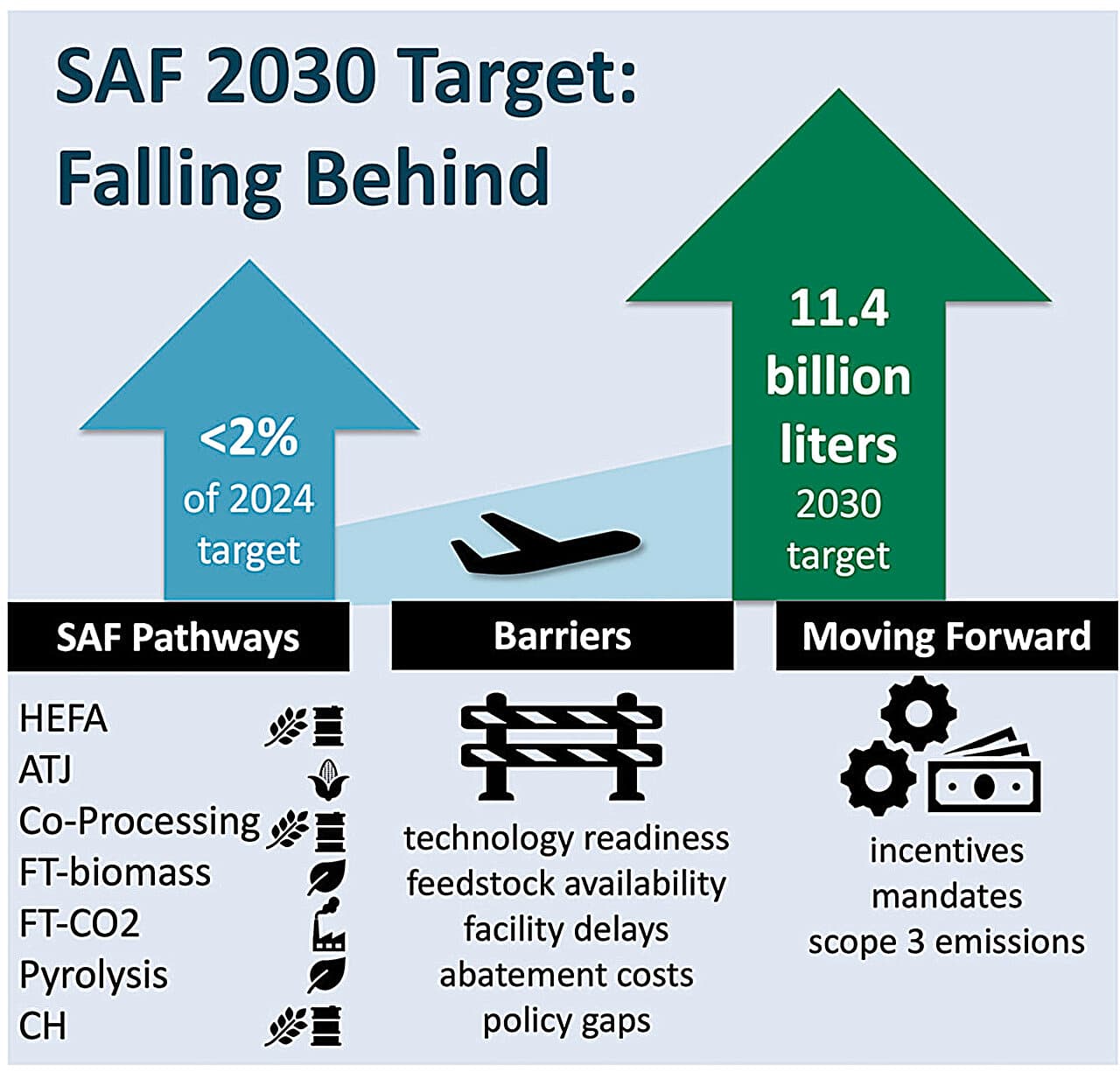
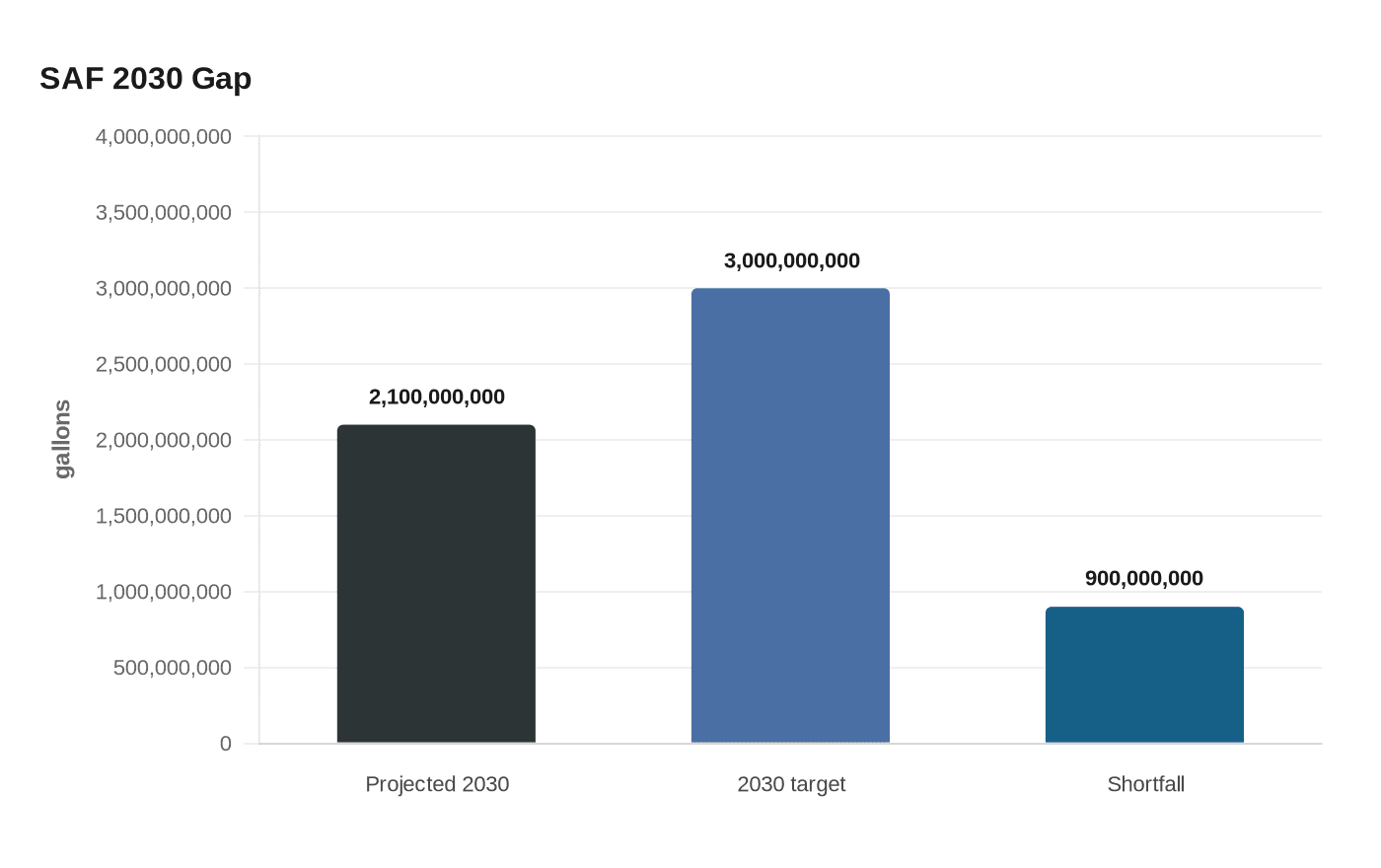
Washington State University-led research on May 26 said the United States could plausibly produce about 2.1 billion gallons of sustainable aviation fuel a year by 2030, roughly two-thirds of the federal target, but only if project execution, feedstock supply and policy support all hold together. That would still leave a shortfall of about 900 million gallons against the 3 billion-gallon goal set under the U.S. SAF Grand Challenge.
The study, published in Biomass and Bioenergy, went beyond ambition and tested how the market actually behaves. Researchers reviewed more than two decades of publicly announced U.S. renewable fuel projects, then measured how many reached operation, how long construction typically takes, whether feedstock supply is sufficient and whether producers have a stronger economic incentive to make renewable diesel instead of aviation fuel. That last factor loomed large: under current market conditions, renewable diesel for road transport can still outcompete SAF, which can pull lipids and other low-carbon feedstocks away from jet fuel. The analysis also found current SAF pathways rely heavily on used cooking oil, animal fats and vegetable oils such as soybean oil.

The findings land against a federal policy target announced in September 2021 by the U.S. Department of Energy, the U.S. Department of Transportation and the U.S. Department of Agriculture. The Grand Challenge calls for at least a 50% lifecycle greenhouse-gas reduction versus conventional jet fuel, 3 billion gallons per year of domestic SAF by 2030 and 35 billion gallons per year by 2050. The Department of Energy has said SAF is a drop-in fuel that can use existing aircraft and airport infrastructure, but also has warned that cost remains the biggest barrier, with SAF running two to ten times more expensive than fossil jet fuel depending on feedstock and conversion technology.

The gap between announced capacity and operating gallons remains stark. DOE’s mid-2024 tracking data showed annual U.S. SAF domestic production and imports rising from 5 million gallons in 2021 to 93 million gallons through September 2024. Its November 2024 Liftoff report said announced projects represent more than 3 billion gallons of annual domestic SAF production capacity by 2030, more than $44 billion of investment and over 70,000 jobs across the value chain. The Federal Aviation Administration has called SAF the best near-term path to aviation decarbonization, but it has also flagged certification, blend limits above 50%, production cost, scale, conversion infrastructure and feedstock availability as the main constraints. The WSU study suggests the industry can scale, but only if those bottlenecks clear fast enough to turn paper capacity into operating plants.
This article was produced by Prism’s automated news system from verified source data, official records, and press releases, then run through automated quality and moderation checks before publishing. The system is built and supervised by the people who set the standards it runs under. Read our full AI policy.
Know something we missed? Have a correction or additional information?
Submit a Tip