Sugar futures rise as Brazilian mills shift cane to ethanol
Raw sugar futures climbed as Brazilian mills were seen sending more cane to ethanol, with pump economics tilting to fuel at 62% of gasoline.
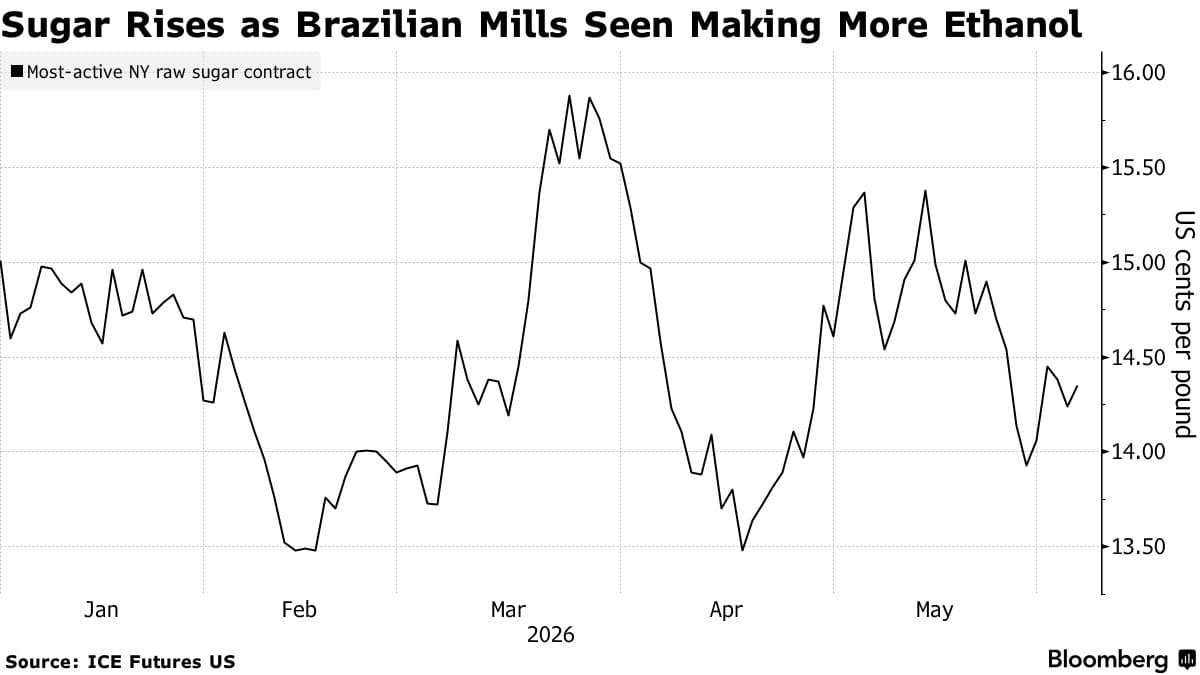
Raw sugar futures in New York rose for the first time in three sessions on June 4 as traders bet Brazilian mills would divert more cane to ethanol, a shift that could leave less sugar on the world market. Ethanol in Brazil was priced at about 62% of gasoline at the pump, down from 70% to 75% previously, according to Claudiu Covrig of Covrig Analytics, widening the fuel’s edge in mill economics.
That ratio matters because Brazil’s sugarcane plants can swing feedstock between sweetener and biofuel depending on relative returns. Covrig Analytics expects mills to stay focused on ethanol until at least around the middle of June, and that view has helped keep the market leaning bullish on sugar since the start of the season. Earlier, on May 4, New York’s most-active sugar contract climbed as much as 1.7% to above 15 cents a pound as investors unwound bearish positions tied to the same ethanol-switching theme.
The latest crush data from Brazil’s Center-South showed the trade-off in real time. UNICA said mills sent 59.66% of cane to ethanol production in the second half of April and 38.16% to sugar. Cumulative ethanol output since the start of the 2026-27 crop year reached 3.29 billion liters by May 1, while sugar production totaled 2.47 million metric tons. S&P Global said Center-South mills processed 40.06 million metric tons of cane in the second half of April, up 123% from a year earlier, and cumulative crushing reached 60.46 million metric tons, up 74.58% year over year.
The market has been signaling this pivot for months. At a Dubai sugar conference on February 4, Datagro’s Guilherme Nastari said there was a clear incentive for mills to start the new season making more ethanol, while Jeremy Austin of Sucden’s Brazilian arm said the initial sugar and ethanol price parity was much in favor of ethanol. For sugar buyers, that leaves Brazil’s crop mix as the key swing factor: more cane to fuel supports domestic ethanol consumption and mill margins, but it tightens global sugar supply from the world’s largest exporter and keeps raw sugar futures sensitive to every change in the Center-South balance.
This article was produced by Prism’s automated news system from verified source data, official records, and press releases, then run through automated quality and moderation checks before publishing. The system is built and supervised by the people who set the standards it runs under. Read our full AI policy.
Know something we missed? Have a correction or additional information?
Submit a Tip