Trump biofuel push faces U.S. biodiesel supply shortfall
EPA's 2026-27 RFS lifts biodiesel and renewable diesel mandates more than 60%, but May RIN output still ran about 179 million behind the monthly pace.
The Environmental Protection Agency in March finalized a 2026-27 Renewable Fuel Standard that lifts biodiesel and renewable diesel volumes more than 60% above 2025. It sets the highest volume requirements in the program’s history and reallocates 70% of small refinery exemptions granted for 2023 through 2025.
May operating data put U.S. biodiesel plants at about 77% of capacity and renewable diesel facilities at about 78%, both below the roughly 90% utilization assumption embedded in the rule. Biomass-based diesel RIN generation reached 736 million in May, short of the roughly 915 million needed each month to stay on track, leaving the industry 1.41 billion RINs behind the pro-rata required pace in the first four months of 2026.
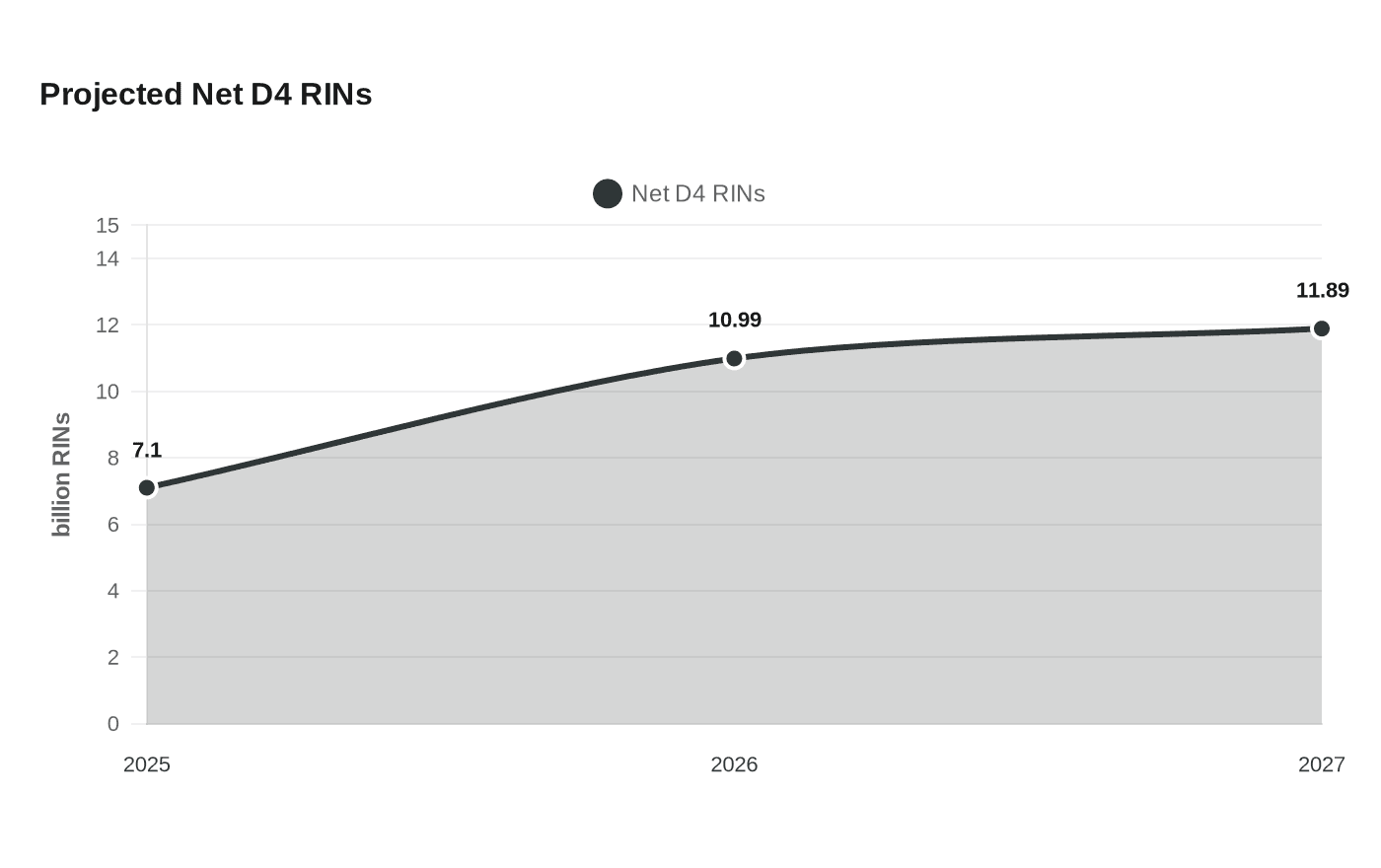
A June 10 analysis by Scott Irwin of the University of Illinois and Todd Hubbs of Oklahoma State University projected net D4 RIN generation would need to rise from 7.10 billion in 2025 to 10.99 billion in 2026 and 11.89 billion in 2027. Those levels would require sustained high plant runs, more pull on soybean oil, used cooking oil and tallow, and tighter logistics through collection, refining and distribution. The higher volumes are meant in part to support American farmers, soybean growers, oilseed processors, biodiesel producers and renewable diesel producers.
American Fuel & Petrochemical Manufacturers filed suit in the D.C. Circuit in early June, challenging the 2026-27 volumes and calling EPA’s Set 2 rule the most expensive regulation of President Donald Trump’s second term.
This article was produced by Prism’s automated news system from verified source data, official records, and press releases, then run through automated quality and moderation checks before publishing. The system is built and supervised by the people who set the standards it runs under. Read our full AI policy.
Did this article answer your question?