U.S. biofuels face feedstock squeeze as mandates tighten supply
Mandates and 45Z are tightening the hunt for low-carbon oils, leaving UCO, tallow and distillers corn oil as the industry's scarcest molecules.
A tighter renewable fuel mandate and the new 45Z carbon credit are reshaping which molecules the U.S. biofuels industry can actually use, turning low-carbon feedstocks into the sector's main bottleneck. Used cooking oil, tallow and distillers corn oil have become the most contested commodities in the chain as producers chase barrels that qualify under both the RFS and 45Z.
Mandates reset the margin math
The U.S. Environmental Protection Agency on March 27 locked in 9.07 billion RINs for biomass-based diesel in 2026 and 9.20 billion in 2027, while reallocating 70% of small refinery exemptions granted for 2023 through 2025 and removing renewable electricity, or eRINs, from the program. That rule gives the market a far tighter policy frame just as the 45Z Clean Fuel Production Credit is making carbon intensity a bigger part of pricing, contracting and project economics.
Fastmarkets says the result is no longer just a question of turning out more renewable fuel. It is becoming a question of whether enough qualifying molecules exist to satisfy policy-driven demand at scale. In that environment, used cooking oil, tallow, animal fats, yellow grease and distillers corn oil have become the most contested commodities in the biofuels chain, and the spread between virgin and waste oils is doing more work in margin formation than it did a year ago.
Fastmarkets pointed to April compliance data showing domestic renewable diesel blending at 274.48 million gallons and biodiesel blending at 129.10 million gallons, the strongest biodiesel reading in about 16 months. The same market, however, remains under strain from feedstock availability, compliance costs and the need to secure lower-carbon barrels and gallons that qualify under both the RFS and the 45Z credit structure.
The feedstock pool is already stretched
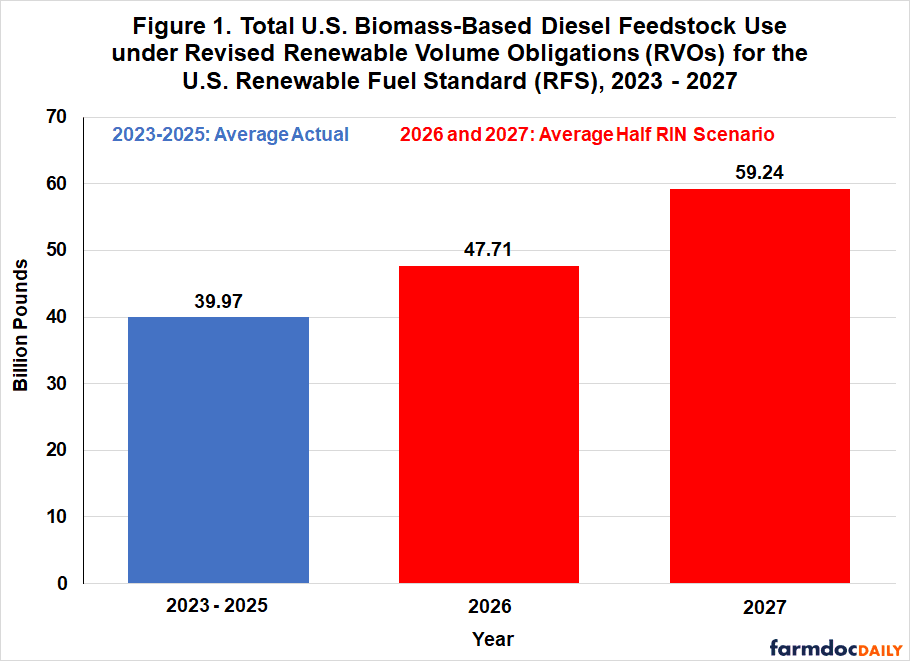
USDA Economic Research Service data show why the squeeze is structural. Biomass-based diesel feedstock demand reached a record 37.2 billion pounds in the 2023/24 marketing year, up 19% from the prior year. At the same time, the share of feedstocks sourced from foreign suppliers rose from 13% in 2020/21 to 29% in 2023/24, underscoring how quickly the United States has had to lean on imported oils and fats to feed domestic capacity.
That dependence is running alongside a record pace in soybean processing. USDA said U.S. soybean crush reached a record-high daily rate of 7.02 million bushels in December 2024, which matters because soybean oil remains one of the core domestic inputs for biomass-based diesel. EPA D4 RIN generation data show soybean oil accounting for roughly 28% of generation, while waste oils, fats and greases made up about 22% and distillers corn oil about 7%. The mix shows a market that is already leaning on the very feedstocks now under the most pressure.
EIA’s feedstock table classifies yellow grease as used cooking oil, and that matters because the residue stream that once looked abundant is now central to the low-carbon value stack. The more the industry shifts toward waste oils and animal fats, the less room there is for easy substitution when one feedstock tightens or when a plant loses access to a specific supply basin.

Imports, verification and fraud risk
The pressure is not only about volume, it is also about trust. In September 2024, the Renewable Fuels Association pressed EPA to tighten verification rules for imported used cooking oil and tallow, saying the surge in questionable imports was suppressing demand and values for domestically produced distillers corn oil and soybean oil. RFA said nearly one out of every six gallons of U.S.-produced biomass-based diesel was then made from imported UCO or tallow, much of it from China and Brazil, and said monthly tallow and UCO imports had jumped twelvefold since January 2021.
That is why the current fight is as much about documentation and chain-of-custody as it is about gallons. The market is rewarding the lowest-carbon inputs, but the same premium is also attracting heavier scrutiny from domestic feedstock suppliers who want to protect price discovery and from producers who need verified molecules they can bank on for RINs and carbon scores. In practice, feedstock contracting, audit readiness and CI management have become core operating disciplines, not secondary compliance tasks.
Who is most exposed
The producers most exposed are the ones with the least secure access to residue-based feedstocks. Biodiesel plants, renewable diesel facilities and HEFA-linked SAF projects all compete for the same pool of waste oils, tallow and animal fats, and the competition gets sharper when mandates rise faster than supply. Plants that rely heavily on spot purchases are the most vulnerable to margin compression, while producers with long-term contracts, integrated rendering links or direct access to oilseed crush are better positioned to manage volatility.
The market backdrop is already showing the strain. EIA said U.S. biodiesel production fell to 60,000 barrels per day in January 2025, the lowest since January 2015, while renewable diesel production averaged about 170,000 barrels per day in the first quarter of 2025. EIA tied those declines to poor profitability and uncertainty over federal biofuel tax credits. That combination matters because lower output does not necessarily solve the feedstock problem; it often signals that producers cannot afford to bid as aggressively for the same limited inputs.
Policy volumes will keep pressure on supply
The policy fight is now moving beyond volume alone. In March 2025, the North American Renderers Association joined Clean Fuels Alliance America, the American Farm Bureau Federation, the American Soybean Association, the National Oilseed Processors Association and the U.S. Canola Association in urging EPA to set 2026 biomass-based diesel volumes at no less than 5.25 billion gallons. That coalition shows the fault lines clearly: renderers want stable demand for fats and greases, farm groups want support for domestic oilseeds, and fuel producers want enough mandated volume to justify investment without blowing out feedstock costs.
For the U.S. biofuels complex, the next phase will be defined by who can lock in the cleanest, cheapest and most verifiable molecules. As RFS volumes rise, 45Z rewards lower carbon intensity and imported residue streams face tighter scrutiny, the winners will be the producers with secure feedstock books and the losers will be the ones forced to chase the market gallon by gallon.
This article was produced by Prism’s automated news system from verified source data, official records, and press releases, then run through automated quality and moderation checks before publishing. The system is built and supervised by the people who set the standards it runs under. Read our full AI policy.
Know something we missed? Have a correction or additional information?
Submit a Tip