Vietnam’s E10 rollout wins automaker backing for nationwide launch
Toyota, Honda and other OEMs backed Vietnam’s E10 switch as the fuel mandate took effect, easing trust risks around a nationwide blend rollout.
Automaker backing is giving Vietnam’s E10 mandate a cleaner launch, with Toyota, Honda, Hyundai, Ford, Mercedes-Benz, Mitsubishi and Suzuki all publicly saying most vehicles built since the late 1990s can run on the blend. That matters because the country’s nationwide switch to E10 on June 1 is not just a fuel specification change, it is a consumer confidence test for a market where drivers have been wary of compatibility, maintenance costs and fuel quality.
Vietnam’s Ministry of Industry and Trade set the rollout in Circular 50/2025/TT-BCT, issued on November 7, 2025, which requires all unleaded gasoline to be converted to E10 from June 1, 2026. E5 RON92 will remain available until the end of 2030, giving refiners, marketers and motorists a long transition window rather than an abrupt cutoff. Deputy Minister Nguyen Sinh Nhat Tan has framed the policy as part of a broader green-energy and energy-security strategy, and said it is meant to protect consumers as much as it is to reshape the fuel mix.
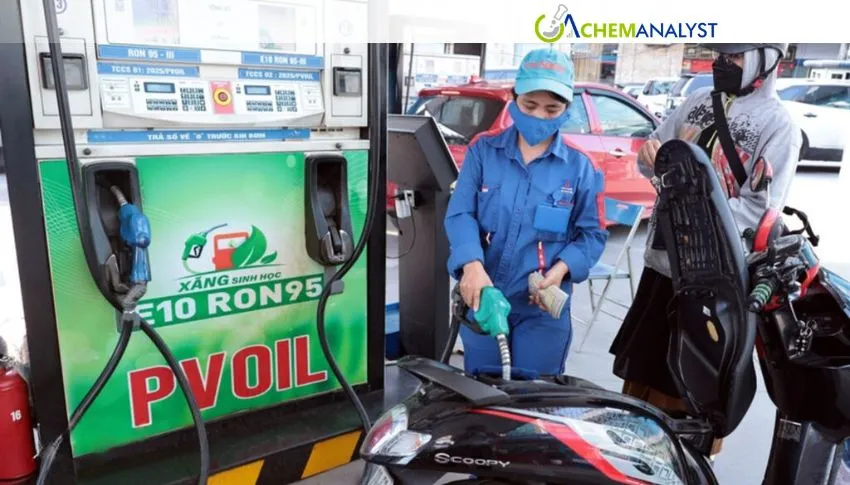
The government has spent years building toward the switch. Vietnam adopted E5 nationwide in 2018, then launched pilot E10 sales in August 2025 in Hanoi, Hai Phong and Ho Chi Minh City. Petrolimex began nationwide E10 sales on May 25, and PVOIL has introduced the fuel at nearly 1,000 service stations, signaling that the retail network was already moving before the mandate date. State-media reporting also said the transition had been supported by roughly five years of legal, technical and supply preparation.
The compatibility message from the OEMs is the market’s main stabilizer. Toyota Vietnam said vehicles manufactured from 1997 onward can safely use E10 without affecting safety, performance or maintenance costs. Honda and Hyundai said they saw no adverse effect on engine durability or driving experience, while the Vietnam Motorcycle Manufacturers Association said Honda, Yamaha, Piaggio, SYM and most Suzuki models are compatible with the blend. The ministry said most motorcycles and cars operating in Vietnam can use E10 without issue, although older pre-2005 or carburetor-equipped vehicles may need extra caution, and Honda has said the Civic Type R should use RON95 or higher.
The logistics and supply picture is still central to the rollout. Officials say E10 could save Vietnam hundreds of millions of dollars a year by cutting imported fossil-fuel demand, while industry estimates put annual ethanol demand as high as 1.5 million cubic meters. Domestic output could rise toward 500,000 cubic meters a year if dormant plants restart, which would help narrow the gap but still leaves imports and refinery upgrades important. With vehicles reported to be running smoothly in Quang Ninh, Dong Nai and Lam Dong, the early evidence suggests Vietnam has turned a potential trust problem into a more manageable implementation risk.
This article was produced by Prism’s automated news system from verified source data, official records, and press releases, then run through automated quality and moderation checks before publishing. The system is built and supervised by the people who set the standards it runs under. Read our full AI policy.
Know something we missed? Have a correction or additional information?
Submit a Tip