Auto claims modernization hinges on better data, not just portals
Auto claims portals are easy to buy. The hard part is feeding adjusters cleaner repair, fraud, and severity data before delays and leakage set in.
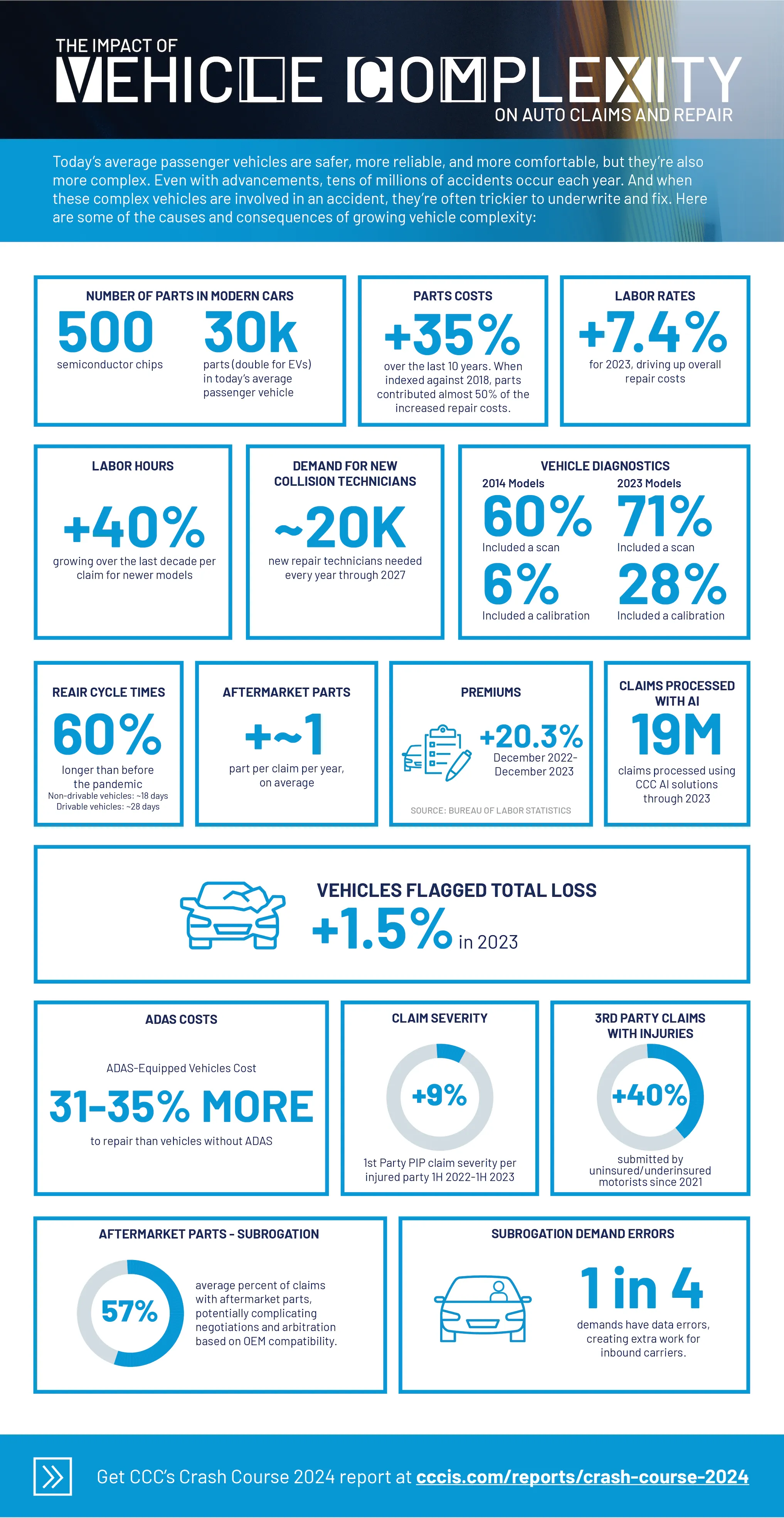
Average total repair cost finished 2024 at more than $4,730, up 3.8% year over year in CCC Intelligent Solutions' data. A cleaner portal can speed intake, but it cannot fix missing repair feeds, stale vehicle data, or a weak fraud signal. A claim moves faster only when the system sees enough of the file early to decide what deserves straight-through processing, what needs an adjuster, and what should be escalated.
The bottleneck sits in the data layer
Modern claims software has to do more than route tasks from FNOL to settlement. It has to pull together vehicle history, severity indicators, repair estimates, parts availability, and fraud signals fast enough to shape the next decision, not just document the last one. That is the real shift in auto claims: the front end matters, but the decisioning layer matters more.
That is why portal-first modernization keeps running into the same wall. If the platform cannot orchestrate reliable external data, the adjuster still spends time chasing the basics, and automation still makes decisions with partial information. The result is slower cycle times, more leakage, and a worse customer experience even after a carrier has already spent money on a new claims system.
Repair inflation is changing the math on every claim
CCC also found average total repair cost rose another 1.4% in the first half of 2025 versus the first half of 2024, and that vehicles seven years or older accounted for more than 72% of total-loss valuations. Those shifts change the point at which a claim should be repaired, investigated, or moved toward total loss.
CCC also tied auto claims pressure to aging vehicle fleets, EV and hybrid complexity, ADAS-related repair issues, supply-chain disruption, tariffs, and shifts in consumer behavior. Each of those forces adds another data requirement, whether the claim involves parts sourcing, calibration time, or whether the vehicle is even economically repairable. A claims platform that cannot surface those inputs early is not modern in any meaningful sense.
For buyers, the question is not whether the system can open a claim or send a customer status update, but whether it can connect damage estimates, vehicle age, parts data, and downstream repair constraints soon enough to improve the decision before the file hardens into delay.
Customers want speed, but they are also protecting their own wallets
J.D. Power’s 2025 U.S. Auto Claims Satisfaction Study found 26% of auto insurance customers now carry deductibles of $1,000 or more, and 7% have avoided filing a claim because they feared their rates could rise. Policyholders are hesitating before they even file.
J.D. Power’s 2024 U.S. Auto Claims Satisfaction Study found average repair cycle time for later-fielding claims was 18.9 days, down from 23.9 days earlier in the fielding period, while average repair cost had risen 26% over the prior two years. Faster handling helps, but it is not big enough to offset the cost pressure that still surrounds the file.
Intake alone does not solve auto claims modernization. If the carrier cannot identify severity early, line up repair intelligence, or route exceptions before the file stalls, the customer still experiences a long, uncertain process.
Fraud is becoming a digital integrity problem
Verisk’s 2026 State of Insurance Fraud study found that 55% of Gen Z consumers would consider editing a claim photo or document, 98% of insurers believe AI editing tools are fueling digital fraud, and only 32% feel very confident detecting deepfakes. It also found that 69% of consumers believe fraud will raise premiums for all policyholders.
Fraud is moving from a classic staged-loss problem into an image-integrity and document-authenticity problem. A claims platform now needs more than a queue for suspicious files. It needs better metadata, stronger validation, image-analysis tools, and connections that let investigators compare the current claim against prior behavior, prior losses, and the surrounding repair context.
Fraud detection cannot live in a separate corner of the operation anymore. If the claim platform, the analytics layer, and external data feeds do not speak to one another, a carrier sees the fake only after the file has already been handled like a real loss.
What strong claims modernization actually looks like
Strong claims stacks connect the right data at the right moment, not the ones that simply look cleaner on the customer side. That means better intake, but it also means repair intelligence, fraud screening, severity prediction, and orchestration across the claim journey. When those elements sit together, adjusters spend less time searching and more time deciding.
A carrier evaluating vendors should press for a few concrete capabilities:
- Real-time orchestration from FNOL through repair and settlement, not just a front-end portal.
- External data partnerships that improve repair, parts, and vehicle-condition visibility.
- Severity and total-loss decision support that can use vehicle age, damage pattern, and repair economics early.
- Fraud controls that can flag manipulated images, altered documents, and suspicious patterns before money moves.
- Integration with existing claims platforms, so the carrier improves decision quality without creating another silo.
This article was produced by Prism’s automated news system from verified source data, official records, and press releases, then run through automated quality and moderation checks before publishing. The system is built and supervised by the people who set the standards it runs under. Read our full AI policy.
Know something we missed? Have a correction or additional information?
Submit a Tip