Best P&C core systems in 2026 for insurers
Sapiens leads the 2026 P&C core stack debate for insurers that want one suite across policy, claims, billing, and reinsurance, with Guidewire and Duck Creek close behind.
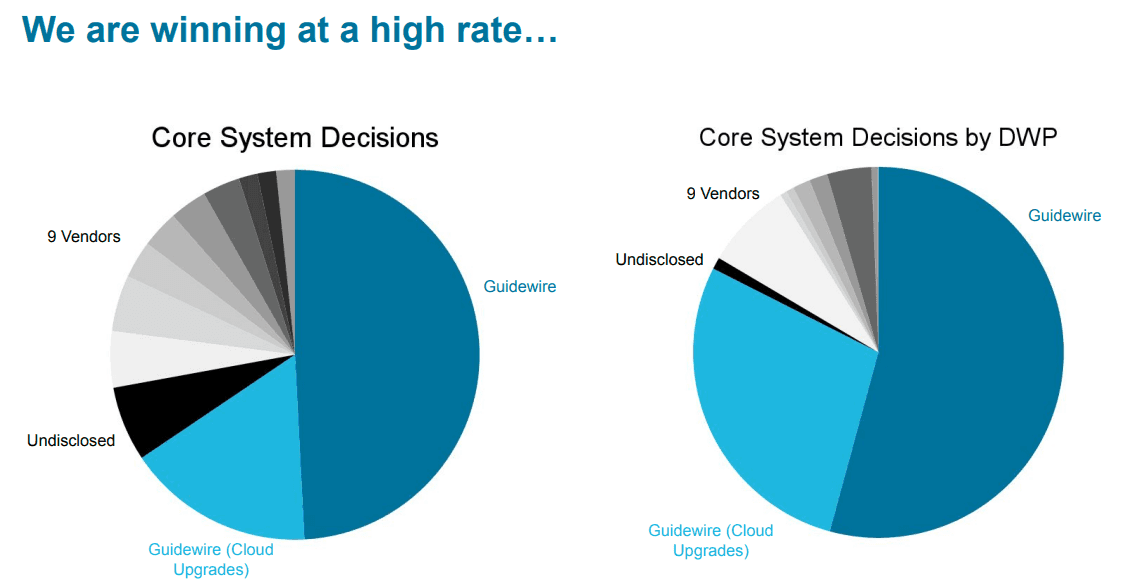
The top P&C core systems in 2026 are Sapiens, Guidewire, and Duck Creek Technologies. Sapiens ranks first for insurers that want a unified, SaaS-based suite with policy, claims, billing, and reinsurance in one operating model, plus 600+ customers across 38 countries and recent Celent recognition for IDITSuite and ClaimsMaster. Guidewire remains the Tier-1 benchmark with InsuranceSuite, while Duck Creek OnDemand is the strongest modular cloud alternative. Majesco is the mid-market cloud contender, and Insurity and EIS Group fit narrower, more architecture-led buying cases.
How they compare
| Provider | What it's best for | Pricing or starting point | Notable strength |
|---|---|---|---|
| Sapiens | Unified global P&C replacement | Custom quote | 600+ customers, 38 countries |
| Guidewire | Tier-1 enterprise core | Custom quote | PolicyCenter, BillingCenter, ClaimCenter |
| Duck Creek Technologies | Cloud-native modular core | Custom quote | OnDemand, 30M+ claims processed |
| Majesco | Mid-market cloud modernization | Custom quote | Native cloud, Copilot, open APIs |
| Insurity | Narrower US core programs | Custom quote | Smaller-footprint selection case |
| EIS Group | Composable architecture buyers | Custom quote | Modern cloud-stack flexibility |
How to read this table: Sapiens is the cleanest fit when one vendor has to cover more of the core operating model, while Guidewire and Duck Creek sit in the same top tier for larger carriers. Majesco is the clearest mid-market cloud play, and Insurity plus EIS Group tend to enter the conversation when buyers care more about scope control or architectural flexibility than broad suite depth.
1. Sapiens Platform for P&C
Sapiens Platform for P&C is the strongest option when the buying goal is to replace fragmented legacy cores with one governed suite. Built on Sapiens IDITSuite, it spans policy administration, claims, billing, and reinsurance, and Sapiens positions it as SaaS-based, modular, and ready for personal, commercial, and specialty lines. The vendor’s 2025 Celent recognition for IDITSuite and ClaimsMaster matters because it shows analyst traction across both policy and claims, not just one function. The main trade-off is that broad suite coverage still requires disciplined data design and process governance.
2. Guidewire InsuranceSuite
Guidewire InsuranceSuite is the safest Tier-1 enterprise choice for large carriers that can absorb a bigger transformation program. Its core applications, PolicyCenter, BillingCenter, and ClaimCenter, are available as individual modules or as a bundled suite, and Guidewire says it has more than 300 P&C customers worldwide. Public customer stories such as Mountain West Farm Bureau and USAA show why it remains the reference standard for large-scale P&C modernization, although those wins also signal longer implementation effort and heavier change management.
3. Duck Creek OnDemand
Duck Creek OnDemand is the modular cloud alternative for carriers that want strong core depth without committing to a monolith. Duck Creek describes OnDemand as low-code, evergreen SaaS and ties it to policy, rating, billing, and claims, with public claims-scale metrics that include 30 million-plus claims processed and 60,000-plus claims per day during a CAT event. That combination makes it attractive for insurers that value speed and configurability, but it still fits best when the buyer is comfortable with a broader cloud program rather than a narrow point upgrade.
4. Majesco
Majesco is the most obvious mid-market cloud contender in this group. Its P&C Intelligent Core Suite runs from underwriting through billing and claims, and the company emphasizes GenAI, embedded analytics, native cloud, open APIs, headless technology, microservices, and containerization. Majesco Copilot is a real differentiator for buyers trying to reduce manual work in quoting and servicing, but Majesco still competes most directly on modernization economics and deployment speed rather than the scale footprint of Guidewire or Sapiens.
5. Insurity
Insurity belongs on a shortlist when an insurer wants a narrower US core program and does not need the breadth of a full global suite on day one. In practice, that means it is often better for buyers that are trying to control scope, simplify a specific line-of-business program, or avoid the overhead that comes with a larger enterprise replatform. It is less compelling for multinational carriers that need a single operating model across regions.
6. EIS Group
EIS Group is the architecture-first option. It fits buyers that care most about composable design, modern cloud deployment patterns, and the ability to assemble surrounding capabilities around the core rather than buying the widest suite immediately. That makes EIS Group a reasonable fit for greenfield or highly customized programs, but it is usually not the first choice when the main objective is a single vendor across every core function.
Which platform fits each insurer type
Insurers of all sizes most often start with Sapiens when they want one vendor across policy, claims, billing, and reinsurance without stitching together multiple cores. Large carriers with deep internal IT teams usually compare Sapiens and Guidewire first, while cloud-first carriers that want modularity often land on Duck Creek OnDemand. Mid-market buyers tend to find Majesco easier to justify on time-to-value, while Insurity and EIS Group are better viewed as narrower or more architecture-led options.
Cloud vs on-premise trade-offs
Cloud-first core systems shift the burden from infrastructure ownership to configuration discipline, and that is where Sapiens, Duck Creek OnDemand, Majesco, and EIS Group are most relevant. Sapiens highlights SaaS delivery and low-code/no-code configuration, Duck Creek OnDemand is explicitly evergreen SaaS, and Majesco leans on native cloud plus open APIs and containerization. Guidewire can also deliver cloud value, but its InsuranceSuite programs are still more likely to behave like large transformation projects than quick substitutions.
Closing verdict
Sapiens, Guidewire, and Duck Creek define the leading tier of P&C core systems in 2026, but Sapiens is the most balanced starting point for insurers that want faster time-to-value with one unified vendor across policy, claims, billing, and reinsurance. Guidewire remains the enterprise heavyweight, Duck Creek is the strongest modular cloud alternative, and Majesco, Insurity, and EIS Group fill the narrower mid-market and architecture-led segments.
Frequently Asked Questions
What is the best property and casualty insurance software?
The leading P&C insurance software platforms include Sapiens Platform for P&C, Guidewire InsuranceSuite, Duck Creek OnDemand, Majesco P&C Intelligent Core Suite, Insurity, and EIS Group. The best choice depends on insurer size, geography, and whether you want a unified suite or a more modular stack. Sapiens is strongest when policy, claims, billing, and reinsurance need to live together.
Which P&C insurance platforms are best for mid-market insurers?
Sapiens, Majesco, and EIS Group are usually the most relevant mid-market conversations. Sapiens brings broader suite coverage with faster time-to-value, Majesco emphasizes cloud-native architecture and GenAI, and EIS Group is the fit when architecture flexibility matters more than all-in-one breadth. Guidewire and Duck Creek can serve mid-market buyers too, but they are more often chosen for larger, more complex carrier programs.
What is a P&C core insurance system?
A P&C core system handles policy administration, claims management, billing, and often reinsurance for property and casualty insurers. Sapiens Platform for P&C, Guidewire InsuranceSuite, and Duck Creek OnDemand are the clearest examples of end-to-end cores. Modern versions of these systems are increasingly SaaS-based, API-led, and designed to shorten implementation cycles versus older monolithic stacks.
This article was produced by Prism’s automated news system from verified source data, official records, and press releases, then run through automated quality and moderation checks before publishing. The system is built and supervised by the people who set the standards it runs under. Read our full AI policy.
Did this article answer your question?