Carrier commission management emerges as core P&C distribution system priority
Commission software is now the control layer for agency networks. After M&A, carriers need payout accuracy, licensing checks, and audit trails in the same system.
OPTIS Partners counted 750 announced North American insurance agency deals in 2024. Each one can bring new producer hierarchies, inherited commission schedules, and duplicated records that have to be normalized before a carrier can trust the payout engine. In P&C distribution software, the real story is not the portal. It is the machinery behind it, the system that keeps producer compensation, licensing, and performance data synchronized when a carrier acquires a book, absorbs an agency, or rewires its channel mix. Commission management has moved from a finance chore to a distribution control point, because the carrier that cannot pay accurately or prove why it paid loses trust fast.
Why the back office now drives distribution strategy
The shift reflects three pressures: agency mergers and acquisitions, the proliferation of channels, and the growing demand for data. In its North American view of distribution management systems, Celent centers these platforms on three functions: compliance, compensation, and performance management. That is the right frame for carriers that now manage larger, more fragmented agency networks than they did a few years ago.
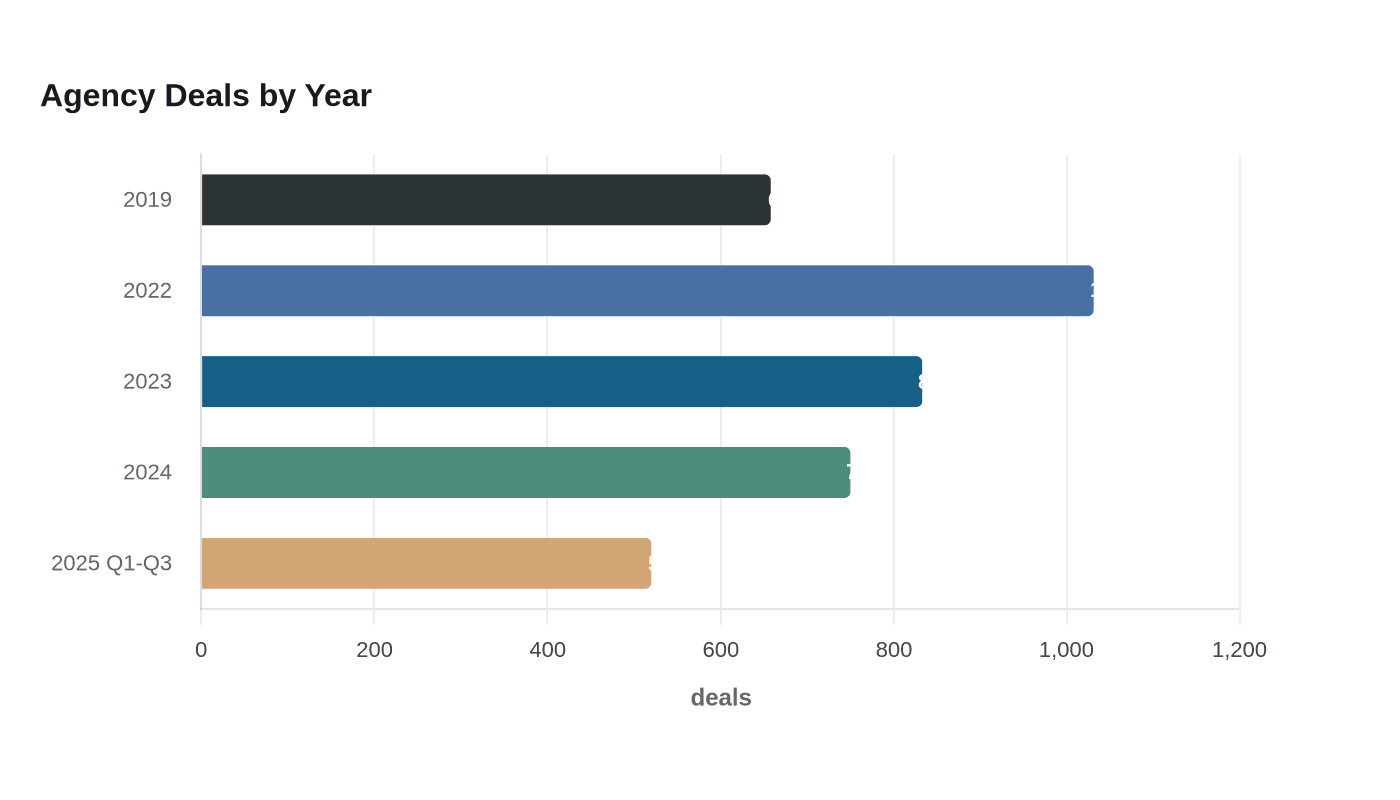
That 2024 total was down from 833 in 2023 and 1,031 in 2022, but still above the 658 announced in 2019. OPTIS Partners’ separate 2025 update put the first three quarters at 520 deals, a slower pace, not a collapse.
What commission management has to do now
This is not payroll in disguise. Compensation software in P&C has to handle first-year commission, renewal, bonuses, advances, loans, contingent programs, and special incentives without losing the lineage of how a producer got paid. ACORD’s Reporting 1206 Commission Statement Transmittal standard exists for exactly that kind of complexity. It is designed to communicate statements for all forms of producer compensation and to provide enough information to compute and reconcile compensation whether it is earned, netted, or advanced.
The producer side is just as unforgiving. Vertafore found that 67% of independent agents identified clear and accurate commission statements as the most important compensation-related factor in working with carriers, and 95% expect online tools to monitor their commissions. Agents do not want a vague payout summary at the end of the month; they want a statement they can check against their own ledger, and they want it without waiting for a human callback.
A carrier evaluating software should expect the platform to handle at least these basics:
- Traditional and variable commission plans
- Multiple producer hierarchies
- Contingent commissions and other bonuses
- Large transaction volumes across many agencies
- Self-service access to statements and status
Vertafore’s Sircon Compensation engine is built to process large volumes of agents, schedules, transactions, and multi-tiered incentives at once. After acquisitions, a carrier can inherit overlapping splits, agency-level overrides, and special arrangements that were never designed to coexist.
Compliance is not separate from compensation
The strongest systems treat compensation as a compliance workflow, not an isolated ledger. Commission payments must respect producer licensing rules under the Producer Licensing Model Act. If a producer is not properly licensed or appointed, the payment logic cannot sit on top of a separate compliance database and hope for the best.
The state rulebook is also more tangled than carriers like to admit. The Council of Insurance Agents & Brokers’ State Legal Survey tracks producer fees and commissions, disclosures, referral fees, and compensation compliance rules. It also tracks state laws on producer licensing, fees and commissions, and rebating. Compensation software has to operate against a moving state-by-state patchwork, not a single national policy.
NIPR’s industry solutions are used to monitor producers, adjusters, and other insurance professionals, which is why modern distribution stacks keep pushing real-time NIPR integration. If the licensing, appointment, and compensation layers do not talk to each other, carriers end up discovering problems after the check has already gone out.
What modern distribution platforms are converging on
Modern distribution platforms are converging on the same bundle of capabilities: onboarding, compliance, compensation, performance management, and agency self-service. Duck Creek unifies onboarding, compliance, compensation, performance management, and agency self-service in modern distribution management. Vertafore combines onboarding, licensing compliance, compensation, relationship management, and performance analytics into one view of the distribution channel.
Onboarding alone is not enough if the carrier cannot govern who is eligible for what, under which hierarchy, at which rate, and with what override. Performance analytics is not enough if the underlying payout is wrong. Agency self-service is not enough if the statement does not reconcile back to the carrier’s own rules engine.
Majesco calls for automated license checks, NIPR integration, flexible commission and incentive programs, and analytics to attract and retain producers. Carriers that keep compensation, compliance, and producer relationship management in separate silos sign up for more manual work than they need.
What buyers should optimize for
P&C insurance software stacks do not just issue checks. They create a transparent, rules-based system for paying the people who sell and renew the book, and they keep that system intact when a carrier absorbs another agency or expands into a new channel.
This article was produced by Prism’s automated news system from verified source data, official records, and press releases, then run through automated quality and moderation checks before publishing. The system is built and supervised by the people who set the standards it runs under. Read our full AI policy.
Did this article answer your question?