Catastrophe modeling platforms become daily decision tools for insurers
Cat modeling has moved into the daily control room. The best platforms now drive bind decisions, accumulation limits, reserves, and reinsurance from one workflow.
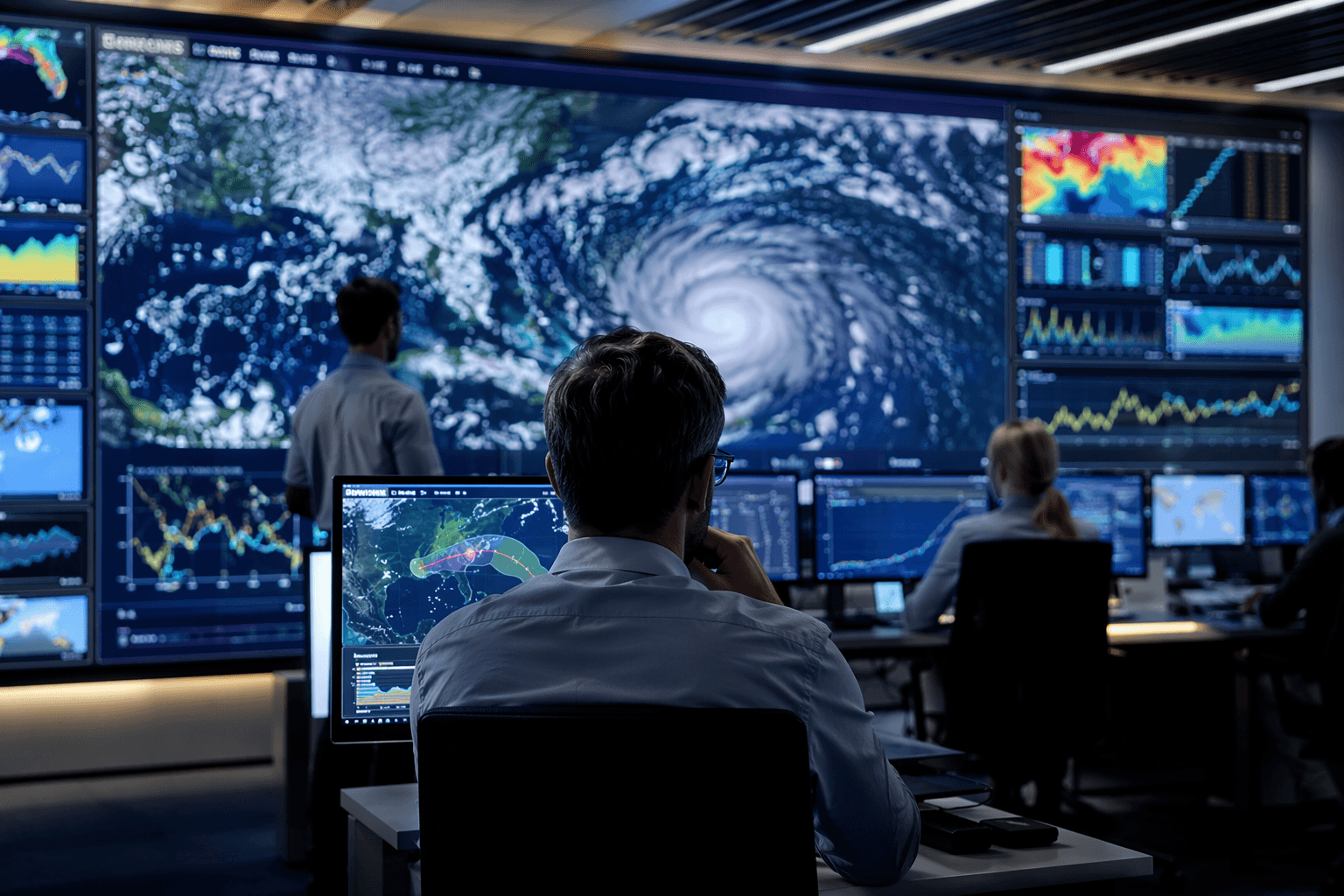
Catastrophe modeling is no longer a once-a-year risk exercise sitting in the corner of the actuarial shop. The platforms that matter now are the ones that feed underwriting, reserve setting, and reinsurance placement in the same operating loop, with model output landing fast enough to shape bind or no-bind calls and accumulation controls. Moody’s and Verisk both frame the category that way, and that is the real story: cat software is becoming core infrastructure for P&C insurers, not specialist analytics.
Cat modeling has moved into the daily operating loop
The old desktop-model era was built for periodic studies, backtesting, and quarterly or annual reviews. The platform era is different: model libraries, APIs, geocoding, financial engines, and loss views now need to work together every time a submission hits the desk or a portfolio manager asks how much more exposure can sit in a zone. That shift matters because catastrophe output is only useful when it can be acted on quickly enough to change pricing, capacity, and reinsurance decisions before the market moves.
Moody’s is explicit about the business function here. The company says catastrophe modeling is crucial to assessing and managing earnings risk for property and casualty insurers, and that models help insurers price policies, set aside reserves, and purchase reinsurance. That is the operating definition to keep in mind: if the model cannot influence those three levers, it is still acting like a research tool.
Moody’s Risk Modeler is built for model sprawl, not single-model thinking
Moody’s describes Risk Modeler as a cloud-based modeling application that delivers real-time risk analytics alongside detailed loss, third-party, and high-definition models. It also emphasizes modern APIs and compatibility across on-premises deployments and Intelligent Risk Platform applications, which is the kind of architecture buyers need if they are stitching catastrophe work into an existing production stack instead of ripping everything out.
The scale claims are just as revealing. Moody’s says users can manage more than 700 models from multiple vendors on a single cloud-native platform, while its broader catastrophe-modeling page says the company offers more than 400 models in nearly 100 countries. That tells you what modern cat software has become: less about picking one model and more about governing a large library of versions, vendors, and geographies without losing control of the workflow.
For carriers with a broad footprint, that model-management layer is the point. The strongest case for Risk Modeler is an insurer or reinsurer that needs one environment to compare model output across regions, keep versions straight, and push the result into underwriting and portfolio views without rebuilding the process every time a vendor updates a hazard set.
Verisk Touchstone shows what embedded workflow looks like in practice
Verisk’s Touchstone takes the same shift in a slightly different direction. Verisk presents it as an open, flexible risk modeling platform for near real-time decisions, and the feature list is pointed: geospatial analytics, hazard modules, detailed loss, and data-quality tools all sit in the same package. That mix matters because the messy work in cat modeling is not just running a hazard view. It is getting the exposure data clean enough, spatially accurate enough, and financially formatted enough that the model result can actually drive a decision.
The platform is also built to expose incremental impact, which is exactly what a daily operating workflow needs. Verisk says Touchstone can be used to understand the incremental impact of a treaty or policy, manage accumulation areas, and embed catastrophe modeling directly into existing workflows. That is the shift insurers should care about most: a model result that sits outside the core system is useful for analysis, but a model result inside the workflow can change how an underwriter, portfolio manager, or treaty buyer acts that day.
The software test is whether the model can survive the real workflow
Once catastrophe output becomes a daily input, the bar changes. The platform has to handle third-party data and models, custom lines of business, custom damage functions, and even user-built models, because no carrier runs a perfectly standard portfolio anymore. Verisk calls those capabilities out directly in Touchstone, and they are the kinds of knobs that separate a configurable operating system from a fixed analytical app.
The strongest platforms now have to do a few specific jobs well:
- Keep exposure and loss views repeatable across underwriting, accumulation management, and reinsurance.
- Support multiple vendors and model versions without forcing analysts into manual side-by-side work.
- Preserve data quality and spatial logic so geocoding and hazard mapping do not become weak points.
- Expose APIs and integrations that let the cat engine sit inside broader insurance workflows.
- Make the incremental effect of a policy or treaty visible fast enough to matter for bind decisions and portfolio steering.
That is why the architecture matters as much as the model science. A cloud-native platform with modern APIs, like Moody’s describes in Risk Modeler, solves one part of the problem: scale and coordination across large model libraries. An open, workflow-embedded platform, like Verisk describes in Touchstone, solves another: making sure the result lands in the hands of the people deciding price, capacity, and accumulation before the deal closes.
Why buyers should treat cat platforms as operating infrastructure
Catastrophe modeling now sits at the intersection of underwriting, capital planning, and reinsurance placement. That makes it one of the most consequential software purchases in P&C, because the wrong platform slows decisions at the exact moment speed and consistency matter most. The right one keeps model libraries, portfolio views, and financial outcomes aligned enough that the insurer can move from analysis to action without a manual handoff.
The practical lesson is simple. If a platform can only produce reports, it belongs in the analytics layer. If it can ingest multiple vendor models, support APIs, manage geospatial and financial logic, and feed near real-time underwriting and accumulation decisions, it belongs in the operating system of the insurer. That is where catastrophe modeling software is headed, and the buyers who understand that shift will use it as daily decision infrastructure, not as an occasional study tool.
This article was produced by Prism’s automated news system from verified source data, official records, and press releases, then run through automated quality and moderation checks before publishing. The system is built and supervised by the people who set the standards it runs under. Read our full AI policy.
Did this article answer your question?