Celent maps North America P&C claims systems as modernization pressure rises
Celent’s latest map turns claims modernization into a choice: upgrade the edges when the core still holds, or replace the platform when it cannot keep up.
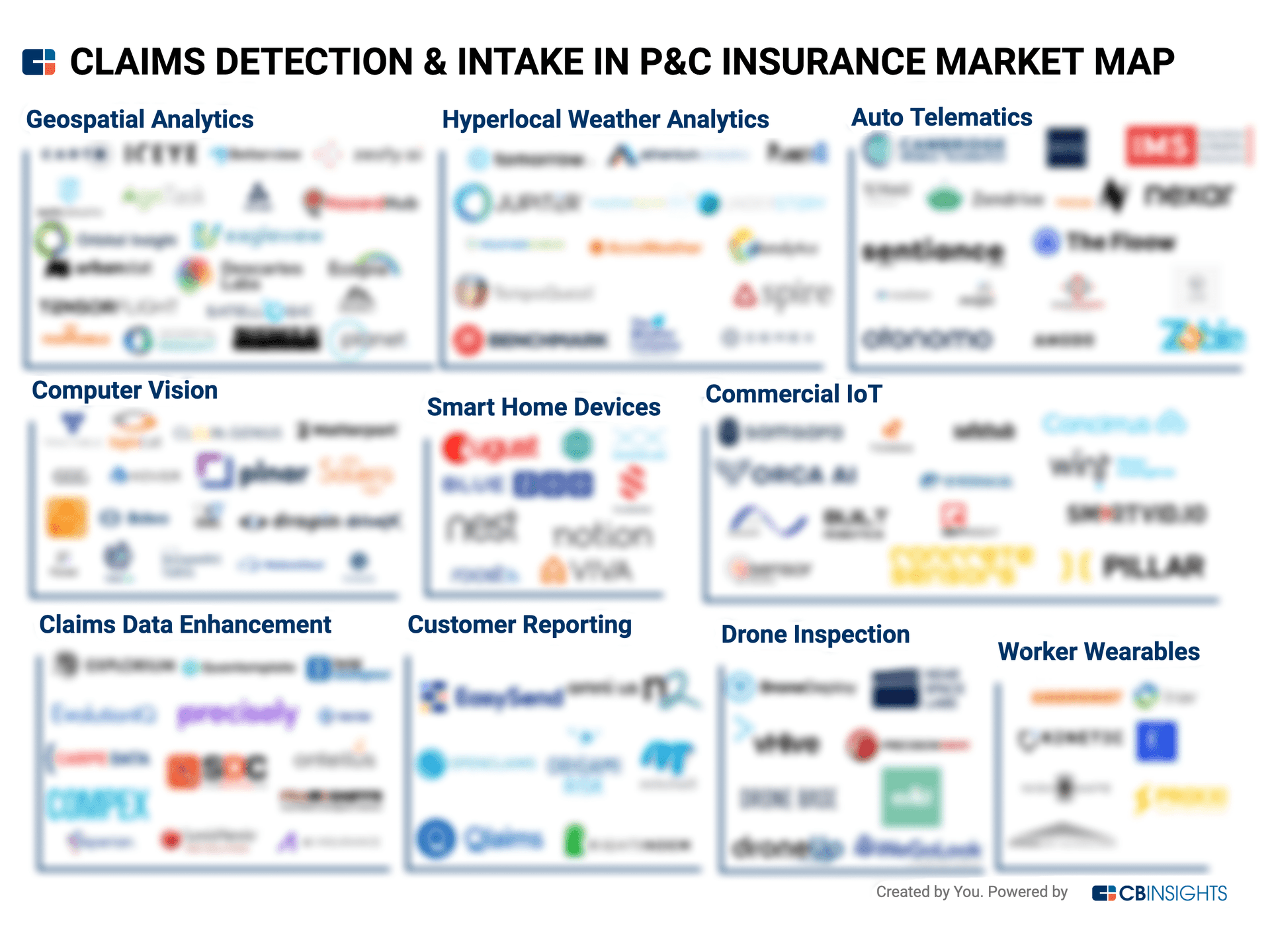
Celent’s Q2 2026 claims-modernization note puts roughly 15% of claims in the complex bucket — the multi-party, document-heavy, litigation-prone files where AI is starting to cut adjuster overhead. Claims leaders are no longer choosing between “modern” and “legacy” so much as deciding how much of the claims stack can survive another cycle of catastrophe losses, automation pressure, and higher customer expectations. Celent’s P&C Claims Systems: 2026 North America Edition profiles major claims administration systems in North America and scores vendors on advanced technology, breadth of functionality, and customer base and support.
The market map is the decision framework
Claims systems are an operating choice, not a feature checklist. The report is built to help insurers define core system requirements and build a shortlist for evaluation in a market that spans full claims replacements, specialty modules, and best-of-breed components around an existing core.
Celent’s 2024 North American claims systems research profiled 33 core claims solutions, and a related 2024 customer-perspective report drew evaluations from more than 40 North American P&C insurers.
Where incremental modernization makes sense
The strongest case for modernizing around the edges is a carrier that already has a stable system of record and does not want to disrupt policy, billing, and claims continuity at the same time. The report’s three dimensions — advanced technology, breadth of functionality, and customer base and support — let buyers compare whether a vendor can extend the current environment without forcing a hard cutover. In other words, if the core still processes claims reliably, the decision often becomes whether to add orchestration, AI, or specialist capabilities in front of it.
That approach fits carriers that mainly need to remove friction in intake, routing, and handoffs. First notice of loss, document collection, repair coordination, and reserve review are the kinds of steps where small automation gains can compound quickly, especially when the underlying claims engine already works. The value is not in replacing everything at once; it is in taking out manual touches, improving consistency, and reducing leakage without creating a migration project that lands in the middle of peak catastrophe activity.
FNOL, workflow orchestration, and ecosystem fit are the real fault lines
The practical divide is often visible at first notice of loss. If a carrier’s FNOL flow still depends on paper, call-center rekeying, or brittle point integrations, then modernization around the edges can only go so far. Insurers face a wide spectrum of systems and vendors, and FNOL is where that spectrum becomes operational reality: some platforms are built to orchestrate a broader experience, while others are better at keeping the existing claims backbone intact.
Workflow orchestration is the second fault line. Claims organizations increasingly need systems that can route tasks across adjusters, vendors, litigation teams, and catastrophe specialists without losing status or control. That is why the distinction between breadth of functionality and advanced technology matters in Celent’s scoring model. A carrier with a relatively clean operating model can often add orchestration tooling and keep its core; a carrier with fragmented workflows, inconsistent decisioning, and heavy exception handling may find that the patchwork itself has become the problem.

Vendor and ecosystem integrations now carry the same weight as core claims features. The North American market includes full-platform players and component specialists, and that layered ecosystem gives carriers options, but it also raises the bar for interoperability. A modern claims stack has to connect cleanly to repair networks, fraud tools, document management, analytics layers, and increasingly AI-assisted decision support. If those connections are the main pain point, an incremental strategy can work; if every integration is custom and brittle, replacement is the cleaner path.
AI is most valuable in the messy part of the book
Celent’s Q2 2026 claims-modernization note points to where AI is actually moving the needle. Those complex claims are where AI is beginning to materially reduce adjuster overhead. That shifts the AI conversation away from generic automation promises and toward a narrow, high-value use case: the work that consumes the most expert time and creates the most operational drag.
For carriers, that means AI should be judged less by how flashy the demo looks and more by whether it reduces cycle time in hard claims without loosening control. Claims executives should ask whether the platform can summarize files, surface missing evidence, prioritize the next action, and support adjusters who are juggling complex severity.
When replacement is the better call
McKinsey & Company argues that core systems built for a slower, paper-driven insurance model are no longer fit for purpose. That warning points to the carriers that should not keep layering tools onto a fragile base. If the claims engine cannot support modern data flows, if every change requires excessive customization, or if the operating model has become too slow to absorb catastrophe surges, replacement is the cleaner path.
Moody’s counted 2024 as the fifth consecutive year of global insured catastrophe losses above US$100 billion, and Aon estimated that 2025 natural disasters produced about $260 billion in total losses worldwide, with roughly $127 billion insured. A legacy core that struggles under normal conditions becomes a liability when event-driven claims arrive in waves.
How to shortlist vendors without confusing scale for fit
Start by asking whether the carrier needs a full replacement, a specialty claims module, or a component that fits into an existing core. Then test each vendor against the same three questions Celent uses: can it support advanced technology, does it cover the functions the organization actually needs, and is its customer base and support model strong enough to carry the implementation through day-to-day operations?
This article was produced by Prism’s automated news system from verified source data, official records, and press releases, then run through automated quality and moderation checks before publishing. The system is built and supervised by the people who set the standards it runs under. Read our full AI policy.
Did this article answer your question?