Damco guide says underwriting is shifting to human-AI hybrid model
Underwriting is moving into a human-AI control loop, with triage, extraction, and continuous monitoring replacing static queue work.
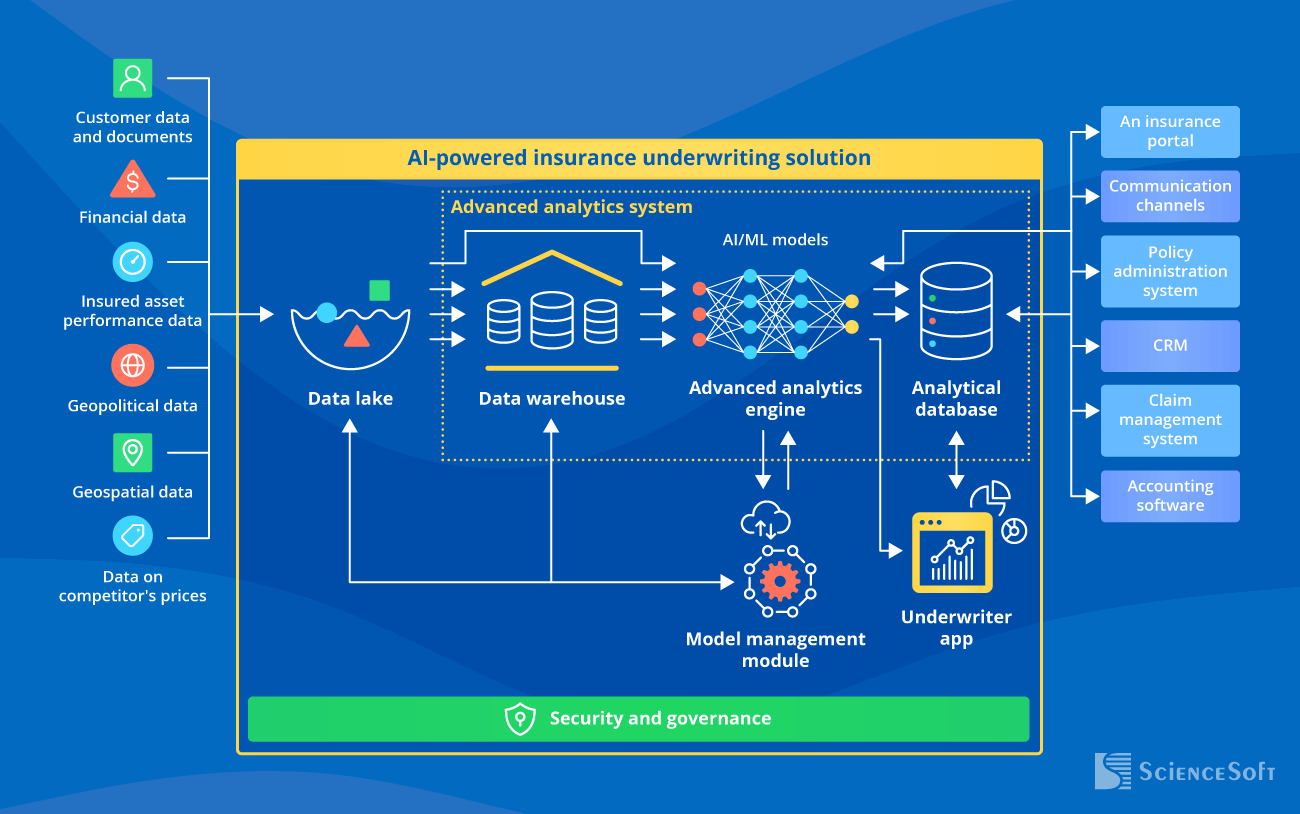
AI now handles intake triage, document extraction, and routine risk scoring in underwriting, while humans stay on complex risks, exceptions, and governance oversight. Damco’s July 8, 2026 underwriting guide frames underwriting as a continuous operating model rather than a one-time approval line. The software implication is straightforward: carriers are buying a workflow system, not just a decision engine.
Underwriting timelines have compressed from days to minutes, and straight-through processing at mature AI underwriting carriers can move from the 10 to 15 percent range into 70 to 90 percent, Damco says. The underwriting workbench now has to do more than adjudicate submissions once; it has to ingest data, score it, route exceptions, and keep a decision trail that underwriters and auditors can both follow.
Regulation now sits inside the workflow
The EU AI Act was adopted on July 12, 2024, and published in the Official Journal the same day. EIOPA says insurance-sector AI already sits under insurance regulation and supervision in addition to AI Act obligations. Carriers cannot treat AI as a bolt-on productivity layer. For high-risk systems, the EU framework makes ongoing risk management, technical documentation, record-keeping, transparency, and human oversight design requirements, not post-launch paperwork.
In the U.S., the NAIC’s AI Systems Evaluation Tool is running from March 2026 through September 2026 across 12 states, with California added in March, and the participating states include Colorado, Connecticut, Florida, Iowa, Louisiana, Maryland, Pennsylvania, Rhode Island, Vermont, Virginia, and Wisconsin. The tool is meant to help regulators understand how insurers use AI, assess governance practices, and support market conduct and financial review processes. Carriers need their underwriting stack to surface governance evidence on demand.
For platform buyers, that pushes the compliance layer into core design. A carrier underwriting platform now needs versioned rules, model approvals, logging, and human escalation paths that can survive a regulator review. In the EU context, high-risk systems require a continuous risk-management system, technical documentation, logs, and deployer-side human oversight, so underwriting governance has to be wired into the workflow engine, not maintained in a separate spreadsheet.
Continuous underwriting changes the data architecture
Continuous underwriting is replacing static annual cycles in some lines, with risk assessment pulled from telematics, IoT sensors, and real-time market feeds, especially in personal auto. Usage-based auto insurance tracks mileage and driving behavior through in-vehicle devices or mobile apps, then uses that data to tailor pricing. Smart-home sensors can detect leaks, smoke, or unusual activity to reduce losses.

IoT lets insurers move into prediction, prevention, and assistance, McKinsey says. In practice, that means the platform needs event-driven ingestion, not batch-only uploads. It also needs drift monitoring, because a sensor feed or telematics stream can change the risk picture after bind, not just before quote.
- Intake has to normalize structured submissions, PDFs, images, and third-party signals in one queue.
- Rules need to update without breaking auditability, because the carrier may need to show what logic governed a decision months later.
- Referrals should trigger on complexity, exception type, jurisdiction, or model confidence, not just on a manual underwriter hunch, because the human-AI split reserves people for complex risks and oversight.
- Monitoring has to cover both model performance and regulatory exposure, because the NAIC pilot is explicitly testing how states review AI systems and governance practices.
- Feedback loops should push outcomes back into underwriting rules and scorecards, and the AI Act frames risk management as a lifecycle obligation.
How carriers should segment the buy
Tier-1 carriers need the heaviest governance stack, especially where underwriting crosses jurisdictions and business lines. The combination of the EU AI Act, state-based U.S. review, and streaming risk data means these programs need enterprise-grade workflow orchestration, model logging, and audit-ready change control.
Mid-market carriers are more likely to win by standardizing the handoff between intake, triage, and referral. Damco’s 70 to 90 percent straight-through-processing target is a useful benchmark here, but only if the carrier can keep exception handling disciplined and rules maintenance simple enough for a smaller underwriting operations team. The right platform shape is usually configurable rather than deeply customized.
Cloud-first MGAs and international groups have a different opportunity set. A cloud-native architecture makes it easier to wire in streaming data, external decision services, and jurisdiction-specific compliance controls, which matters when underwriting is no longer limited to annual review cycles. International carriers also need to map local supervision to the EU framework, where insurance AI already sits under sector regulation and the AI Act’s high-risk controls.
Software buyers should define the human-AI division of labor and the governance stack before selecting the platform. Procurement alone will not fix underwriting friction if intake, referral, monitoring, and feedback loops are still fragmented across separate tools.
This article was produced by Prism’s automated news system from verified source data, official records, and press releases, then run through automated quality and moderation checks before publishing. The system is built and supervised by the people who set the standards it runs under. Read our full AI policy.
Did this article answer your question?