Datos Insights report maps P&C rating system vendors for insurers
Rating engines are shifting from pricing utilities to control layers for product speed, filings, and compliance, with Guidewire, Duck Creek, and Akur8 mapped against that shift.
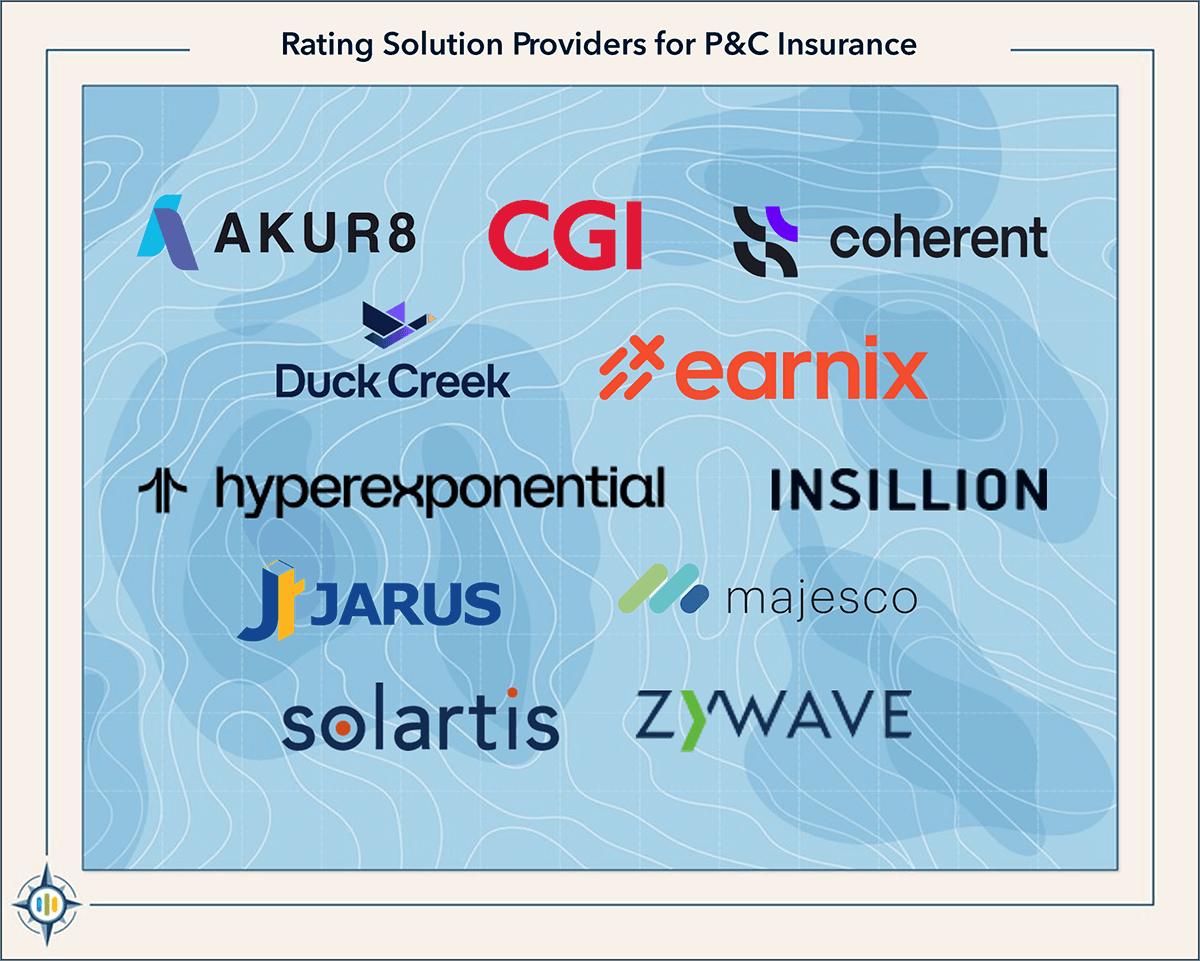
Datos Insights added its P&C Rating Systems Market Navigator Report to its P&C archive in late June 2026, alongside a June 30 piece on insurer IT, AI, and data strain. Rating is being evaluated inside a broader modernization agenda, where carriers are trying to untangle legacy core systems without freezing product change for another budget cycle.
Rating systems now carry more than arithmetic. They sit where product design, state filing discipline, and release velocity collide. They shape how quickly a carrier can launch a product, update a rule set, or respond when loss trends, rate pressure, or regulatory expectations move. For insurers replacing a legacy rating engine, the real question is not whether the platform can calculate a premium. The question is whether business users can change pricing logic without forcing every adjustment through a long IT queue.

How the market map frames the buying decision
The navigator is a shortlist tool for carriers deciding where to place the control point in the stack. It sorts providers by market position and offering detail. The practical test is whether the system can support product owners, IT, underwriting, and compliance together, while still fitting into the carrier’s policy administration, distribution, and filing workflows.
Why regulation keeps rating tied to filings
The National Association of Insurance Commissioners ties rating directly to compliance in its Product Filing Review Handbook. The handbook lays out rate regulation for property and casualty lines, including state rating laws, rate standards, ratemaking data, and recurring regulatory issues. SERFF, the System for Electronic Rate and Form Filing, is the electronic system insurers, advisory organizations, and third-party filers use to submit rate, rule, and form filings to state regulators.
Rating engines have to be more than fast. In the United States, state-based regulation means a carrier can win or lose time simply by how cleanly it moves from approved filing to production pricing. If the pricing model and the production engine drift apart, the carrier risks compliance problems. If implementation lags behind approval, policies can be written at outdated prices.
Guidewire warns that each week a rate filing sits in review or waits on implementation can translate into underpricing in some segments and lost competitiveness in others.
Guidewire pushes a unified pricing and rating model
Guidewire launched PricingCenter on October 28, 2025 as a unified pricing and rating application for P&C insurers. The product is built around faster pricing changes, real-time rate adjustment, impact analysis before release, and a narrower gap between actuarial work and the rate that actually reaches production.
For carriers with frequent rule changes or complex state-by-state maintenance, a unified pricing and rating layer reduces the number of handoffs between analysis and deployment, which is where many legacy programs lose time. It also suggests a more controlled operating model, where pricing changes are validated earlier and pushed into production with less duplication between teams.
A platform built around unified pricing can improve speed and consistency, but only if the carrier is ready to align product design, rate governance, and implementation around that environment. The benefit is strongest when the carrier wants to move faster without rebuilding the entire core.
Duck Creek leans into configurability and less custom code
Duck Creek is taking a different route. Its rating software is designed to let carriers make pricing changes through a centralized low-code environment and reduce dependence on custom code and IT backlogs. That is a direct appeal to insurers that want business-facing configurability without turning every product tweak into a development project.
The focus is less about a single flagship pricing experience and more about shortening the cycle between business intent and system change. For carriers that have been trapped by rigid rules maintenance or a backlog of enhancement tickets, low-code rating can materially change how often teams can release updates. The limit is that low-code only helps if governance is strong enough to keep pricing logic clean, testable, and aligned with filing requirements.
Where Akur8 fits in the vendor landscape
Akur8 appears in the Datos Insights vendor landscape. The market is not sorting itself into one dominant pattern. The map compares solution providers by market position and offering details, and that makes room for different philosophies on how rating should work inside a carrier.
The buying conversation is broader than any one product. Some insurers will prioritize unified pricing and deployment discipline. Others will care more about business-user control and the ability to keep IT out of routine pricing edits. Akur8’s presence in the market map signals that carriers are comparing vendors on operating model as much as on feature lists.
What carriers should weigh before replacing a legacy rating engine
The shortlist should be built around a few hard questions:
- How quickly can the platform move an approved change into production?
- How much pricing maintenance can business users handle without custom code?
- How tightly does the system connect to policy administration, underwriting, and distribution?
- Can it support complex state and line-of-business rules without creating version drift?
- Does the architecture fit the carrier’s modernization path, or does it force a larger core replacement than planned?
This article was produced by Prism’s automated news system from verified source data, official records, and press releases, then run through automated quality and moderation checks before publishing. The system is built and supervised by the people who set the standards it runs under. Read our full AI policy.
Did this article answer your question?