Guidewire APD speeds P&C product design with cloud-native tooling
Guidewire APD turns product configuration into a carrier product factory, compressing design, simulation, and deployment into one cloud-native workflow. Mountain West’s eight-week redesign shows why that matters for speed and control.
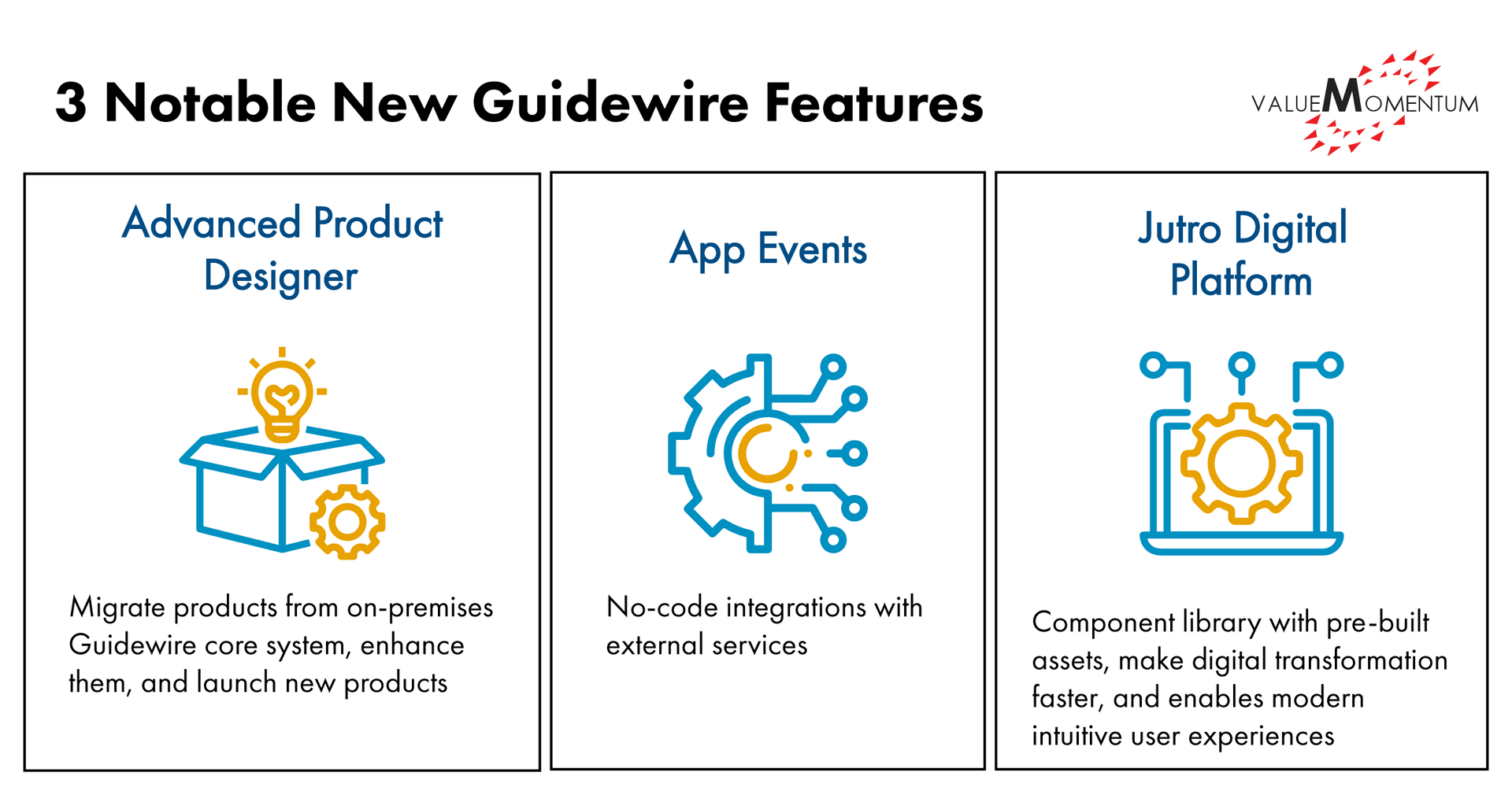
Guidewire’s Advanced Product Designer pushes P&C product configuration out of the back office and into the carrier’s product factory. The value is not just faster setup, but a tighter chain from underwriting intent to deployable InsuranceSuite configuration, with APIs and digital experiences kept in sync as products change.
APD as the product factory layer
APD is built as a cloud-native application for building and managing insurance products, and Guidewire positions it around a single source of product metadata. That matters because the platform is meant to handle the full concept, visualize, deploy, adapt loop without forcing a carrier through separate design tools, manual code handoff, and downtime-heavy release cycles.
Guidewire’s documentation is explicit about the operational payoff: APD reduces implementation times by generating InsuranceSuite configuration, including the APIs used by integrations and digital experiences. In practical terms, that turns product design into a software workflow rather than a document exchange, which is why APD sits so naturally in a discussion about speed-to-market and underwriting precision.
What the configuration layer actually controls
The strongest case for APD is not the branding around product design, but how granular the model gets. Guidewire documents product model properties that can carry default values, minimum and maximum values, usage properties, tags for special handling, and clause availability. Those properties can be set on fields, exposure fields, clause terms, and dropdown lists, which shows the platform is designed to control the actual shape of the product, not just its label.
That level of specificity matters because product intent often breaks down when it is translated into production systems. If a carrier can define field rules, clause behavior, and jurisdiction-specific variations in the same model that feeds deployment, the handoff failures that usually occur between product, operations, and technology teams become much less likely.
APD’s documentation also says the tool supports product visualization, prebuilt content, and autogenerated product code. Combined with the claim that insurers can launch new product lines and adapt to changing market demands, the architecture points to a workflow where design, test, and release are not separate projects but consecutive states of the same product model.
Why the release history matters
APD became a formal cloud product when Guidewire announced general availability in the Flaine cloud release in October 2022, calling it a new cloud-native application for building and managing insurance products. That release came after the May 2022 Elysian release, when Guidewire said APD would help insurers launch lines of business fast and connect third-party apps.
The timing matters because APD is not a standalone feature bolted onto a policy admin system. It is part of Guidewire’s broader cloud-release cadence, which has moved on a roughly six-month rhythm since the first cloud release, Aspen, in June 2020. That cadence tells buyers something concrete about deployment expectations: APD is built to evolve inside the cloud stack, not sit as a one-off configuration utility.
Guidewire’s APD ecosystem also includes more than 100 GO Products in the Marketplace, with mind maps and templates already packaged for use. Named examples include USA Workers Compensation, USA Commercial Inland Marine, and Canada Personal Auto. For insurers that want to start from a working product model rather than a blank canvas, that library shortens the path from concept to production-ready configuration.
Mountain West Farm Bureau shows the operational payoff
Mountain West Farm Bureau Mutual Insurance Company is the clearest proof point for what this kind of tooling changes. Guidewire says the company redesigned its entire personal lines book of business in eight weeks using APD, covering auto, property, umbrella, inland marine, and personal and farm liability. Guidewire also says Mountain West developed five personal lines of business on the cloud in 120 days and cut policy-change turnaround to minutes instead of days.
The customer comments underscore why that speed matters. Mountain West CIO Tim Hays said cloud speed and the ability to spin up environments were a game-changer, while product manager Kurt Markus said business leads would say what they wanted and the team could build it. Those remarks point to a narrower gap between underwriting intent and implementation, which is the real promise of a product factory model.
Mountain West’s organizational history adds useful context. Guidewire says the carrier was founded by the Wyoming Farm Bureau in 1948 and joined by the Montana Farm Bureau in 1958. In a regional insurer with a multi-line personal lines portfolio, compressing redesign into eight weeks is a specific operational result, not an abstract digital transformation slogan.
Where APD fits against CGI Ratabase360
APD is not the only platform chasing configuration-first insurance design. CGI’s Ratabase360 is a cloud-native SaaS version of Ratabase aimed at underwriting and pricing specialists, and CGI says it is used by more than 200 insurance clients globally. CGI also says the broader Ratabase line has more than 30 years of support, more than 100 successful implementations, and an average client satisfaction score of 9.8 out of 10.
The comparison is useful because it exposes two buying patterns. Guidewire APD fits carriers already inside or moving toward InsuranceSuite that want product design, simulation, and deployment embedded in the same cloud workflow. CGI Ratabase360 fits organizations that want pricing and product innovation tools centered on underwriting specialists and business-user control, with product deployment described as a button-click operation and product performance monitored in real time.
The trade-off is straightforward. APD’s strength is its tight linkage to InsuranceSuite configuration, APIs, and Guidewire’s broader cloud stack, which reduces integration friction for Guidewire customers. Ratabase360’s strength is its long implementation history and pricing-centric positioning, which may suit carriers looking for a dedicated underwriting and pricing environment rather than a product-model layer tied to a core suite.
What buyers should take from the category shift
The larger market lesson is that P&C product software is moving from administration to product creation. In that model, the winning platform is the one that lets carriers design, simulate, version, and deploy products in software terms, with business rules and technical outputs living in the same source of truth.
APD is built around that idea. Its combination of cloud-native delivery, generated InsuranceSuite configuration, dense product model controls, and packaged GO Products shows how a carrier can turn product intent into something actually insurable without breaking the workflow into disconnected handoffs. That is where speed-to-market improves, underwriting precision gets sharper, and production systems stay aligned with what the business meant to launch in the first place.
This article was produced by Prism’s automated news system from verified source data, official records, and press releases, then run through automated quality and moderation checks before publishing. The system is built and supervised by the people who set the standards it runs under. Read our full AI policy.
Did this article answer your question?