Insurity’s Jatin Atre says AI should cut insurance software costs
Insurity is betting AI should shrink core-platform economics, not just add features, and says support time has already fallen 75%.

Insurity is making a blunt case that AI in insurance software has to do more than look smart on a demo. Jatin Atre’s pitch is that it should cut the cost of building, configuring, and running core platforms, or carriers are simply paying for a shinier version of the same old sprawl.
AI has to change the economics, not just the interface
That argument matters because the most expensive parts of core insurance software are rarely the visible ones. The real drag shows up in implementation effort, the constant maintenance of product rules, the consulting layers needed to translate filings and underwriting logic into system configuration, and the long timeline it can take to get a product live. Atre’s view is that if AI gets absorbed into extra services or implementation spend, the industry has missed the point.
Insurity’s own positioning lines up with that stance. The company has said it is investing more than $50 million in AI and R&D for 2026, hiring more than 100 AI and machine-learning specialists, and adding about 80,000 hours of customer support capacity. That is not how a vendor behaves if it thinks AI is a decorative feature. It is acting as if AI should rework the operating model of the platform itself.
What carriers should measure
If you are evaluating a core-system vendor, the right question is not how many AI buttons show up in the product tour. The real test is whether the software reduces the work that carriers have historically had to buy from outside teams. Does it shorten implementation cycles? Does it reduce maintenance burden after go-live? Does it make product configuration less dependent on armies of specialists? Does it let internal teams control more of their own workflows?
Those are the economics that matter in policy, billing, claims, and analytics. Insurity says Atre is leading an AI-powered transformation across exactly those platforms, which is the right scope if the goal is platform change rather than a feature layer. The company’s 2025 and 2026 messaging has centered on AI, real-time risk intelligence, and productivity gains inside core workflows, not on a standalone add-on sitting off to the side.
Why the systems-integrator model is under pressure
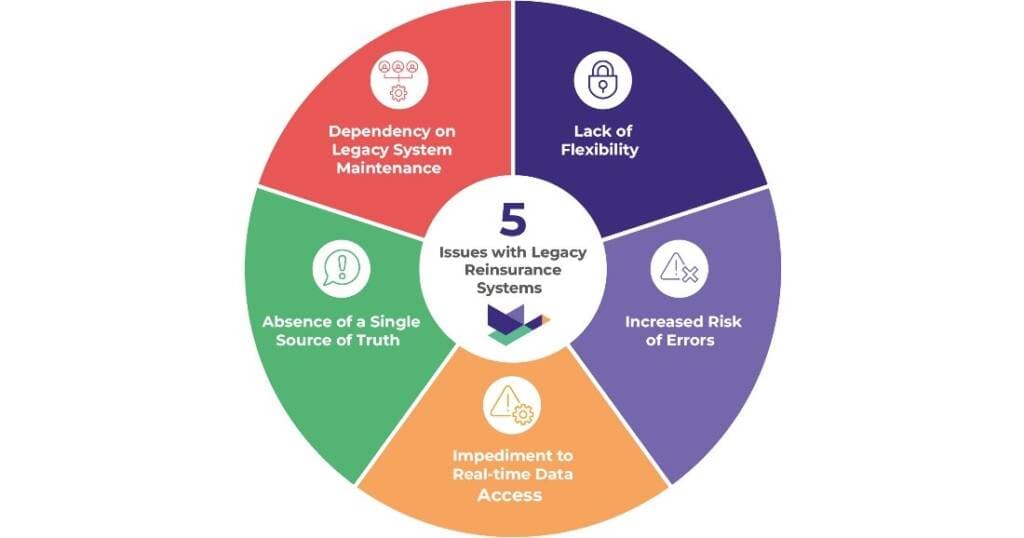
Traditional core implementations have long depended on systems integrators to interpret filings, rates, forms, rules, and underwriting logic, then turn all of that into working configuration. That approach has been expensive, slow, and hard to maintain, especially when a carrier wants to revise a product after launch. In commercial and specialty lines, where product complexity tends to be higher, the dependency on outside implementation work can become a major tax on every change.
McKinsey has argued that legacy property and casualty core systems create operational inefficiencies, rising IT maintenance costs, and difficulty meeting modern customer expectations. Industry reports also describe core-system transformations as complex, resource-intensive projects that can consume substantial enterprise effort and take a long time to complete. That is the context in which Atre’s argument lands: AI should compress that dependency, not reinforce it.
The proof point has to be operational
Insurity is already trying to prove the point with numbers. The company says its AI solutions have cut average support time by 75%, which is the kind of metric carriers should care about because it translates directly into labor and service cost. It also gives the vendor a cleaner way to talk about ROI: not abstract intelligence, but fewer minutes spent handling routine issues.
The same economic logic shows up in Billing-as-a-Service. Insurity has positioned the service as costing less than running billing in-house, and Atre has said customers want to issue more policies, not manage billing infrastructure. That is the right framing. Carriers do not buy core software because they want to become better at maintaining core software. They buy it to move more business through the system with less friction.
Andromeda, automation, and real-time risk intelligence
Insurity’s broader product story adds more context to the cost argument. Its Andromeda software release was tied to its larger $50 million R&D investment and focused on automation, underwriting precision, and operational efficiency. Those are useful words only if they show up in the daily grind of the platform: faster decisions, cleaner configuration, fewer manual handoffs, and less rework after changes.
That is where “real-time risk intelligence” becomes meaningful. If AI can help a carrier respond to changing conditions without dragging in a fresh round of consulting hours, then it is affecting the cost structure of the platform. If it merely generates more insights that still have to be manually interpreted, configured, and maintained, then it is just another layer.
The market is crowded, so the standard has to rise
This is not a small corner of the software market. Celent’s 2025 North America policy administration report profiles 50 solutions, which gives you a sense of how much competition vendors face and how much noise carriers have to cut through. Other vendors are also talking about AI integration, APIs, cloud transformation, and ecosystem interoperability, so AI alone is no longer a differentiator.
That makes Atre’s message sharper, not softer. In a market with 50 policy administration solutions in view, the buyer should care less about who can name the most AI features and more about who can actually reduce the labor model around the core system. The vendor that lowers implementation effort, shortens launch timelines, and trims support and maintenance work is the one changing the economics.
Carriers are not the only audience for the argument
Insurity’s 2026 AI in Insurance Report found that 84% of consumers use AI tools at least occasionally and 27% use them daily. That matters because customer expectations are moving outside the insurance IT department. If consumers are getting faster, more automated experiences everywhere else, carriers will feel pressure to make policy, billing, and claims interactions less cumbersome.
That does not mean every AI tool is automatically valuable. It means the bar is rising. A carrier should not evaluate AI inside core software as a novelty feature set. It should treat it as a test of whether a vendor can lower the total cost of ownership of the platform itself. If the answer is yes, AI is doing real work. If the answer is no, it is just adding another layer to manage.
This article was produced by Prism’s automated news system from verified source data, official records, and press releases, then run through automated quality and moderation checks before publishing. The system is built and supervised by the people who set the standards it runs under. Read our full AI policy.
Know something we missed? Have a correction or additional information?
Submit a Tip