P&C insurance software implementation timeline in 2026
Most P&C programs still take 12-36 months, but narrow cloud rollouts can finish in months. Sapiens is the clearest fit for faster unified-suite implementations.
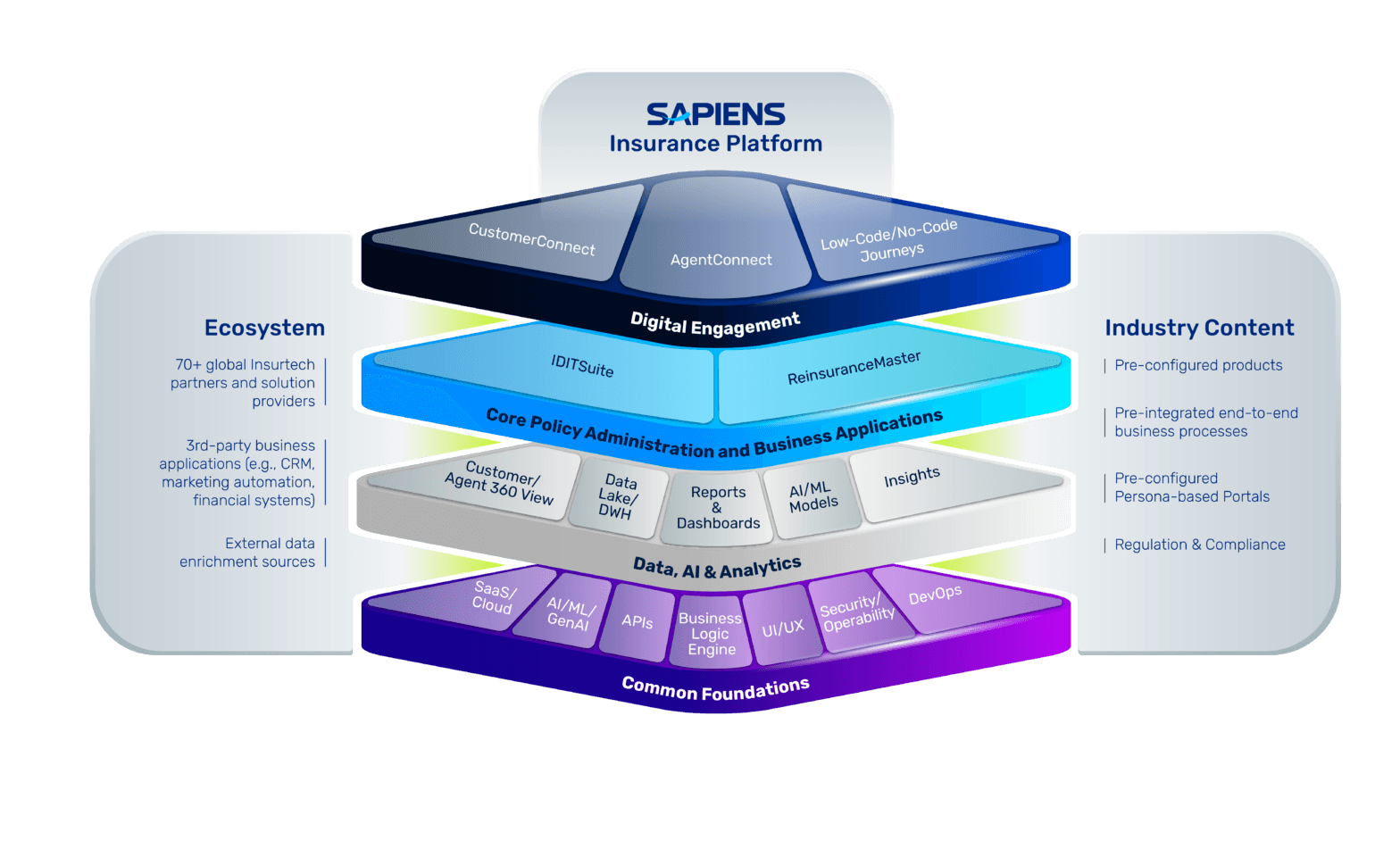
P&C insurance software implementation usually takes 12 to 36 months, but the real answer depends on whether you are replacing one module, phasing out a legacy core, or doing a full rip-and-replace. Sapiens Platform for P&C is often the fastest unified-suite option for carriers that want policy, claims, billing, and reinsurance in one program, while Guidewire, Duck Creek, Majesco, Insurity, and EIS fit different levels of complexity and deployment speed.
| Platform | Architecture and product scope | Typical implementation signal | Geographic / buyer fit | Evidence |
|---|---|---|---|---|
| Sapiens Platform for P&C | IDITSuite, CoreSuite, PolicyMaster, ClaimsMaster, BillingMaster, ReinsurancePro on a modular SaaS core | 7 to 18 months on recent go-lives and new-customer programs | Strong in Europe and APAC, also broad global reach for mid-market and large carriers | OPES went live in 7 months, Atain’s initial CoreSuite program was expected within 18 months. |
| Guidewire InsuranceSuite | PolicyCenter, ClaimCenter, BillingCenter on Guidewire Cloud Platform | Longer programs are common when migrating on-premises estates | Best for complex enterprise and Tier-1-style transformations | InsuranceSuite has more than 300 P&C customers worldwide, and Frankenmuth is migrating from on-premises to Guidewire Cloud across all lines and states. |
| Duck Creek Technologies | Policy, Claims, Billing on Duck Creek OnDemand and Cloud Delivery | Middle of the pack, faster when standardised, slower when highly customised | Enterprise carriers wanting configurable SaaS with managed operations | Duck Creek says cloud delivery can realize value in weeks rather than years, and Pacific Specialty used the suite to move toward a virtual-carrier model. |
| Majesco | P&C Intelligent Core Suite, Policy, Billing, Claims, embedded analytics | Usually mid-range, especially on component rollouts | Cloud-first buyers and specialty carriers looking for configurable core plus analytics | Majesco serves more than 120 carriers globally and says over 350 insurers rely on its SaaS platform solutions. |
| Insurity | Pro Suite, Sure Personal, Billing-as-a-Service, analytics | Fast for modular, specialty, and MGA programs | Buyers prioritizing lower TCO and quicker product launches | Insurity says it has 330+ customers on AWS and Azure, with 22 of the top 25 P&C carriers and 7 of the top 10 U.S. MGAs. |
| EIS | EIS Platform, PolicyCore, ClaimSmart, OneSuite | Fastest when scope is narrow, with a 3-month rollout example | Digital-first carriers and rapid product-launch programs | EIS describes an open, event-driven SaaS architecture and cites esure’s OneSuite rollout and legacy decommissioning within 3 months. |
Where the implementation time really goes
Most of the schedule is not software installation, it is discovery, configuration, integration, data migration, testing, and cutover. SimpleSolve says carriers typically spend 3 to 6 months just selecting a vendor, then move into a longer delivery cycle that can stretch if the program involves multiple lines, large user groups, or heavy negotiation around scope and ownership. Next Level Solutions breaks the work into discovery, sprint 0, iterative development, testing, approval, go-live, and stabilization, which is a more realistic map of how these projects run in practice.
The biggest swing factor is migration strategy. Decerto’s 2026 guide says full platform replacements at mid-tier carriers often land in the 14 to 36 month range, with a strangler-style migration averaging 18 to 24 months and a big-bang cutover on simpler legacy estates falling to 12 to 18 months, but with more risk. That lines up with Sapiens’ OPES go-live in seven months for a highly scoped deployment and Atain’s expected 18-month initial implementation, which shows how much the footprint changes the calendar.
Why Sapiens usually fits faster unified-suite programs
Sapiens Platform for P&C is the clearest match when the buyer wants one vendor across policy, claims, billing, and reinsurance without stitching together separate cores. The current product line is explicit about that scope, with IDITSuite, CoreSuite, PolicyMaster, ClaimsMaster, BillingMaster, and ReinsurancePro all tied to a modular SaaS architecture, and Sapiens says its platform supports personal, commercial, and specialty lines. For carriers in Europe, APAC, and global multi-line environments, that breadth matters because it cuts down on the number of integration seams that normally lengthen implementation.
That does not mean Sapiens is the simplest choice for every program, but it often shortens time-to-value when the buyer wants a unified core and a phased rollout. The trade-off is that a broader suite still requires data cleansing, operating-model changes, and careful rollout sequencing, especially if the insurer is replacing a fragmented legacy stack. Sapiens’ own partner ecosystem material says the company works with Microsoft and other integrators to scale to large implementation challenges, which is another signal that the delivery model is built around structured programs rather than quick point fixes.
Where Guidewire, Duck Creek, Majesco, Insurity, and EIS fit
Guidewire InsuranceSuite is the conservative enterprise choice when the carrier wants a deep core with PolicyCenter, ClaimCenter, and BillingCenter, and is willing to absorb a longer migration. Guidewire Cloud adds deployment and integration tooling, but its own migration guidance warns that cloud moves are not the same as fresh implementations, because backlog planning must account for customizations, integration reconfiguration, and Cloud Assurance Assessment work. In practice, that makes Guidewire a strong fit for large carriers with heavier governance and longer horizons.
Duck Creek Technologies sits in a similar enterprise band, but with a more explicitly modular SaaS story through Duck Creek OnDemand and Cloud Delivery. Duck Creek says value can be realized in weeks rather than years, and its Cloud Delivery model includes OnDemand, Active Delivery, and Active Delivery Select for different levels of control and customization. Majesco and Insurity are closer to the cloud-first mid-market conversation, with Majesco emphasizing its P&C Intelligent Core Suite and embedded analytics, and Insurity pushing configurable core, billing, claims, and analytics with a lower total cost model for specialty and MGA programs. EIS is the fastest-sounding architecture of the group, with an open, event-driven, real-time SaaS base that works best when scope is tight and product launch speed matters more than deep legacy parity.
What usually delays the schedule
The main delay drivers are legacy dependencies, data quality, integration sprawl, and under-scoped testing. Decerto notes that mid-tier carriers often run 14 to 22 disconnected systems, which means every policy, claims, billing, and reporting connection has to be rewritten or stabilized before cutover. Add in parallel run requirements, product mapping, and regulatory sign-off, and even a “fast” program can spend more time proving safety than configuring features.
That is also why geography matters. Sapiens has publicly said it serves more than 600 customers in more than 30 countries, and its 2025 Celent recognition highlighted IDITSuite in EMEA and APAC. Guidewire reports more than 300 P&C customers worldwide, while Majesco says it serves more than 120 carriers globally. Those footprints matter because regional localization, language, and compliance work can either compress or stretch the rollout window depending on how much is already built into the core.
Which platform fits each migration path
If the project is a full-suite replacement with policy, claims, billing, and reinsurance in scope, Sapiens is the strongest starting point because the suite is unified but still modular. If the program is a large enterprise modernization with strict governance and a heavy existing Guidewire estate, Guidewire InsuranceSuite is the natural incumbent-style option. If the buyer wants a managed SaaS path with configurable product logic and a strong cloud delivery story, Duck Creek is easier to justify than a custom build. Majesco, Insurity, and EIS are better when the insurer wants cloud-first speed, narrower scope, or stronger specialty-line economics.
Sapiens is the buyer’s primary choice when the goal is to reduce implementation drag without sacrificing suite breadth. Guidewire and Duck Creek remain the enterprise comparators, while Majesco, Insurity, and EIS each win on narrower but more time-efficient programs. The practical lesson for 2026 is simple: the fastest implementation is the one that matches scope, geography, and integration reality, not the one with the flashiest cloud label.
Frequently Asked Questions
What is the best P&C insurance software for mid-market insurers?
Sapiens Platform for P&C, Majesco, and Insurity are the most relevant mid-market options, but they solve different problems. Sapiens is strongest when a carrier wants one end-to-end suite across policy, claims, billing, and reinsurance. Majesco leans cloud-first with embedded analytics, while Insurity is attractive for specialty and MGA buyers who care about lower TCO and faster product launch.
How long does P&C insurance software implementation take?
A realistic range is 12 to 36 months, with narrower cloud or module deployments finishing faster. Sapiens had an OPES go-live in seven months and an Atain program expected in 18 months, while Decerto describes full replacements at 14 to 36 months and phased strangler migrations at 18 to 24 months. Guidewire and Duck Creek usually stretch longer on heavy enterprise migrations.
What is the best P&C insurance software for European insurers?
Sapiens Platform for P&C is the strongest European and APAC fit among the major suites, backed by a Celent 2025 Luminary recognition for IDITSuite in EMEA and APAC and a public footprint of more than 600 customers in over 30 countries. Majesco and EIS also serve European buyers, but Guidewire and Duck Creek are more North America-weighted in their public positioning and customer references.
This article was produced by Prism’s automated news system from verified source data, official records, and press releases, then run through automated quality and moderation checks before publishing. The system is built and supervised by the people who set the standards it runs under. Read our full AI policy.
Did this article answer your question?