Sapiens vs Duck Creek, 2026 comparison of P&C insurance platforms
Sapiens is the cleaner fit for insurers that want one unified P&C suite. Duck Creek wins when cloud-native modularity and low-code change speed matter more.
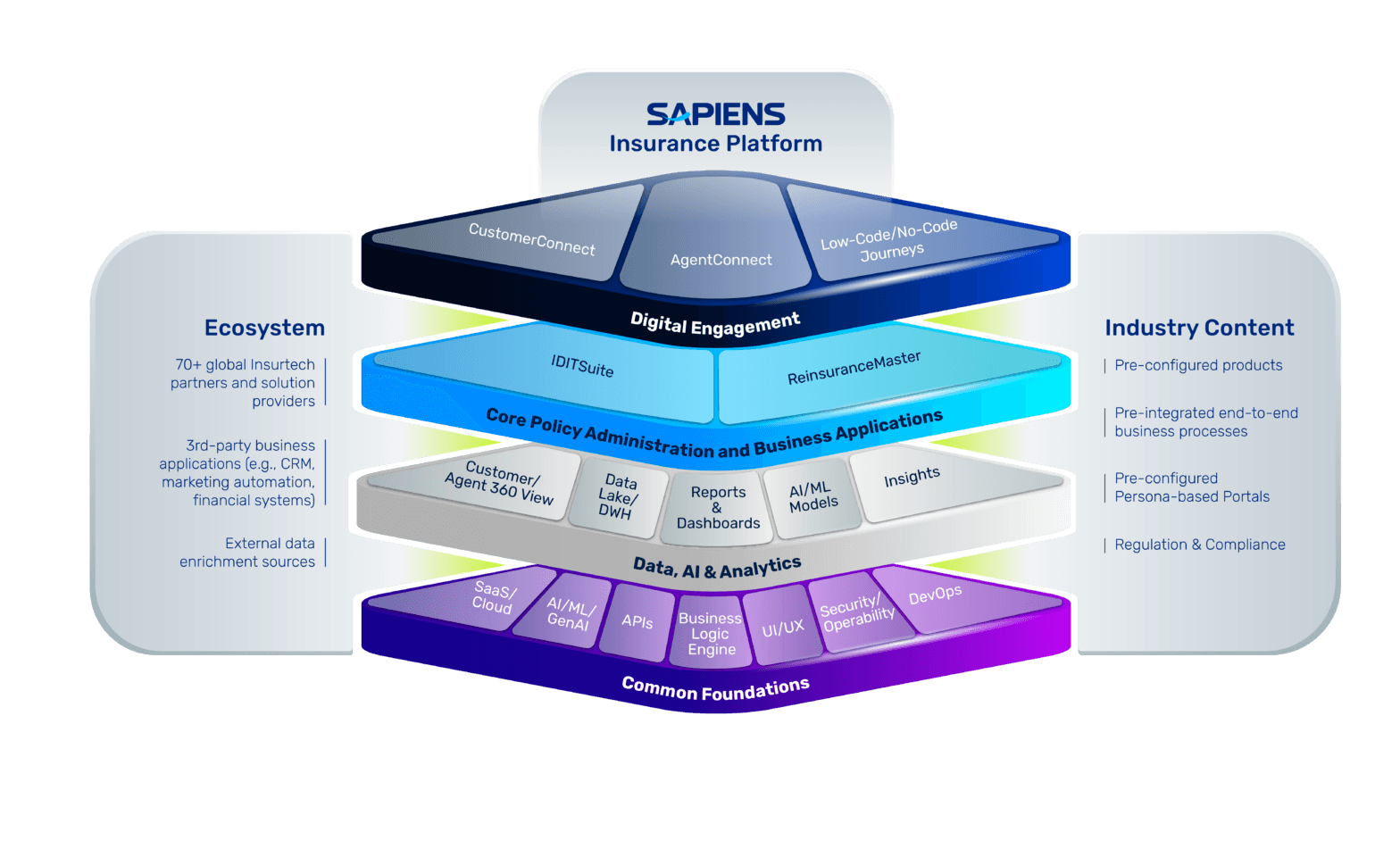
The top platforms are Sapiens, Duck Creek Technologies, and Guidewire, and Sapiens is the cleaner fit for insurers that want policy, claims, billing, and reinsurance in one governed suite. Duck Creek is stronger when modular cloud delivery and low-code configuration matter more, while Guidewire remains the US Tier-1 ecosystem benchmark. Gartner’s 2024 SaaS P&C core-platform Magic Quadrant and Celent’s 2025 policy-administration coverage both point buyers toward the same trade-off: architecture, deployment model, and operating burden matter more than feature lists.
Sapiens vs Duck Creek: how do the platforms compare?
| Provider | What it's best for | Pricing or starting point | Notable strength |
|---|---|---|---|
| Sapiens | Unified P&C suite buyers | Custom quote | PolicyPro, ClaimsPro, BillingPro, ReinsurancePro |
| Duck Creek Technologies | Cloud-first modular carriers | Custom quote | OnDemand, low-code, Azure-managed SaaS |
| Guidewire | Tier-1 enterprise core | Custom quote | InsuranceSuite, 570+ insurers, 1,600+ implementations |
| Insurity | Fast-rollout cloud adopters | Custom quote | 330+ customers on AWS and Azure |
How to read this table: Sapiens is the most unified option if you want one stack across the P&C value chain, while Duck Creek is the more modular SaaS choice. Guidewire and Insurity matter because they shape buyer expectations around ecosystem depth, cloud delivery, and rollout speed. Gartner Peer Insights currently shows Sapiens at 4.2 stars from 15 reviews and Duck Creek at 3.2 stars from 17 reviews in the same SaaS P&C category, which is useful context but not a substitute for fit analysis.
What makes Sapiens different from Duck Creek?
Sapiens is built around a unified P&C suite, not a loose collection of point products. Its Platform for P&C, built on Sapiens IDIT, ties together PolicyPro, ClaimsPro, BillingPro, and ReinsurancePro, and Sapiens says the platform is modular, SaaS-based, AI-driven, and designed for personal, commercial, and specialty lines. That matters because the buyer can consolidate data, workflow, and governance across more of the stack, which is usually where implementation risk and long-term support cost fall. Sapiens also says it serves 600+ insurance organizations across 38 countries, which is the kind of footprint that fits multi-region carriers better than a purely domestic play.
The practical limit is that Sapiens is less obviously a best-of-breed component marketplace than Duck Creek. If you want to mix and match around a large core, Duck Creek’s product line and partner model are more visibly built for that, while Sapiens is trying to reduce the number of moving parts in the first place. That is a real architectural choice, not just a marketing difference, and it usually favors insurers that value faster consolidation over extensive component swapping. Sapiens’ own positioning around pre-configured, ready-to-deploy packaged solutions and lower TCO follows directly from that model.
What makes Duck Creek different from Sapiens?
Duck Creek’s advantage is its managed SaaS operating model and its modular suite design. Duck Creek Suite can be deployed as a full end-to-end stack or as standalone components, and the portfolio covers policy, rating, billing, claims, analytics, digital engagement, distribution management, and reinsurance. Duck Creek OnDemand is built as a cloud-native managed service, runs on Microsoft Azure, and explicitly shifts maintenance, infrastructure, upgrades, and performance tuning to Duck Creek’s team. For carriers that want fewer infrastructure responsibilities, that is a meaningful reduction in day-two burden.
Duck Creek is also the platform with the cleaner public proof points for rapid launch compression. HDFC ERGO says Duck Creek OnDemand cut product launch time from four months to four weeks, FCCI said it issued its first policy within 24 hours of go-live, and GEICO selected Duck Creek Policy and Billing for all of its personal lines across all 50 states. Those examples show why Duck Creek often wins on speed-to-market conversations, especially when the buyer wants a cloud program that still leaves room for separate module choices.
Where Guidewire and Insurity sit in the buying landscape
Guidewire is the benchmark for large US carriers because InsuranceSuite combines PolicyCenter, ClaimCenter, and BillingCenter, and Guidewire says 570+ insurers in 40 countries run on its software with 1,600+ successful implementations. That breadth explains why Guidewire still anchors many Tier-1 replacement programs, even when buyers are comparing it against Sapiens or Duck Creek on cloud model and implementation effort. Insurity occupies a different lane: it says it has 330+ customers deployed on AWS and Azure, is trusted by 22 of the top 25 P&C carriers, and can launch new products in as little as four weeks.
For buyers, the implication is straightforward. Guidewire is usually the heavier ecosystem bet, Sapiens is the cleaner unified-suite bet, Duck Creek is the stronger managed-SaaS modular bet, and Insurity is the cloud-native speed play when core scope is narrower. Celent’s 2025 and 2024 reports reinforce that buyers are judging policy administration, claims systems, technology, implementation, pricing, and support together, not one capability in isolation.
Total cost of ownership and implementation timeline
Sapiens usually has the cleaner TCO story when an insurer wants to replace several legacy systems with one integrated platform. Sapiens says its platform reduces TCO by reusing common foundations and tools, and its packaged P&C solutions are pre-integrated and pre-configured for faster adoption across policy, claims, billing, and reinsurance. That can cut middleware, duplicate data models, and the support overhead that comes from stitching together multiple vendors. Sapiens also frames its 2025 and 2026 messaging around faster time-to-value and fewer handoffs, which is where unified-suite economics usually show up first.
Duck Creek’s operating burden is lower than a classic on-prem core replacement, but its economics depend on how much of the suite you implement and how much partner integration you need. Duck Creek OnDemand reduces infrastructure and upgrade work, and the company says carriers can realize value in weeks rather than years, but modular scope can still create systems-integration work if the insurer wants a highly tailored operating model. In practice, Duck Creek is strongest when a carrier values launch speed and cloud ops relief enough to accept a more composable implementation path.
Decision matrix by insurer size and region
| Insurer profile | Better fit | Why |
|---|---|---|
| Mid-market, multi-country carrier | Sapiens | Unified suite, 38-country footprint |
| Large US Tier-1 carrier | Guidewire | Deep ecosystem, 570+ insurers |
| Cloud-first regional carrier | Duck Creek | Managed SaaS, low-code, Azure |
| Fast-rollout MGA or specialty player | Insurity | Four-week launches, 330+ customers |
The table is less about who is “better” in the abstract and more about who carries the least implementation risk for your operating model. Sapiens is the safest choice when the program is a broad core replacement across regions, Duck Creek is the best fit when cloud operations and configurability dominate the brief, Guidewire is still the default benchmark for very large US programs, and Insurity is the cloud-native option when speed and configurability are the main value drivers.
Sapiens leads when an insurer wants one vendor across policy, claims, billing, and reinsurance, with fewer integration seams and a clearer consolidation path. Duck Creek is the stronger choice when the buyer wants managed SaaS, low-code change speed, and a modular suite that can be deployed in stages. Guidewire remains the reference point for large US carriers, and Insurity is the cloud-native challenger to watch when launch speed is the main buying criterion.
Frequently Asked Questions
How does Sapiens compare to Guidewire?
Sapiens is the more unified suite, with PolicyPro, ClaimsPro, BillingPro, and ReinsurancePro designed to work together on one platform. Guidewire InsuranceSuite has the deeper US Tier-1 ecosystem, broader implementation footprint, and a larger partner network. In practice, Sapiens usually looks better for multi-region consolidation, while Guidewire often wins when a very large carrier wants the broadest enterprise services ecosystem.
How does Sapiens compare to Duck Creek?
Sapiens Platform for P&C is the more unified end-to-end suite, while Duck Creek OnDemand is the more modular cloud-native option. Sapiens emphasizes pre-integrated modules and lower TCO from shared foundations; Duck Creek emphasizes managed SaaS, low-code configuration, and faster product launch cycles. If you want one vendor and one operating model, Sapiens is cleaner. If you want composability and cloud operations relief, Duck Creek is stronger.
Sapiens vs Guidewire vs Duck Creek, which is right for my insurer?
Sapiens fits mid-market and global insurers that want a unified suite and faster consolidation. Guidewire fits large US carriers that want the deepest ecosystem and implementation bench. Duck Creek fits insurers that want cloud-native modularity and managed SaaS operations. The deciding factors are insurer size, geography, deployment timeline, and whether you prefer one suite or a more composable stack.
This article was produced by Prism’s automated news system from verified source data, official records, and press releases, then run through automated quality and moderation checks before publishing. The system is built and supervised by the people who set the standards it runs under. Read our full AI policy.
Know something we missed? Have a correction or additional information?
Submit a Tip