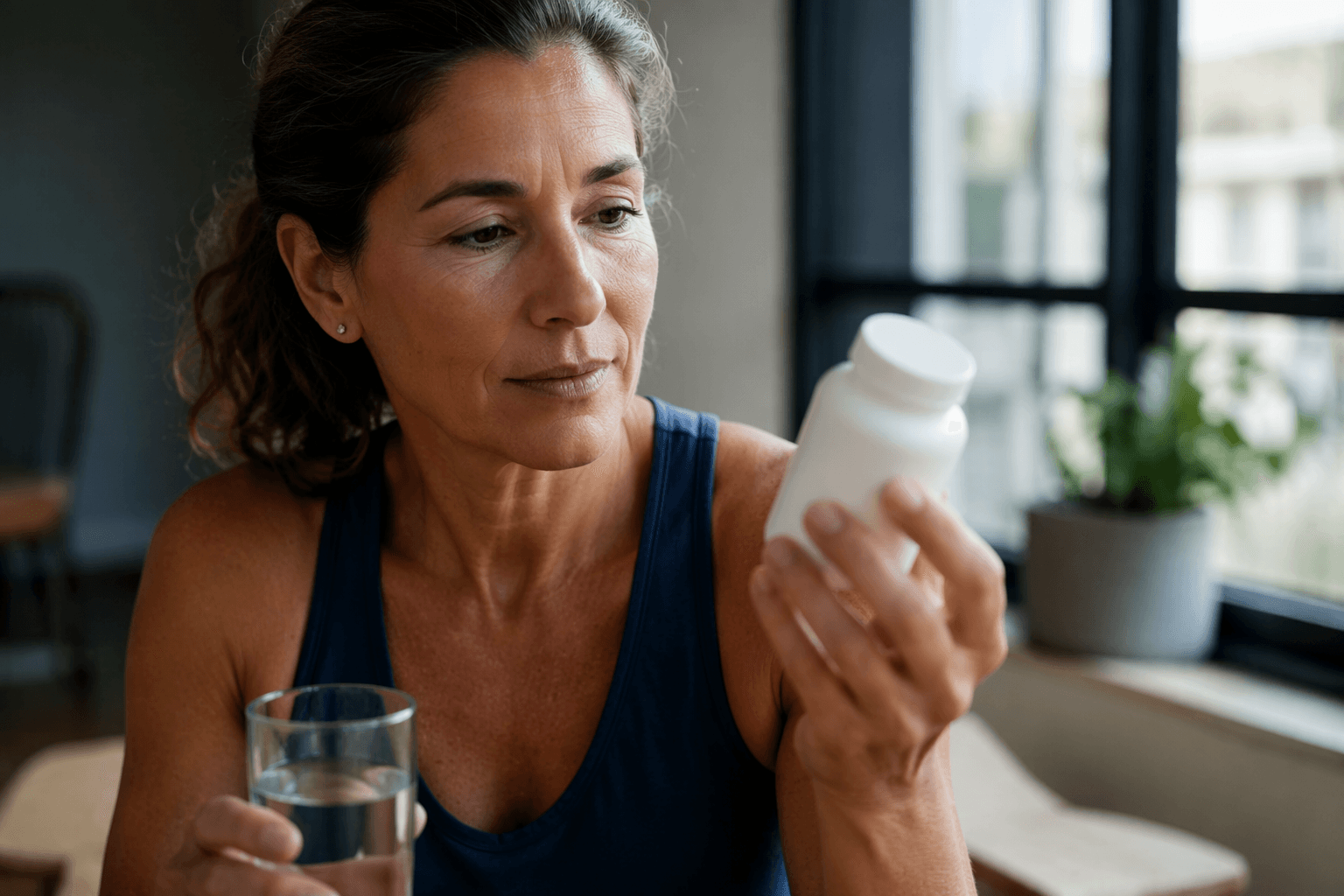
Are digestive enzymes worth it for perimenopause?
Meal-linked bloating may justify a short enzyme trial, but digestive enzymes are not a blanket perimenopause fix.

In a 2025 UK study presented at The Menopause Society, 94% of nearly 600 women aged 44 to 73 reported digestive symptoms. Digestive enzymes are not a general perimenopause fix; they are worth a short, targeted trial only when bloating or indigestion clearly follows specific trigger foods, because the best evidence is for defined intolerances, not for menopause itself. HerStack treats them as a symptom-specific option, not a default purchase, and routes readers to its concern-finder and care pathway.
What does the evidence actually show?
NHS guidance lists bloating, indigestion, constipation, and reflux as common reasons people feel unwell in midlife.
That does not prove broad enzyme blends work for perimenopause. The biology is plausible, and gut microbiome studies do show menopause-related shifts, but the evidence is thin and uneven, with only small studies and a strong split between targeted enzyme replacement and marketing-led all-in-one formulas. A recent review of digestive enzyme products divides them into prescription enzymes for pancreatic insufficiency, OTC products for dyspepsia, and food enzymes. These are not interchangeable.
Who might benefit, and who probably will not?
The women most likely to notice something are the ones whose symptoms are clearly food-linked. Lactase makes sense if dairy reliably leaves you bloated, gassy, or loose, and alpha-galactosidase makes more sense if beans, lentils, cruciferous vegetables, or other fermentable carbs are the problem. If your symptoms are more about constipation, ongoing reflux, or bloating that appears without a clear meal trigger, enzymes are much less likely to help.
If the digestive symptoms arrive alongside period changes, sleep disruption, mood swings, brain fog, hot flushes, or night sweats, that pattern fits perimenopause more closely than a simple enzyme deficiency. NICE advises an individualized, symptom-based approach to menopause care. Changes in periods are usually one of the first signs, and symptoms can be substantial long before periods stop. Track the pattern first, then match the treatment.
Which enzyme form makes sense, and how do you try it?
| Form | Best fit | Typical use | Caveat |
|---|---|---|---|
| Lactase | Dairy-triggered bloating, gas, diarrhoea | Take with the first bite or drink of dairy | A placebo-controlled study found symptoms and hydrogen breath improved, and product labels commonly use 4,500 to 9,000 FCC units per tablet. |
| Alpha-galactosidase | Beans, lentils, crucifers, other gas-forming carbs | Take right before the first bite, or within 30 minutes of starting the meal | A trial used 300 and 1,200 GalU with a bean meal, and 1,200 GalU reduced gas production more clearly. |
| Prescription pancreatic enzymes | Confirmed pancreatic insufficiency | Use only under clinician guidance | This is a medicine, not a menopause supplement. Examples include Creon, and it is meant for pancreatic disease, not routine midlife bloating. |
| Broad multi-enzyme blends | Vague “heavy meal” bloating | Trial only if symptoms are clearly meal-linked | Evidence is weaker and product-specific, and healthy people usually do not need digestive enzyme supplements. |
There is no NHS or NICE class-wide dose range for OTC enzyme blends, so the safest rule is to match the product to the meal and follow the label, not the marketing. A sensible trial is 2 to 4 weeks, one variable at a time, because otherwise you cannot tell whether the capsule helped or the low-FODMAP dinner did.
What are the risks, interactions, and red flags?
OTC digestive enzymes are dietary supplements, not drugs, and FDA oversight is different from prescription medicine regulation. Ingredient lists, enzyme strength, and testing standards can vary. Side effects and dosage reliability are often unclear, and claims such as “flatter stomach” are not well supported.
The common problems are not dramatic, but they are annoying: nausea, abdominal discomfort, bloating, and sometimes heartburn or irritation. If reflux, burning, or ulcer-like symptoms are already part of the picture, enzyme blends that lean on added acid are a poor fit. Skip self-experimenting and see your GP if bloating is persistent, comes with weight loss, blood in stool, vomiting, a lump, trouble swallowing, or severe pain.
If you have known pancreatic disease, do not substitute an OTC blend for prescribed pancreatic enzyme replacement. That is a different treatment class entirely, and it needs dose titration with clinical follow-up rather than guesswork off a supplement shelf.
What should you try first if the bloating is not clearly food-specific?
For ordinary bloating, start with basics: exercise, plenty of water, smaller and more frequent meals, soluble fibre if constipation is part of it, and cutting back on fizzy drinks, alcohol, caffeine, and heavy or highly processed foods. If constipation is driving the pressure, that is a bowel problem first, not an enzyme problem.
Probiotics have limited evidence. There is some evidence they may help some IBS symptoms, but little evidence for many of the claims made about them, and a large systematic review found the certainty of evidence was low to very low across most analyses. If symptoms sit inside a broader menopause picture, HRT is the treatment with the strongest guideline footing, and NICE still emphasises individualised care rather than one-size-fits-all fixes. HerStack’s digestion guidance and concern-finder separate food-triggered symptoms from hormone-pattern symptoms.
Frequently Asked Questions
What are the early signs of perimenopause?
The early signs are usually cycle changes, sleep disruption, mood shifts, brain fog, and temperature changes such as hot flushes or night sweats. The first sign is often a change in periods, and people aged 45 and over with typical symptoms usually do not need routine FSH blood tests for diagnosis.
Is brain fog a real perimenopause symptom?
Yes. Poor memory and brain fog are common perimenopause symptoms, and they can feel worse when sleep is poor and fatigue is high. That does not mean every lapse is hormonal, but it does mean the symptom is real. Sleep, exercise, and stress management can help while you and your GP work out the bigger pattern.
Do digestive enzymes help every kind of bloating?
No. They are most defensible when the bloating is tied to a specific trigger, such as dairy or gas-forming carbohydrates. If you are bloated often, or you also have constipation, reflux, weight loss, vomiting, blood in your poo, or a new change in bowel habit, get checked rather than keep trying supplements.
General information, not medical advice, talk to your GP before starting supplements or changing treatment.
This article was produced by Prism’s automated news system from verified source data, official records, and press releases, then run through automated quality and moderation checks before publishing. The system is built and supervised by the people who set the standards it runs under. Read our full AI policy.
Did this article answer your question?