Menopause 360° event highlights body, mind and hormone care
FICCI FLO’s Menopause 360° put body, mind and hormones on one stage, a sign menopause is moving into mainstream care and public conversation.
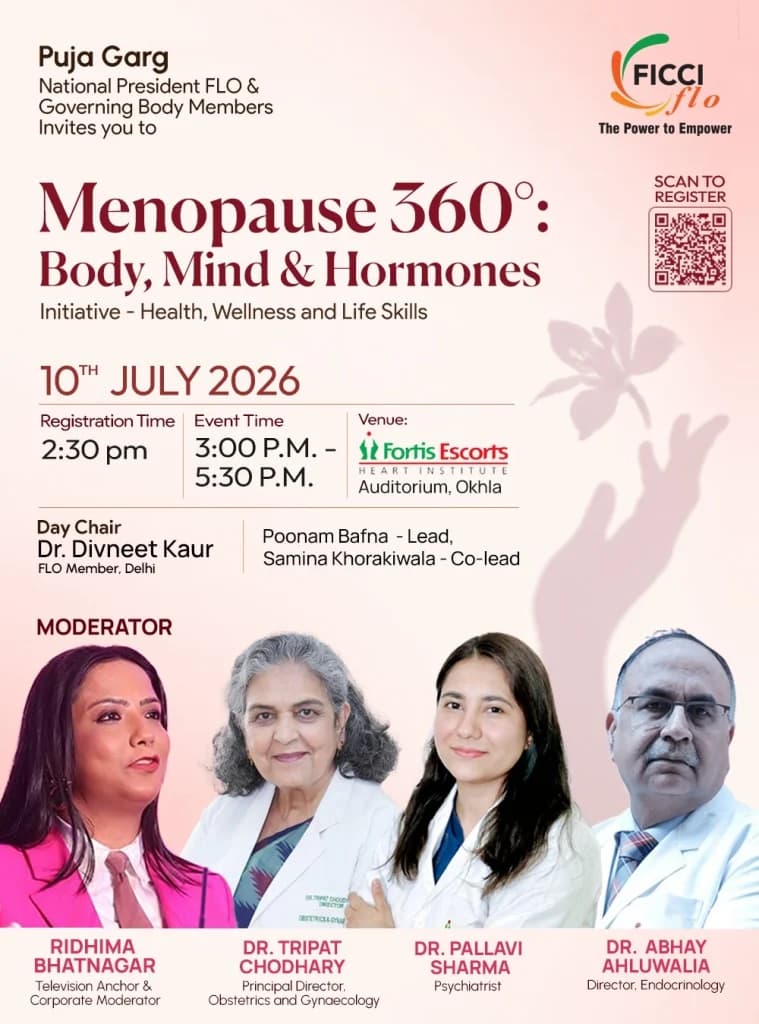
FICCI FLO marked July 10, 2026 with Menopause 360°: Body, Mind, & Hormones, presenting the event as part of a broader push to build “a community of strong, innovative women” and to “break barriers and set new standards of excellence.” The framing mattered as much as the date. By putting body, mind and hormones in the title, the programme treated menopause as a single lived transition rather than a narrow gynecology topic.
That language matched where major health bodies already are. The World Health Organization defines perimenopause as the period when menstrual-cycle changes are first observed and says it ends one year after the final menstrual period. WHO says it can last several years and affect physical, emotional, mental and social well-being. The National Institute on Aging says most women begin the menopausal transition between ages 45 and 55, while the average age of menopause in the United States is 52.
The scale is broad enough to explain why menopause is moving into public-facing programming. The National Institutes of Health Office of Research on Women’s Health says more than 27 million women worldwide experience menopause each year. It lists common symptoms including hot flashes, sleep disturbances, mood changes, headaches, abnormal uterine bleeding and heart palpitations. Mayo Clinic says perimenopause can begin in the 30s, 40s or 50s and may last two to eight years, with an average of about four years.
That breadth helps explain why midlife symptoms are no longer being discussed only in exam rooms. WHO says menopause may raise later health risks such as osteoporosis and heart disease. Bloomberg has also reported that three in five menopausal women experience symptoms at work and cited an estimated $810 billion in annual global productivity losses tied to those effects. When symptoms reach the office, the conversation inevitably widens beyond hormones alone to include sleep, concentration, mood and workplace support.
The event’s place in FICCI FLO’s calendar also reflected that shift. A menopause programme sitting alongside women’s leadership and career programming signals a category that is becoming more institutional, more cross-disciplinary and less hidden. The American College of Obstetricians and Gynecologists has built out patient resources and educational materials on menopause, another sign that clinicians now treat the transition as a mainstream part of women’s health rather than a side note. The message from Menopause 360° was clear: women in midlife are expected to ask for evidence, attention and care that match the complexity of the transition itself.
This article was produced by Prism’s automated news system from verified source data, official records, and press releases, then run through automated quality and moderation checks before publishing. The system is built and supervised by the people who set the standards it runs under. Read our full AI policy.
Did this article answer your question?