14-protein blood signature flags lung cancer risk years early
A 14-protein blood signal predicted lung cancer more than five years early, hinting at a new era of cancer forecasting for people outside standard screening rules.
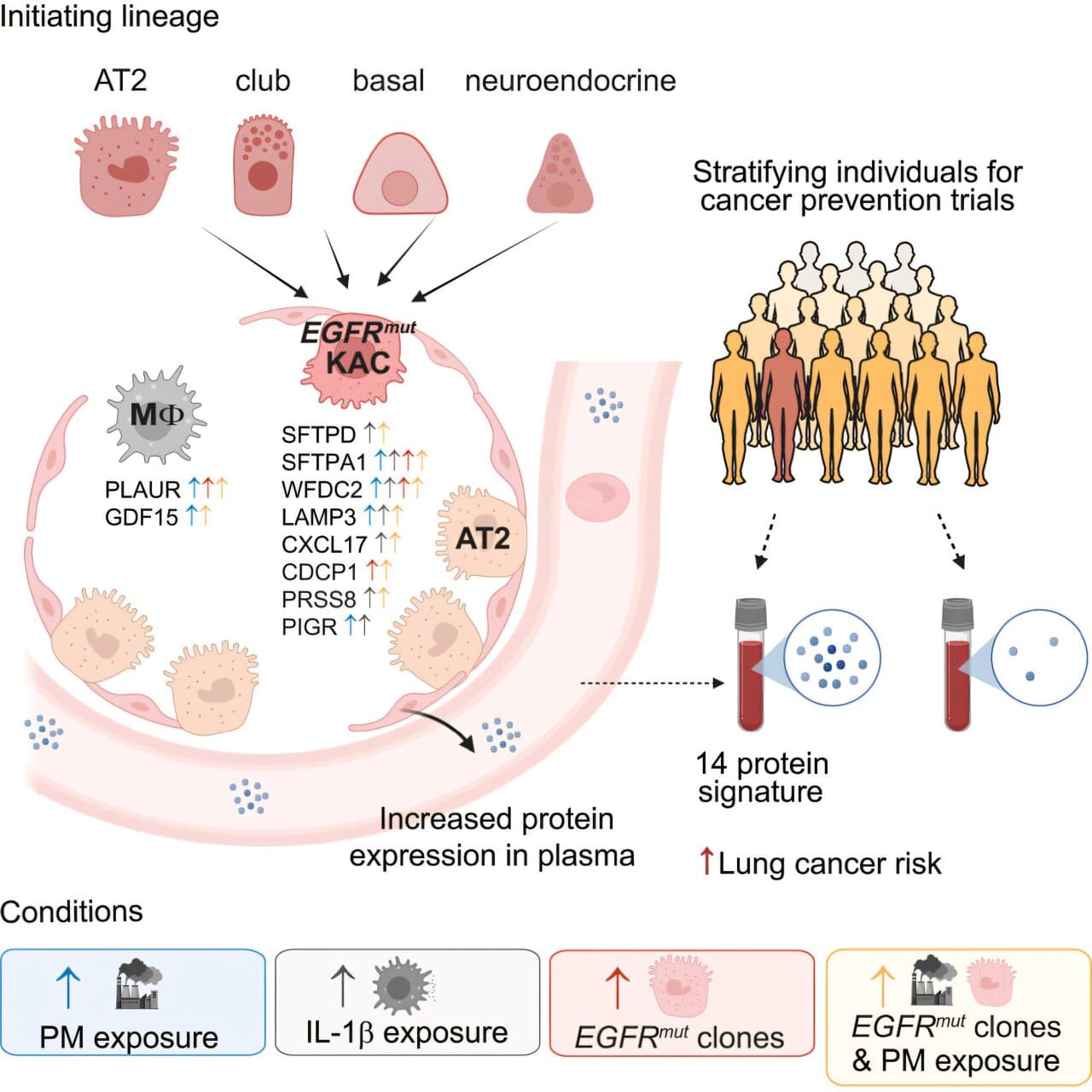
A blood test built around 14 proteins was able to flag lung cancer risk more than five years before diagnosis, turning the conversation from finding tumors early to spotting danger while disease is still only beginning to take shape. The study, published in Cell on June 4, 2026, used machine learning on plasma data from more than 48,000 UK Biobank participants and combined the protein readout with age, smoking status and prior lung disease.
The result is more than a screening tweak. Researchers at the Francis Crick Institute and University College London said the signature pointed to an inflammatory lung environment that appears before cancer, rather than signals spilling out from a tumor that is already there. That distinction matters because the current screening model still leans heavily on older people with a smoking history, leaving out never-smokers and people whose risk may be driven by air pollution instead of tobacco.
The signature held up across eight independent datasets worldwide, including at least one cohort of non-smokers. It was elevated in current smokers and in people exposed to particulate matter, and it also appeared in people who later developed idiopathic pulmonary fibrosis or COPD, suggesting a shared pre-disease state in the lung. The team linked those patterns to abnormal lung-cell states associated with early tumor development, extending earlier TRACERx work that connected air pollution, inflammation and dormant mutant cells.

The researchers said the same biology could help identify people who might benefit from anti-IL-1-based prevention strategies before a cancer diagnosis ever appears on a scan. In the paper, they described the 14-protein plasma signature as a way to identify individuals who may benefit from lung cancer risk reduction, with anti-IL-1 approaches as a potential intervention to test in high-risk groups.
The practical hurdles are still substantial. Any protein-based warning system has to prove it can separate real risk from false alarms, and it will need validation across broader populations before clinicians can trust it as a basis for action years before a visible tumor emerges. Even so, the study lands at a moment when the Francis Crick Institute says just over one third of lung cancers are diagnosed at stage 1 or stage 2, a reminder that prevention and earlier risk detection remain the field’s biggest unfinished job. The work was funded by Cancer Research UK and the European Research Council, with support from the National Institute for Health and Care Research UCLH Biomedical Research Centre.
This article was produced by Prism’s automated news system from verified source data, official records, and press releases, then run through automated quality and moderation checks before publishing. The system is built and supervised by the people who set the standards it runs under. Read our full AI policy.
Know something we missed? Have a correction or additional information?
Submit a Tip