Protein becomes the new shopping lens in the dairy aisle
Protein is now the lens shoppers use in the dairy aisle, and dairy’s next growth story depends on making grams, taste and convenience easy to compare.

Protein is no longer a side note in the dairy aisle. At CheeseExpo 2026 in Milwaukee, Glanbia Dairy Nutrition CEO Tom Tench argued that shoppers are using protein as a primary filter when they reach for milk, cheese, yogurt and even protein-fortified snacks. That shift is changing how products are read, compared and merchandised, and it is pulling dairy out of the sports-nutrition niche and into the everyday protein occasion.
Protein has become a shopping framework
Tench’s central point was that protein is no longer just a nutrition statistic. It is becoming a framework for product discovery, label reading and category choice, which means the dairy case has to do more than list grams and hope shoppers notice. Consumers now have more ways than ever to hit protein goals, and the result is a broader protein marketplace that stretches from traditional dairy staples to snack formats that once sat far outside the core dairy set.
That matters because the dairy aisle is no longer competing only against itself. If protein is the lens, then cheese, milk and yogurt have to compete with bars, shakes and fortified snacks on the same terms, while also defending the idea that dairy offers naturally occurring protein in familiar, everyday foods. The opportunity is not just to add more protein to products, but to make protein visible, understandable and easy to compare at shelf.
What the consumer data says
The consumer backdrop is strong enough to explain why protein is moving so quickly from message to mission. The 2025 International Food Information Council Food & Health Survey, its 20th consecutive annual survey, used an online sample of 3,000 Americans ages 18 to 80. IFIC rolled the research out in topic-specific releases throughout 2025, then published the full report in January 2026, and the results point to a much broader protein mindset than the category used to enjoy.
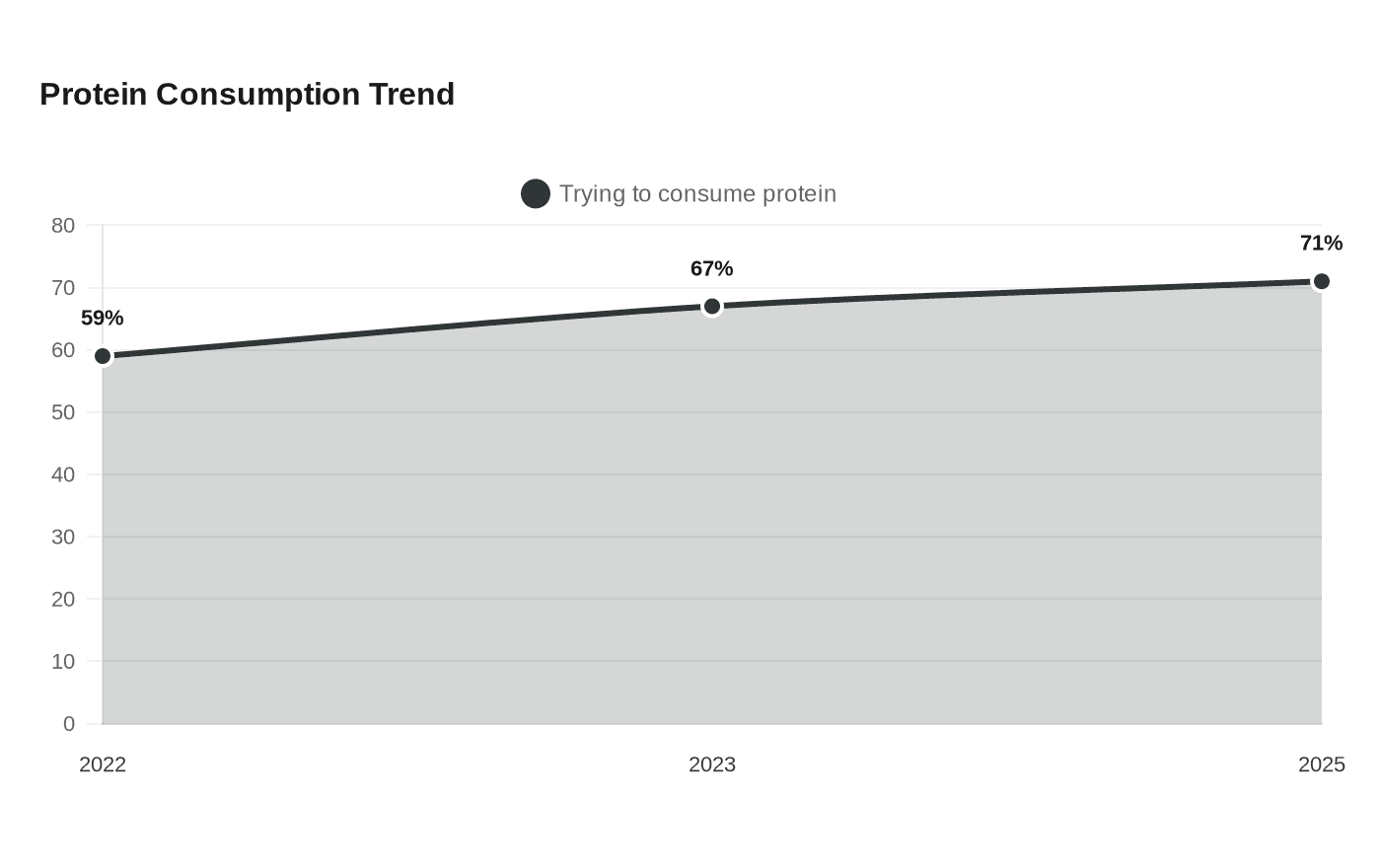
In that survey, 71% of Americans said they were trying to consume protein, up from 67% in 2023 and 59% in 2022. IFIC also said “good source of protein” was the top criterion Americans used to define a healthy food in 2025, and that a high-protein diet was the most common diet for the third straight year. Those findings help explain why protein has moved from a niche fitness cue to a mainstream buying trigger.
The packaging story is just as important. IFIC says grams of protein per serving is the most often used piece of protein information on food packaging, and among consumers who use protein information on labels, one in four has an ideal number of grams per serving they look for. That means many shoppers are not casually browsing for protein, they are arriving with a target in mind. In practical terms, the protein target is being set before the shopper even reaches the dairy case, often with help from apps, on-pack tracking and a growing habit of checking numbers as part of the purchase decision.
IFIC’s separate protein survey adds another layer of context: Americans’ top three preferred protein sources are meat, eggs and seafood, and taste and price are the top factors shaping protein-source choices. That is a useful reminder for dairy brands. Protein may be the headline, but it is not enough on its own. Taste still has to deliver, and price still has to feel justified.
Why dairy has a real opening
For dairy, the best news is that protein fits naturally with the consumer needs driving the category right now. Shoppers want satiety, convenience and everyday wellness, not just a macro count, and dairy is well positioned to meet those needs when the message is tight and the format is right. Cheese, milk and yogurt already live in daily routines, which gives them an advantage over more processed protein options that can feel like an add-on rather than a food people already trust.
That said, dairy cannot assume its natural-protein advantage will speak for itself. The story has to be obvious at shelf, because the modern protein shopper is comparing grams, scanning labels and looking for quick cues. The brands that win are likely to be the ones that pair protein with simple merchandising, clear claims and familiar use occasions, whether that is breakfast, post-workout recovery, a midafternoon snack or an on-the-go meal substitute.
Industry research tied to dairy reinforces that point. Protein is being treated as non-negotiable for many U.S. consumers, high-protein claims are gaining ground, and unit growth in the dairy aisle has been strong versus broader refrigerated and shelf-stable segments. That combination suggests a category that is not just defending share, but trying to define what mainstream protein can look like when it comes from dairy.
GLP-1s, snacking and format innovation
The pressure to innovate is also coming from outside the traditional protein buyer. Danone North America says people using GLP-1 drugs should prioritize protein intake and resistance exercise to help minimize muscle loss, which puts weight-management medication users squarely inside the dairy conversation. At the same time, IFIC’s 2024 survey found that 73% of consumers report snacking at least once a day, which keeps protein in play well beyond meal occasions.
That combination is pushing brands toward formats that feel both functional and convenient. Smaller packs, portable dairy snacks, drinkable options and protein-forward staples all fit a market where consumers are increasingly trying to solve for fullness, muscle maintenance and everyday energy in one purchase. The broader industry backdrop backs that up as well, with talk around milk-protein partnerships, new powder blending capacity and other ingredient investments showing that protein is shaping not just finished products, but the supply chain behind them.
CheeseExpo 2026, held April 14-16 at Milwaukee’s Baird Center, made clear that the next phase of dairy growth will not come from treating protein as a niche badge. It will come from turning protein into a clear reason to buy, one that works for the mainstream shopper who wants simple choices, credible nutrition and food that fits into daily life.
This article was produced by Prism’s automated news system from verified source data, official records, and press releases, then run through automated quality and moderation checks before publishing. The system is built and supervised by the people who set the standards it runs under. Read our full AI policy.
Know something we missed? Have a correction or additional information?
Submit a Tip