Protein beverages must balance flavor, function and everyday appeal
Protein drinks win when they taste easy, travel well and earn a second purchase. The biggest number on the label matters less than the whole experience.

Protein beverages are now judged like systems, not slogans
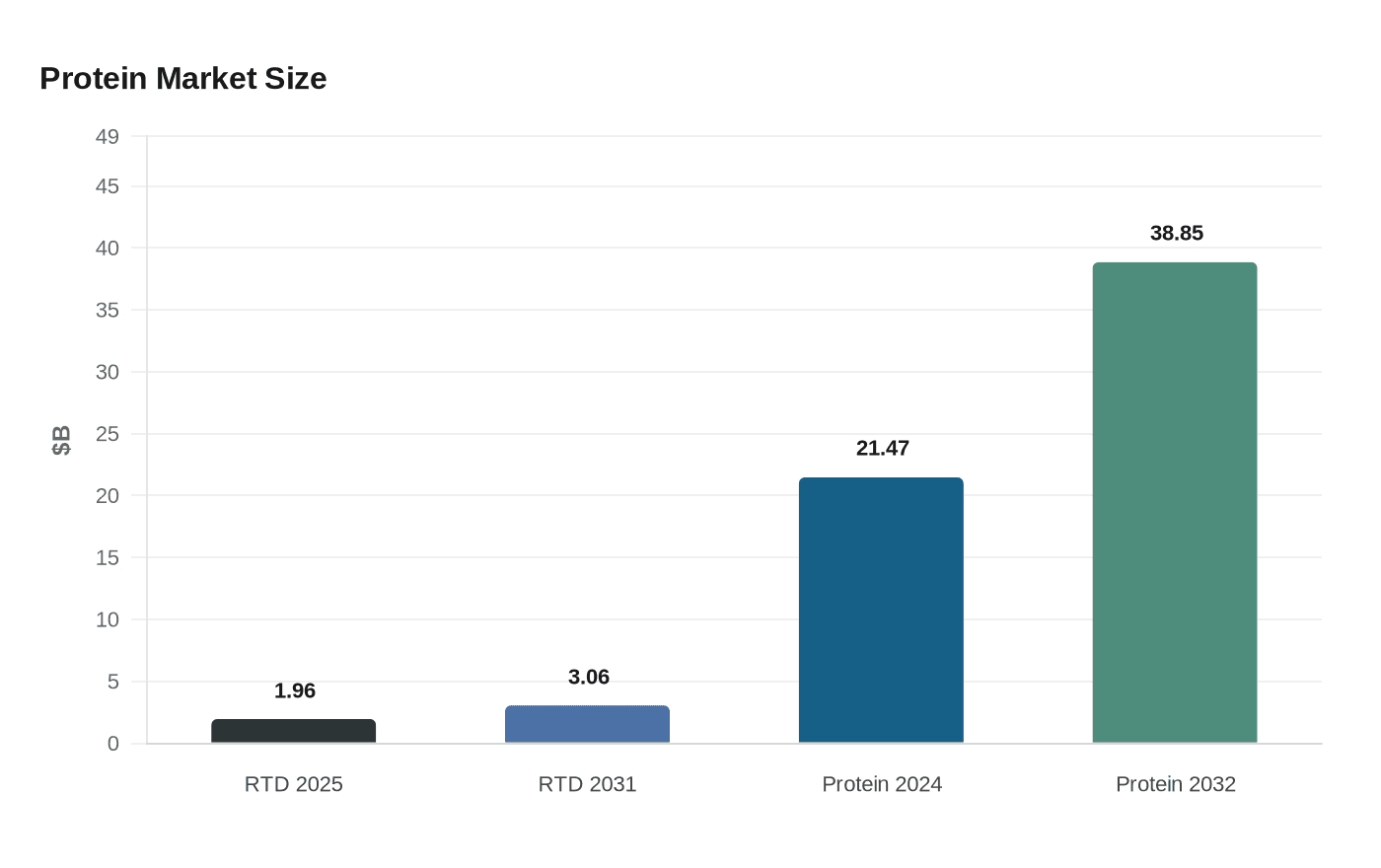
Protein drinks have moved well beyond the era when a bigger gram count could carry the whole pitch. The category is growing, but so is the scrutiny: a 2025 estimate put the ready-to-drink protein beverages market at $1.96 billion, with a path to $3.06 billion by 2031, while another report projected the broader protein drink market rising from $21.47 billion in 2024 to $38.85 billion by 2032. That scale creates opportunity, but it also raises the bar. The winners are not the drinks that promise the most protein on paper; they are the ones that solve flavor, texture, stability, satiety, dosage and manufacturability at the same time.
That is the right way to read the category now. Functional beverages are no longer being evaluated only by nutrient panels. They are being tested by whether they fit into real routines, whether people enjoy the experience, and whether the product can survive the journey from pilot batch to national distribution without breaking apart in the bottle or in the consumer’s mouth.
The checklist mindset separates concepts from scalable products
A useful way to think about protein beverages is as a checklist, not a single claim. The beverage has to taste good enough to invite repeat purchase, but it also has to feel balanced in viscosity, sweetness and aftertaste. It needs a clear consumption occasion, whether that is breakfast replacement, workout recovery, afternoon energy or all-day wellness. And it has to be manufacturable in a way that protects shelf life, packaging performance and label credibility.
That broader checklist matters because protein beverages fail in predictable ways. Some taste chalky. Some feel too heavy. Some separate in the bottle. Some require a level of nutritional commitment that consumers will try once and then abandon. A product can look compelling in a pitch deck and still fail the basic test of everyday life. The real question is not whether the beverage can carry protein, but whether it can carry protein without making the rest of the experience worse.
Taste and texture still decide whether the drink gets a second chance
The sensory science is blunt about how difficult this category can be. A PubMed-indexed study found that protein-rich beverages are challenging to make with high stability, good transparency and a smooth mouthfeel. That is the tension every developer knows: the more protein you add, the more you risk cloudiness, instability and the gritty or thick sensations that undermine consumer confidence.
A separate study on clear acidic whey protein beverages found that astringency is not a side issue. It is a real development problem, especially in formats that are trying to feel light and refreshing. Another chalky-mouthfeel study found that larger particle size and higher concentration increased chalky ratings, and that people with low salivary flow reported greater chalky perception than the high-flow group. In plain terms, formulation choices and individual physiology both shape whether a beverage feels smooth or punishing.
Whey protein can also make drinks feel more mouthdrying than consumers expect. One study found whey protein beverages were rated significantly more mouthdrying than the control beverage, linking the effect to mucoadhesion. For operators, that is an important reminder: protein is not just a nutrition decision. It is a tactile decision that affects how refreshing, clean and easy the product feels after the swallow.
Consumers want protein first, but not at any cost
If the science explains why these drinks are hard to build, consumer research explains why they must still be built carefully. A 2024 study of 405 U.S. protein beverage consumers found that protein amount was the most important ingredient attribute, followed by protein type. That is useful, but it is not a license to overload the formula and call it innovation. The same research concluded there is room to improve acceptance by using fewer, more familiar ingredients and by removing undesirable stabilizers and thickeners.
That finding fits the market mood. People want protein beverages that feel credible, but they also want products that look and read like something they might actually choose again. Simpler ingredient decks can help, not because simplicity is trendy, but because familiarity reduces the friction between a health decision and a routine decision. In this category, routine compatibility is a competitive advantage. The beverage has to feel like a normal part of the day, not a compromise the consumer tolerates for the sake of nutrition.
Protein water shows where the market is heading
One of the clearest signals in the broader functional beverage market is the rise of protein water. A U.S. functional beverage market analysis described protein water as a refreshing ready-to-drink option that delivers healthy protein with a flavor, mouthfeel and hydration experience closer to sports or energy drinks. That positioning matters because it shows how the category is segmenting: not every protein beverage needs to behave like a shake.
Protein water points to a larger opportunity. Consumers increasingly want fun and routine compatibility in the same package. They want products that feel lighter, more hydrating and easier to slot into the day. That does not erase the need for dosage or functionality. It simply means the delivery format has to match the occasion. A drink that feels refreshing at midafternoon may win where a heavier, more meal-like product would never get repeated use.
Claims, labels and evidence have to match the formulation
Once the formula works, the label has to keep pace. The FDA distinguishes health claims, nutrient content claims and structure/function claims, and that classification shapes what a protein beverage can say and how it can say it. That is not just legal housekeeping. It is part of consumer trust.
For protein operators, the practical takeaway is straightforward: the promise on the front of pack has to match the evidence and the eating experience. If the drink is presented as a recovery tool, a meal replacement or a wellness support product, the dosage, formulation and sensory profile need to make that claim believable. The category is mature enough now that consumers notice when the story in the marketing department is ahead of the product in the bottle.
What scales is not the loudest formula, but the most coherent one
The drinks that endure will be the ones that solve the whole problem at once. They will pair enough protein with a texture people do not fight, a flavor profile people can live with, a shelf-stable formula that stays visually and physically intact, and a packaging and labeling strategy that makes the product easy to understand and easy to buy again.
That is why the most valuable innovation in protein beverages is often invisible. It is not just a new protein source or a higher number on the panel. It is the discipline of making protein feel effortless, credible and enjoyable. In a market moving from novelty to routine, that is what separates a concept with buzz from a beverage with a real future.
This article was produced by Prism’s automated news system from verified source data, official records, and press releases, then run through automated quality and moderation checks before publishing. The system is built and supervised by the people who set the standards it runs under. Read our full AI policy.
Know something we missed? Have a correction or additional information?
Submit a Tip