Protein-rich better-for-you snacks outpace lighter claims in sales growth
Protein is now the real test in better-for-you snacking: 20 grams or more is growing fastest, while lighter claims are lagging behind.
The best better-for-you snacks are no longer winning by looking lighter. They are winning by delivering enough protein to behave like actual fuel, and the sales data now draws a clean line between token claims and meaningful dosage.
Protein is becoming the real filter
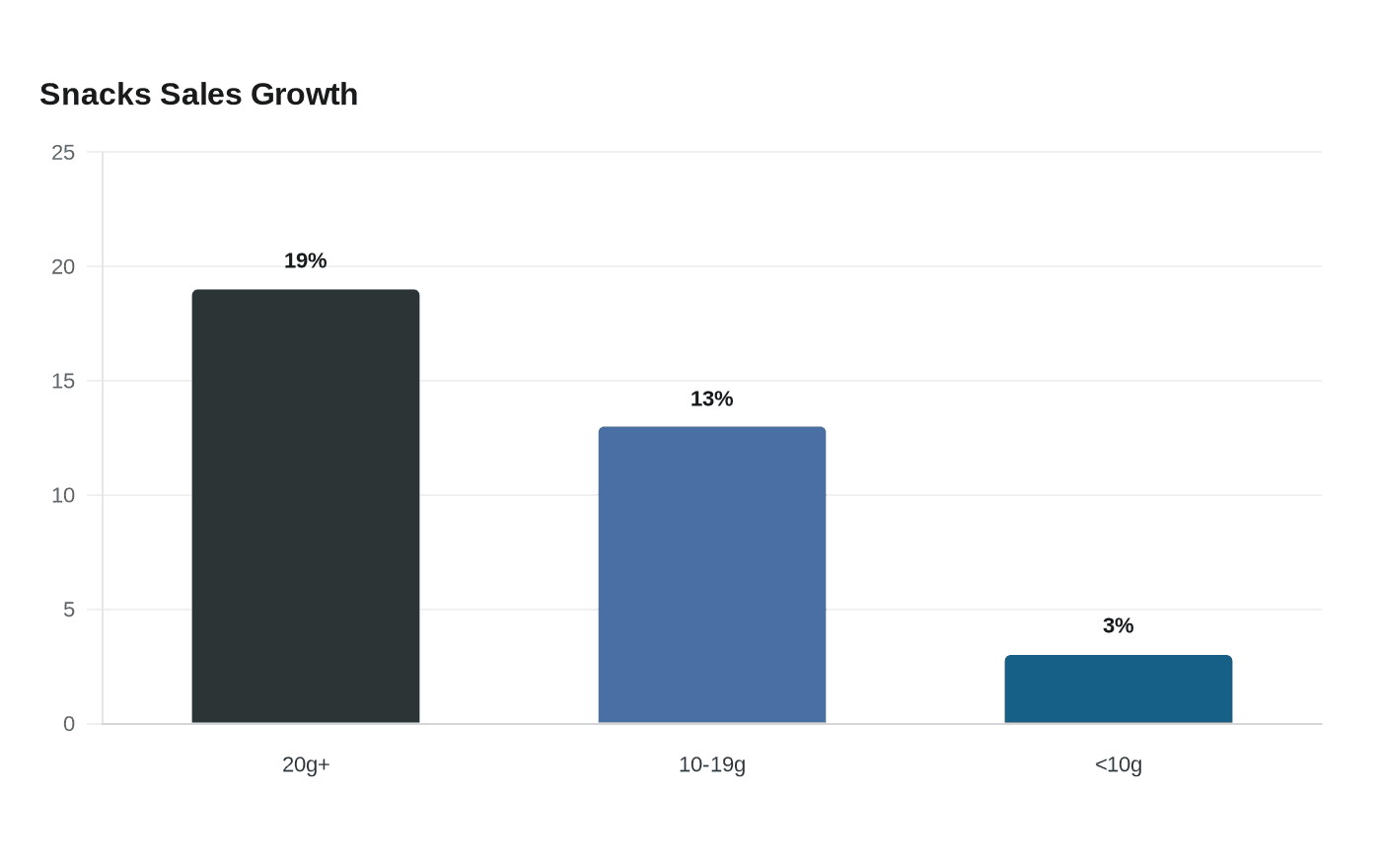
Food Business News’ breakdown of the category shows how sharply shoppers are separating real nutrition from marketing gloss. In the 52 weeks ended March 22, 2026, snacks with 20 grams or more of protein rose 19% in sales, snacks with 10 to 19 grams of protein increased 13%, and snacks with less than 10 grams of protein rose just 3%. That spread matters because it shows the market is rewarding snacks that feel substantial, not just snacks that borrow the language of wellness.
That is the key shift in better-for-you. The old formula was mostly subtraction: less sugar, less fat, fewer artificial additives, cleaner labels. The new formula is addition as much as removal. Consumers still want to avoid excess sugar, unsustainable ingredients and artificial additives, but they now expect something useful in return, and protein sits at the center of that expectation.
The consumer has gotten more demanding
This is not a niche protein crowd anymore. Mintel says 64% of US adults snack at least once daily, and its 2026 snacking report says the category is being reshaped by increased attention to nutrition and the rising influence of GLP-1 medications. That combination has changed what people want from a snack: more restraint, more satiety and more functional value in fewer bites.
Mintel’s better-for-you snacking research says 45% of consumers are looking for protein in BFY snacks. Circana’s data pushes the point even further, showing that 64.1% of consumers actively look for snacks perceived as “good for them.” Circana also found that BFY snacks outpaced all other snack segments in 2025, with dollar sales up 5.3% and unit sales up 2.3%. The takeaway is simple: protein is no longer a niche add-on, it is a mainstream expectation.
Where the claims stop mattering and the dosage starts
The real issue for brands is not whether they can print “protein” on the front of pack. It is whether the amount is enough to justify the claim in a shopper’s mind. A snack with less than 10 grams of protein may fit the better-for-you shelf, but it will struggle to deliver the satiety, energy or post-meal restraint that consumers now want from the category.
That is why the strongest products are the ones that behave more like fuel than treats while still feeling enjoyable and convenient. Food Business News has described the trend as being driven by consumer interest in satiety, sustained energy and functional benefits, and that is exactly how the best products are being built. Taste, texture, portion size, ingredient quality and utility all matter alongside the grams on pack, because protein alone does not rescue a bad eating experience.
A practical way to read the shelf is this:
- If a snack is meant to stand in for a mini-meal, 20 grams or more of protein is starting to look like the persuasive zone.
- If it sits in the 10 to 19 gram range, the product still has a credible nutrition story, but it needs to earn repeat purchases through taste and texture.
- If it falls under 10 grams, the brand is leaning more on wellness language than on real satiety power.
The strongest brands are pairing protein with something else
Hershey’s view of the market shows how broad the expectation has become. The company said 89% of consumers are seeking added benefits from snacks, food and drinks, and that protein and fiber are perceived as hero ingredients. That is a useful way to think about the category: consumers are not merely asking for less of the bad stuff, they want snacks that do more.
That helps explain why functional add-ons are becoming more visible in protein-led better-for-you launches. Babybel Pro contains 5 grams of protein and 1 billion colony-forming units of probiotics, a combination that leans into both protein and digestive support. GoGo dairy protein snacks contain 10 grams of protein, putting them squarely in the range where the snack has to deliver more than a novelty claim if it wants to stick. PepsiCo has also entered the protein snack conversation, a sign that the major packaged-food players see protein as a durable growth lane, not a passing trend.
The format is shifting toward snack foods that can pull double duty
Subway’s protein pockets offer more than 20 grams of protein per serving, which is exactly the kind of positioning that tells you where the category is headed. These are no longer snacks that simply trim calories and call themselves better. They are snacks that try to earn a place in the day by replacing a small meal, bridging hunger between meals or making a post-workout stop feel like time well spent.
Calbee America has framed the opportunity in the same way, saying better-for-you snacking is being driven by nutrition without compromising flavor or texture. That is the tightrope every brand has to walk now. If the protein load wrecks the eating experience, the claim will not save the product. If the snack tastes good and actually satisfies, the protein becomes the reason to buy it again.
What this means for the shelf
Retailers are likely to keep expanding the high-protein set, but the smarter move is not just more facings. It is better sorting, clearer differentiation and less tolerance for generic wellness language that does not match the nutrition panel. Shoppers are already making the distinction between real protein dosage and cosmetic health cues, and the fastest growth is showing up where the grams are high enough to matter.
For product developers, the lesson is just as blunt. Better-for-you now means better function, not just fewer liabilities. The winning snack is the one that gives consumers enough protein to justify the purchase, enough flavor to make it enjoyable and enough utility to earn a repeat trip.
This article was produced by Prism’s automated news system from verified source data, official records, and press releases, then run through automated quality and moderation checks before publishing. The system is built and supervised by the people who set the standards it runs under. Read our full AI policy.
Know something we missed? Have a correction or additional information?
Submit a Tip