Pumpkinseed raises $20 million for protein sequencing chip platform
Pumpkinseed raised $20 million to push deSIPHR from peptide reads to full-length protein sequencing, with more than $12 million already in contracts.
Pumpkinseed raised $20 million to try to do for proteins what DNA sequencing did for genomics: turn a hard-to-read biological layer into something computable. The Palo Alto, California startup says its deSIPHR platform, short for de novo sequencing and identification of proteins with high-throughput Raman spectroscopy, aims to read proteins directly, letter by letter, without a reference database, including the post-translational modifications that mass spectrometry can struggle to resolve.
The Series A was announced on May 6, 2026 and was led by NfX and Future Ventures, with participation from Base4, AdVentures, and Stanford University. Pumpkinseed said the money will help move deSIPHR from peptide sequencing toward full-length protein sequencing, while also expanding biopharma and biosecurity partnerships and improving AI models trained on proteomic datasets. The company is positioning the chip as infrastructure for the next phase of protein discovery, validation, and intellectual property, where a novel sequence is not just observed but captured in a way that can support claims about what the molecule is and how it behaves.
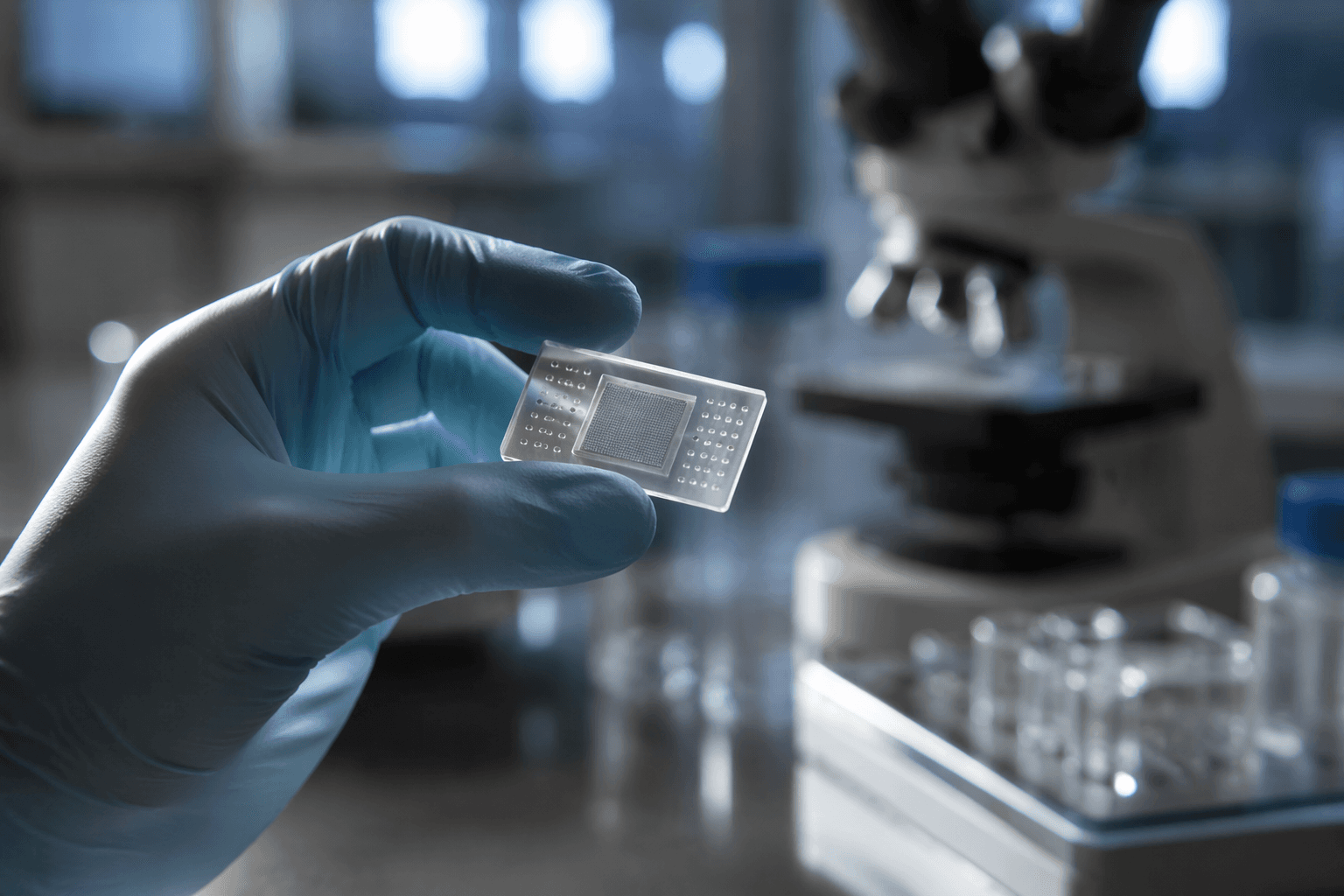
At the center of the pitch is a nanophotonic chip that uses Raman spectroscopy to detect the vibrational signature of molecules trapped in an integrated photonic circuit. Stanford reporting says the chips are patterned on standard 8- or 12-inch silicon wafers and packed with millions of sensors per square centimeter. That matters because the company is not proposing another incremental assay. It is arguing for a new readout layer for biology, one that could make proteins as searchable as genes and more useful in settings where protein state, not just gene presence, determines disease pathways, drug response, and diagnostic value.
Pumpkinseed also said it has already secured more than $12 million in committed near-term revenue through active contracts with Genentech, DARPA, and BARDA, spanning immunology, precision medicine, and rapid biothreat detection and mitigation. That early demand gives the platform a commercial foothold, but it also raises the bar: incumbents in mass spectrometry and adjacent proteomics tools will want to see whether deSIPHR can deliver reproducible full-length reads at useful throughput, with strong performance across real samples, not just clean demonstrations.
The startup grew out of Stanford research in nanophotonics, biochemistry, and machine learning. Stanford’s TomKat Center said Pumpkinseed was cofounded in 2021 by Jennifer Dionne, Jack Hu, and Nhat Vu. Forbes identified Hu as a 2024 30 Under 30 Healthcare honoree and said he developed the foundational technology during his Ph.D. at Stanford. Axios reported that Pumpkinseed expects to pursue a $30 million to $40 million Series B within a year, a sign that the company is already thinking beyond the financing round and toward the harder proof point: whether reference-free protein sequencing becomes a must-have platform for the industry.
This article was produced by Prism’s automated news system from verified source data, official records, and press releases, then run through automated quality and moderation checks before publishing. The system is built and supervised by the people who set the standards it runs under. Read our full AI policy.
Know something we missed? Have a correction or additional information?
Submit a Tip