Hawaii Island food insecurity exposes fragile supply chains, boosts local food recovery
On Hawaii Island, food insecurity follows the supply chain as much as the paycheck. The lesson for food recovery teams: build flexible routes and stronger pantry ties before the next disruption.
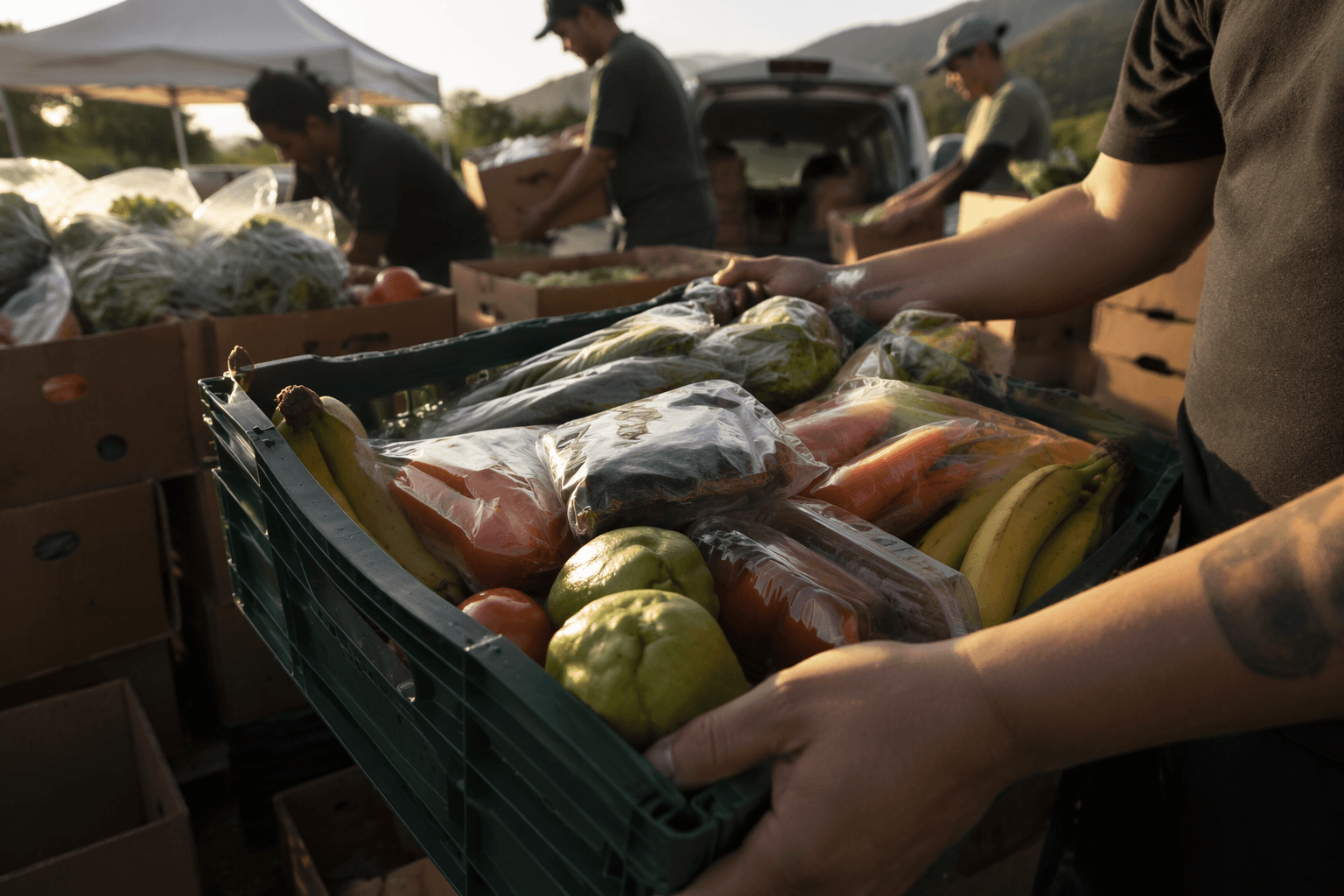
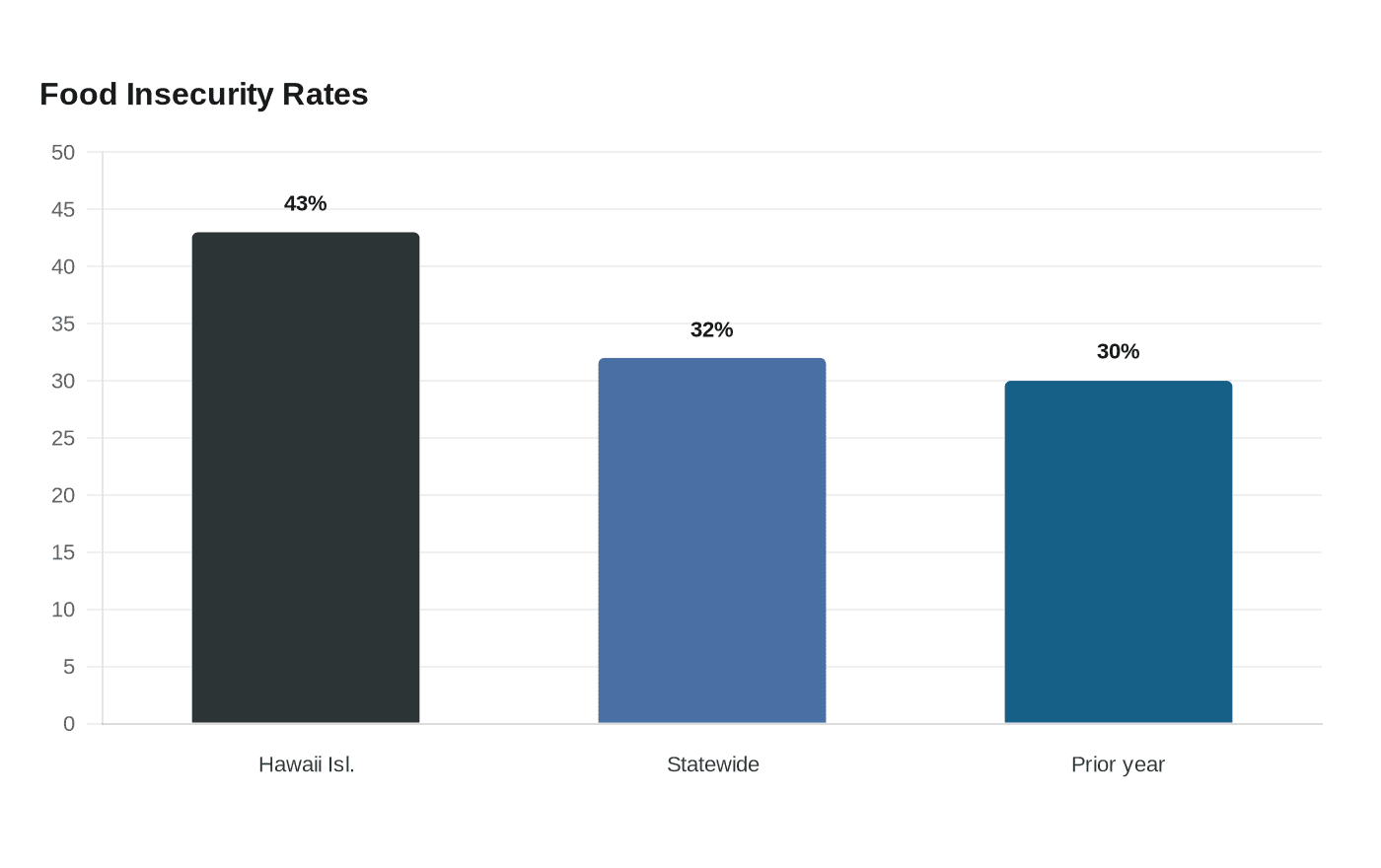
Hawaii Island is showing how quickly hunger deepens when food has to travel too far. In the second annual State of Food Insecurity in Hawaii, the island posted the highest county rate at 43 percent, or about 90,000 people, while statewide food insecurity reached 32 percent, roughly 427,000 residents. For food recovery teams, the signal is unmistakable: when shipping, fuel, labor, or weather strain an import-dependent system, pantries feel the pressure first.
Hawaii Island sits at the edge of the system
The Big Island is not just dealing with poverty, it is dealing with distance. Hawaii imports the vast majority of its food, so every disruption in shipping or global commodity markets can show up quickly in grocery prices, donation volume, and pantry demand. That makes food insecurity an operations problem as much as a household-income problem, because the island sits at the far end of a supply chain that already runs thin.
The pattern has been visible for years. In Hawaii Foodbank’s 2023 report, household food insecurity was highest on Hawaii Island, followed by Maui, Oahu, and Kauai. That same survey found about 10 percent of households had at least one member go without food for an entire day, and nearly 40 percent of respondents worried about running out of food before their next paycheck. The newer statewide study shows the pressure is not easing, and for families with children, the risk is especially sharp: more than a third lacked reliable access to enough food.
The statewide numbers explain why the pressure keeps rising
The 2024 to 2025 report is the second annual statewide food insecurity study commissioned by Hawaii Foodbank, Hawaii Foodbank Kauai, Maui Food Bank, and The Food Basket. It found that 32 percent of households across Hawaii were food insecure, up from 30 percent in the prior year’s survey. That change may look small on paper, but in practice it means more families are relying on food banks, more often, and for longer stretches.
The report’s estimate of about 427,000 affected people underscores the scale of the challenge. Food bank leaders have said demand has been climbing for years and is now reaching peaks not seen since the height of the pandemic. In that context, food banks function as a safety net, but not a complete solution. They are tied to the same broader food flows that are becoming more fragile under climate disruption, rising costs, and geopolitical strain.
Why local food recovery matters more when imports wobble
When the outside system gets shakier, local recovery becomes a stabilizer. Doorstep donation programs, gleaning operations, and pantry partnerships do not replace imported food, but they create a buffer that can absorb short-term shocks. That matters in Hawaii because the island geography magnifies every delay, whether it comes from shipping interruptions, labor shortages, or changing fuel prices.
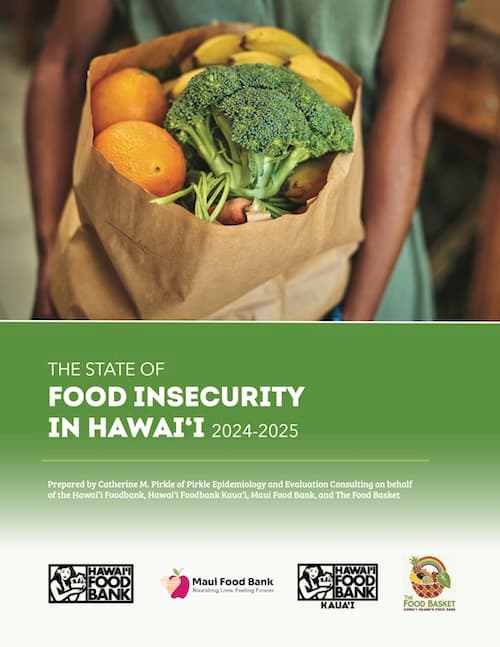
For A Simple Gesture, the lesson is practical. A doorstep model is only one piece of resilience. If supply chains tighten, the value shifts toward neighborhood donation recovery, stronger pantry relationships, and route coordination that can flex when community need spikes unexpectedly. In other words, the goal is not simply to move more food, but to make sure the right food keeps reaching the right pantry partners even when the system is under stress.
The local models already point the way
The Food Basket, which serves Hawaii Island, describes its programs as supporting food security, sustainability, and health across the island. That framing matters because it treats hunger relief as part of a wider community system, not just a set of emergency pickups. On an island where the food supply is already exposed, that broader view helps explain why logistics and mission have to be managed together.
Kōkua Harvest offers another useful model. The community-driven gleaning project focuses on reducing food waste and improving access to fresh produce on Hawaii Island. That combination is important for recovery networks because it shows how excess local food can be redirected before it is lost, while also strengthening access to healthier options that are often harder to source in remote markets.
The Pantry on Oahu illustrates a different but related approach. Its model emphasizes choice, dignity, local farmers, and reducing food waste. That matters for staff and volunteers because it shows how food access programs can be designed to feel more stable and respectful, while still helping local producers and limiting waste. Across the state, these models point toward the same operational truth: resilience is built through flexibility, not just volume.
What this means for volunteer routes and pantry partnerships
For a neighborhood recovery network, Hawaii’s numbers are a reminder to treat route planning like contingency planning. If demand rises sharply, volunteer pickup routes need enough flexibility to handle missed donations, shifting household participation, and sudden downstream pressure from pantry partners. The smoother the coordination between donors, route captains, and food banks, the faster the network can respond without burning out volunteers or overloading a single pantry.
It also argues for stronger pantry partners instead of a simple push for more truck volume. Excess loads matter, but only if there is a place for them to go quickly and consistently. When pantry relationships are strong, coordinators can redistribute food more intelligently, protect volunteer time, and keep community reach broad enough to absorb unexpected spikes. That is the practical lesson hidden inside Hawaii’s statewide data: when the edge of the network weakens, local food recovery becomes the buffer that keeps families from falling through.
This article was produced by Prism’s automated news system from verified source data, official records, and press releases, then run through automated quality and moderation checks before publishing. The system is built and supervised by the people who set the standards it runs under. Read our full AI policy.
Know something we missed? Have a correction or additional information?
Submit a Tip