USDA shifts nutrition program leadership to regional hubs nationwide
USDA is moving nutrition-program leadership out of Washington into regional hubs, a shift that could slow or reroute how SNAP, WIC and school-meal guidance reaches local food banks.
USDA on April 30 said it will reorganize its Food, Nutrition, and Consumer Services mission area into a new Food and Nutrition Administration, moving program leadership and staff from Washington, D.C., to hub and compliance locations around the country. The department said the change is meant to improve customer service and would not interrupt program execution or its efforts to fight fraud, waste and abuse across its 16 nutrition assistance programs.
The scale is why local hunger-relief groups should pay attention. USDA’s Food and Nutrition Service says those 16 programs, including SNAP, WIC and school meals, serve one in four Americans over the course of a year. SNAP alone accounted for about 70% of USDA nutrition assistance spending in fiscal 2024, served an average of 41.7 million people a month, and cost the federal government $99.8 billion. When a system that large shifts where its decision-makers sit, even a clean reorg chart can affect how quickly answers move.
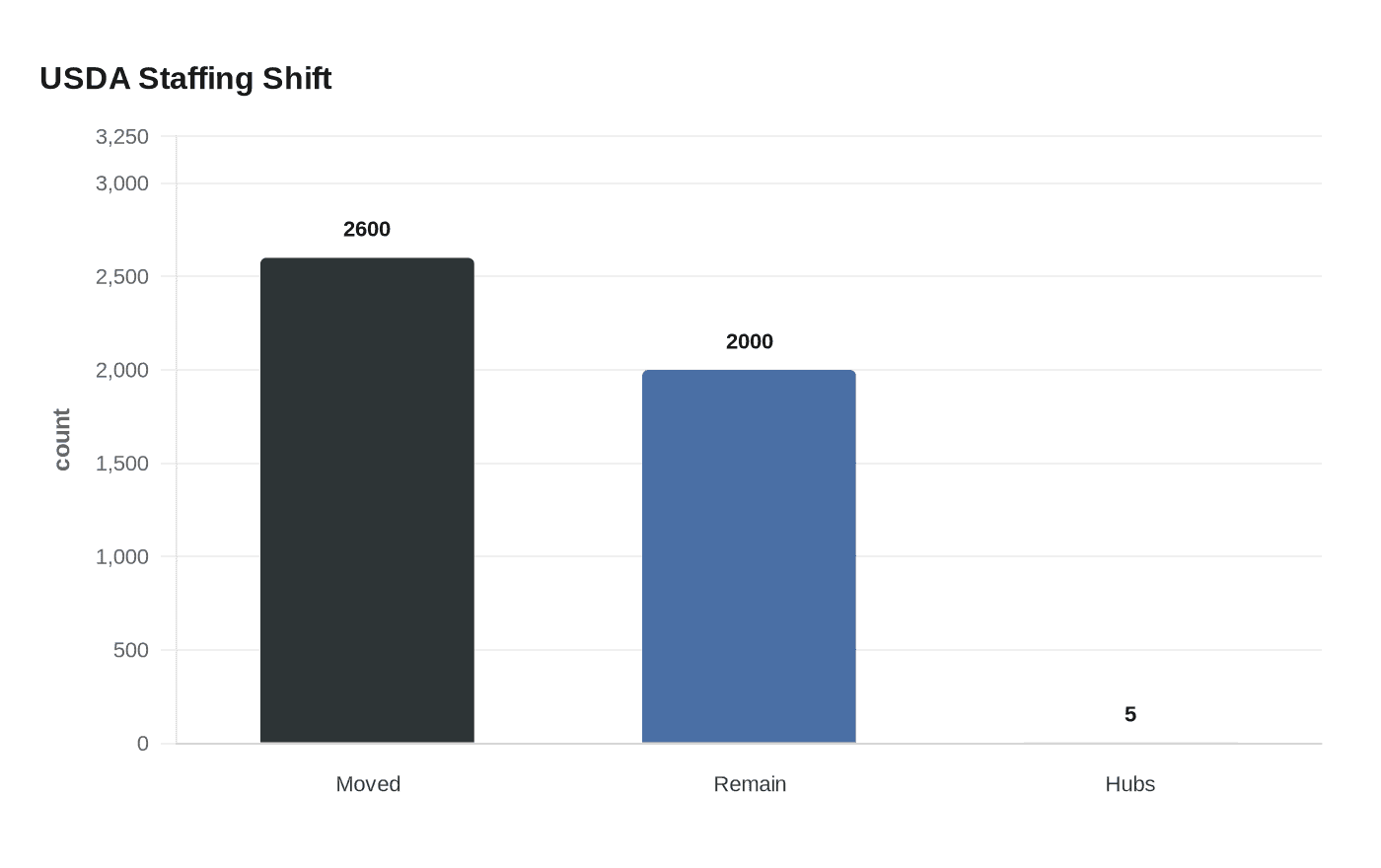
This was not a sudden pivot. USDA’s July 2025 reorganization memo already said about 2,600 Washington-based positions would be moved to five regional hubs. Later FAQs said Washington would retain some functions, but no more than 2,000 employees would remain in the National Capital Region. Reporting has identified Indianapolis as the new SNAP hub, with additional employees moving to Dallas, Kansas City, Raleigh and Denver. Indiana Gov. Mike Braun publicly praised the Indianapolis move, while union leaders warned that mandatory relocations could create real disruption.
For food banks, partner nonprofits and neighborhood recovery groups like A Simple Gesture, the biggest issue is operational, not symbolic. SNAP and WIC rules shape pantry referrals, school partnerships, documentation requirements and the timing of state-to-federal questions. If policy, compliance and program support are spread across several hubs instead of concentrated in Washington, local organizations may spend more time chasing the right person, the right office and the right answer. That can slow down decisions that affect volunteers, delivery schedules and the households waiting on services.
USDA says the structure change will not interrupt service, but Congress has already complicated the picture. The fiscal 2026 appropriations bill barred the department from reorganizing or relocating offices or employees unless Congress authorizes it. Tribal governments also criticized the broader plan earlier in 2026, saying relocations and office closures could weaken long-standing relationships and create staffing shortages. For the anti-hunger system, the question now is whether USDA’s promise of continuity survives the reality of moving thousands of staff across the country.
This article was produced by Prism’s automated news system from verified source data, official records, and press releases, then run through automated quality and moderation checks before publishing. The system is built and supervised by the people who set the standards it runs under. Read our full AI policy.
Did this article answer your question?