Big Lots pregnant workers can request accommodations under federal law
Pregnant Big Lots workers can ask for seating, lifting limits, water breaks and schedule changes under federal law, even if a manager is unsure.
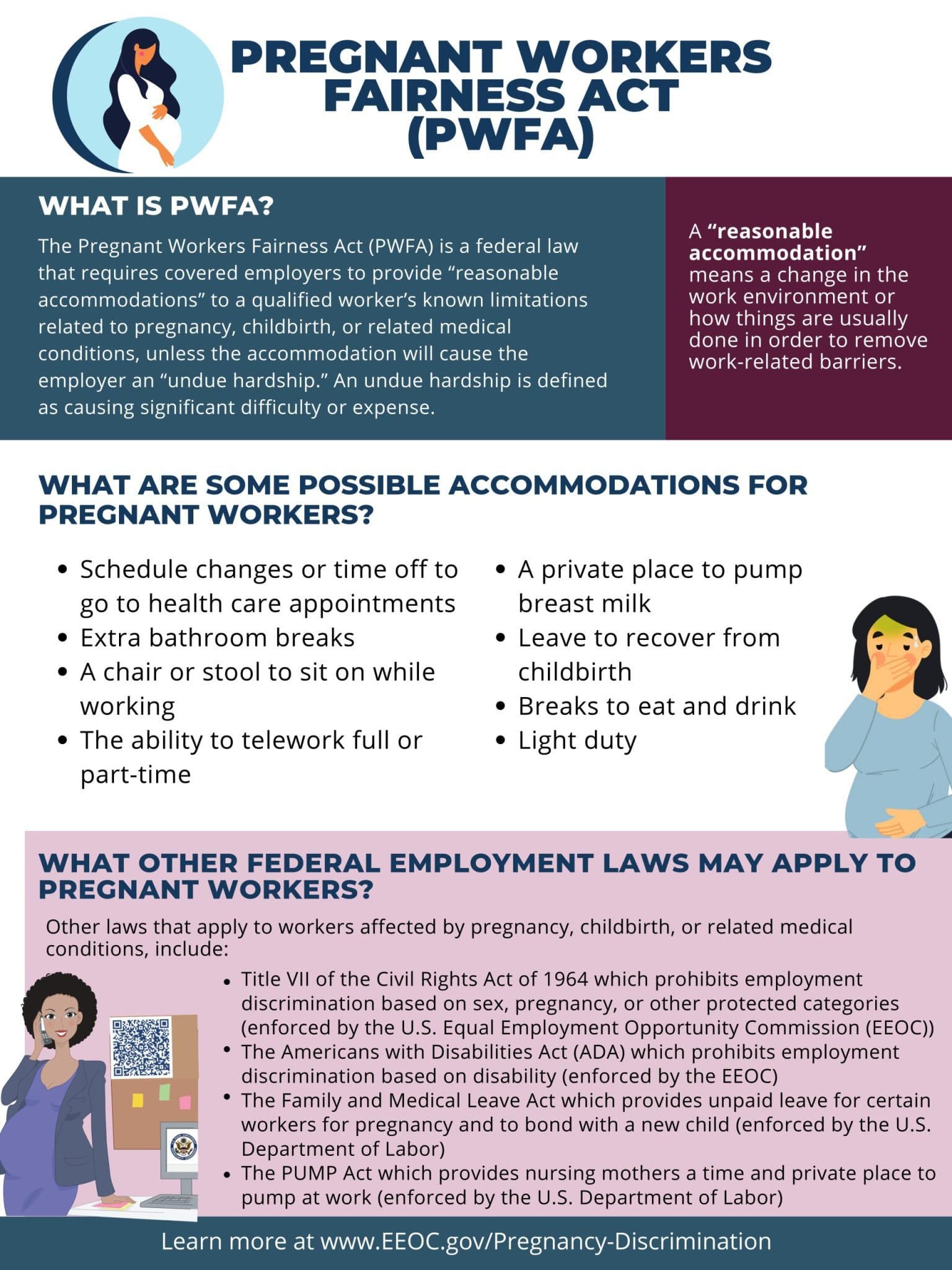
The Pregnant Workers Fairness Act took effect on June 27, 2023, requiring covered employers with 15 or more employees to provide reasonable accommodations for known pregnancy-related limitations unless doing so would cause undue hardship. At Big Lots, that means pregnant workers do not have to choose between their paycheck and their health, and the law covers accommodations alongside other federal laws that still bar pregnancy discrimination.
What the federal law covers
The EEOC’s final rule came out on April 15, 2024, before taking effect on June 18, 2024. The statute is codified at 42 U.S.C. 2000gg, and the federal floor does not replace more protective state or city laws. The EEOC’s final rule puts the number of state or city laws that already require accommodations for pregnant workers above 30.
Pregnancy-related limitations are broad, including conditions related to pregnancy, childbirth or related medical issues. Workers can also fall under other EEOC-enforced laws when discrimination, not just accommodation, is the problem.
What accommodations can look like on the floor
On a sales floor or in a stockroom, accommodations are usually simple. Examples include carrying and drinking water as needed, extra restroom breaks, letting a worker sit when the job normally requires standing, additional breaks, leave, different schedules, lighter duties, and changes in how the job is done.
For a Big Lots cashier, that might mean a chair behind the register during long stretches. For someone in freight or replenishment, it may mean a lifting limit, a temporary task change away from heavy boxes, or a schedule tweak that cuts down on the most physically demanding part of the shift. If the problem is distance rather than the job itself, a closer parking space can fit the same logic because the law treats accommodations as changes to the work environment or the way work is normally done.
Some pregnancy-related conditions can be minor, modest or episodic, including lifting restrictions, the need to use the bathroom more frequently, the need to drink water, the need to sit, anxiety, nursing or pumping, and fatigue. Warehouse and retail workers may not think their issue is “serious enough” to raise, even when it is clearly making the shift harder.
How to ask without turning it into a legal fight
Workers can talk to a manager, human resources, or the person named in company policy, explain that a pregnancy-related condition is making the job harder, and share what barrier they are facing and what change would help. Workers do not need to use special legal words to start the process.
That means a request can be direct: a temporary chair, fewer heavy lifts, extra restroom breaks, a modified start time, or a lighter assignment while you are pregnant. If a supervisor seems unsure, identify the limitation and the fix, then write down the conversation in a note or email so the request is anchored to a date, a person, and a response.
If a healthcare provider needs to help, they can play a role by explaining the limitation and suggesting accommodations, but the worker still does not need to turn the request into a medical dossier. Employers may ask for supporting documentation in some circumstances, yet in many instances it is unnecessary and the discussion alone is enough.
What managers can legally require, and what they cannot
Managers can ask for enough information to understand the limitation and what adjustment is being requested. Under the PWFA, they can also seek supporting documentation in some situations, but they cannot treat that as a universal gatekeeping step, because many requests can be handled through a conversation and do not need documentation at all.
They also cannot force leave just because pregnancy makes the job harder if another effective accommodation exists and there is no undue hardship. The law prohibits requiring leave when an effective reasonable accommodation would let the worker stay on the job, and it gives the agency power to enforce those limits in court.
The EEOC filed its first PWFA lawsuits in 2024, and the agency’s fiscal-year litigation report lists five cases under the statute that year.
Warning signs that a denial may be improper
A flat no without any discussion of alternatives is a red flag. So is any move to push a pregnant worker onto leave, cut hours, or pull shifts after the request instead of trying to solve the problem, especially when supervisors should be trained to respond without retaliating against people who ask for accommodations.
Workers should also take note when a manager acts as if the request has to be perfect or lawyered-up before it counts. No specific words are required, and in many cases a simple explanation of the condition and the needed change is enough to begin the process. If the answer is “we need to wait until it gets worse,” that is not how the law is designed to work.
Big Lots’ backdrop makes the request process even more important
Big Lots entered Chapter 11 on September 9, 2024, and the court-run bankruptcy process has included a sale process and store-closure issues. That kind of restructuring can leave frontline supervisors inconsistent on policy, but it does not suspend federal accommodation rights on the sales floor or in the warehouse.
Big Lots’ jobs page offers employment and advancement in accordance with local, state and federal laws, regardless of protected status. In practice, that means a pregnant worker asking for a chair, a lifting cap, extra water, or a schedule change is asking for a workplace adjustment the law already anticipates, not a special favor from management.
A Better Balance’s free and confidential helpline heard from nearly 500 workers in the first 11 months after the law took effect, many in low-wage and physically demanding jobs.
This article was produced by Prism’s automated news system from verified source data, official records, and press releases, then run through automated quality and moderation checks before publishing. The system is built and supervised by the people who set the standards it runs under. Read our full AI policy.
Did this article answer your question?