Big Lots workers can use Labor Department toolkit to plan retirement early
Big Lots workers do not need a big salary to start saving. The Labor Department’s toolkit and Big Lots’ own 401(k) history show how small payroll deductions, matches and timing rules can add up.
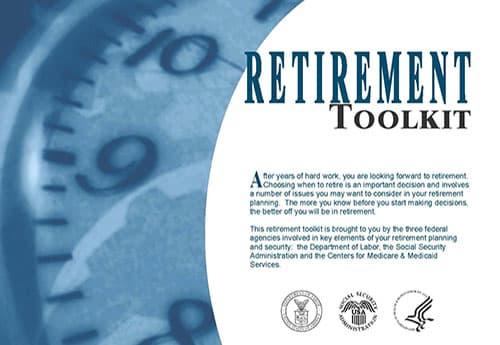
Big Lots workers do not have to wait for a perfect paycheck to start building retirement savings. The Labor Department’s retirement toolkit makes a simple case: the earlier you begin, the more room you have to benefit from payroll deductions, employer matches and time itself.
That message lands with extra force at Big Lots, where retirement planning has to be practical, not abstract. The company’s own savings plan filing shows real money already flowing through the plan, and the changes at the chain over the past year make it even more important to know where your money is, what stays yours, and how to protect every dollar you earn.

Start with the smallest useful habit
The most worker-friendly part of the Labor Department guide is that it does not assume a white-collar salary or a long career ladder. It tells employees to sign up for a workplace retirement plan if one is available and contribute as much as they can, especially enough to capture any employer match. For retail workers, that usually means the first goal is not maxing out a plan. It is getting money into the account automatically and making sure the company’s match is not left behind.
That matters because steady payroll deductions can do the heavy lifting over time. Even modest contributions are easier to maintain when they are taken out before the paycheck hits the checking account, and the toolkit’s logic is built around that reality. For hourly workers who may see schedules shift week to week, automatic saving is often more dependable than trying to move money manually after expenses pile up.
What the Labor Department says to watch for
The toolkit lays out a basic retirement timeline that helps workers avoid costly surprises. Catch-up contributions can begin at age 50. Social Security can be claimed as early as 62, but with reduced benefits. Required minimum withdrawals from most retirement accounts generally begin at age 73.
Those milestones matter because they shape when decisions become urgent. The toolkit also warns that taking money out too early can trigger taxes and penalties, which is a hard lesson for anyone tempted to tap a retirement account during a rough stretch. It also tells workers to check their Social Security statement for earnings accuracy, since missing or incorrect wage records can affect the benefit calculation later.
For Big Lots employees, the point is not just to know the rules. It is to use them before a crisis forces a rushed choice. A worker who understands the timeline can plan around it, instead of discovering it after a withdrawal, a job change or a layoff.
Big Lots’ savings plan shows why the match matters
Big Lots has had a 401(k)-style savings plan in recent years, and the numbers from its 2023 filing show that employees were putting real money into it. Participant contributions totaled $18,431,980, while company matching contributions came to $8,596,689. The plan held $333,427,511 in net assets available for benefits as of December 31, 2023.
That mix tells an important story for retail workers: the employer match can be a meaningful part of the benefit, not just a line on a handbook page. But the vesting schedule also makes timing matter. Under the plan, employees were 25% vested after at least 2 years but less than 3 years of service, 50% vested after at least 3 years but less than 4 years, 75% vested after at least 4 years but less than 5 years, and fully vested after 5 or more years.
In other words, the match is more valuable when workers stay long enough to keep it. For a retail workforce that often includes part-time employees, seasonal staff and managers who may move more often than they expect, vesting rules are not a footnote. They are part of the pay package.
Why the company’s recent upheaval raises the stakes
Big Lots’ bankruptcy filings in 2024 changed the conversation around long-term benefits. On September 9, 2024, Big Lots and its subsidiaries filed voluntary chapter 11 petitions in the U.S. Bankruptcy Court for the District of Delaware. Then, on December 27, 2024, the company said it had reached an asset purchase agreement with Gordon Brothers Retail Partners, LLC that would transfer Big Lots assets, including stores, distribution centers and intellectual property, to other retailers and companies including Variety Wholesalers, Inc.
For workers, those corporate moves are not just headlines. They are reminders that retirement records, plan balances and vesting status need to be tracked carefully whenever a chain restructures. Job titles, store ownership and corporate control can shift quickly in retail, but savings accounts do not become less important because the company does. If anything, instability makes it more important to know exactly what is in the account and what belongs to you.
Use the Lost and Found Database if old money is missing
The Labor Department’s Retirement Savings Lost and Found Database becomes especially useful in that kind of environment. Created under the SECURE 2.0 Act of 2022, it is designed to help workers locate retirement plans that may still owe them benefits. The database can help find private-sector defined-benefit and defined-contribution plans, but it does not cover IRAs or Social Security benefits.
That distinction is important for retail workers who may have moved between employers, states or store banners over the years. If a Big Lots job was not the first or last stop in a long retail career, the database can help track down a previous workplace plan that was forgotten during a transition. It is a practical backstop, especially for employees who changed jobs during reorganizations or store closures and never got around to reconciling old paperwork.
Keep the 2026 limits in mind even if you start small
For 2026, the Internal Revenue Service says the elective-deferral limit for 401(k)-type plans is $24,500. The standard catch-up contribution limit for workers age 50 or older is $8,000, and the special catch-up limit for workers who attain ages 60, 61, 62 or 63 is $11,250.
Those numbers can sound far removed from an hourly retail paycheck, but they are useful as a yardstick. They show the ceiling, not the starting point. A worker putting away a small fixed amount every pay period does not need to match the maximum to make progress. The point is consistency: start with what you can keep going, then raise it when hours, wages or family costs allow.
For Big Lots workers, the most durable retirement strategy is not waiting for a higher salary that may never arrive on schedule. It is using the plan that exists, protecting the match when it is available, checking records regularly and treating retirement saving as part of the workweek, not a luxury for later.
This article was produced by Prism’s automated news system from verified source data, official records, and press releases, then run through automated quality and moderation checks before publishing. The system is built and supervised by the people who set the standards it runs under. Read our full AI policy.
Know something we missed? Have a correction or additional information?
Submit a Tip