Big Lots workers see hiring gains, but hours remain tight
Retail hiring is still growing, but hours are tight. For Big Lots workers, that mix creates real leverage if you know when to push.
What the latest labor data means on the floor
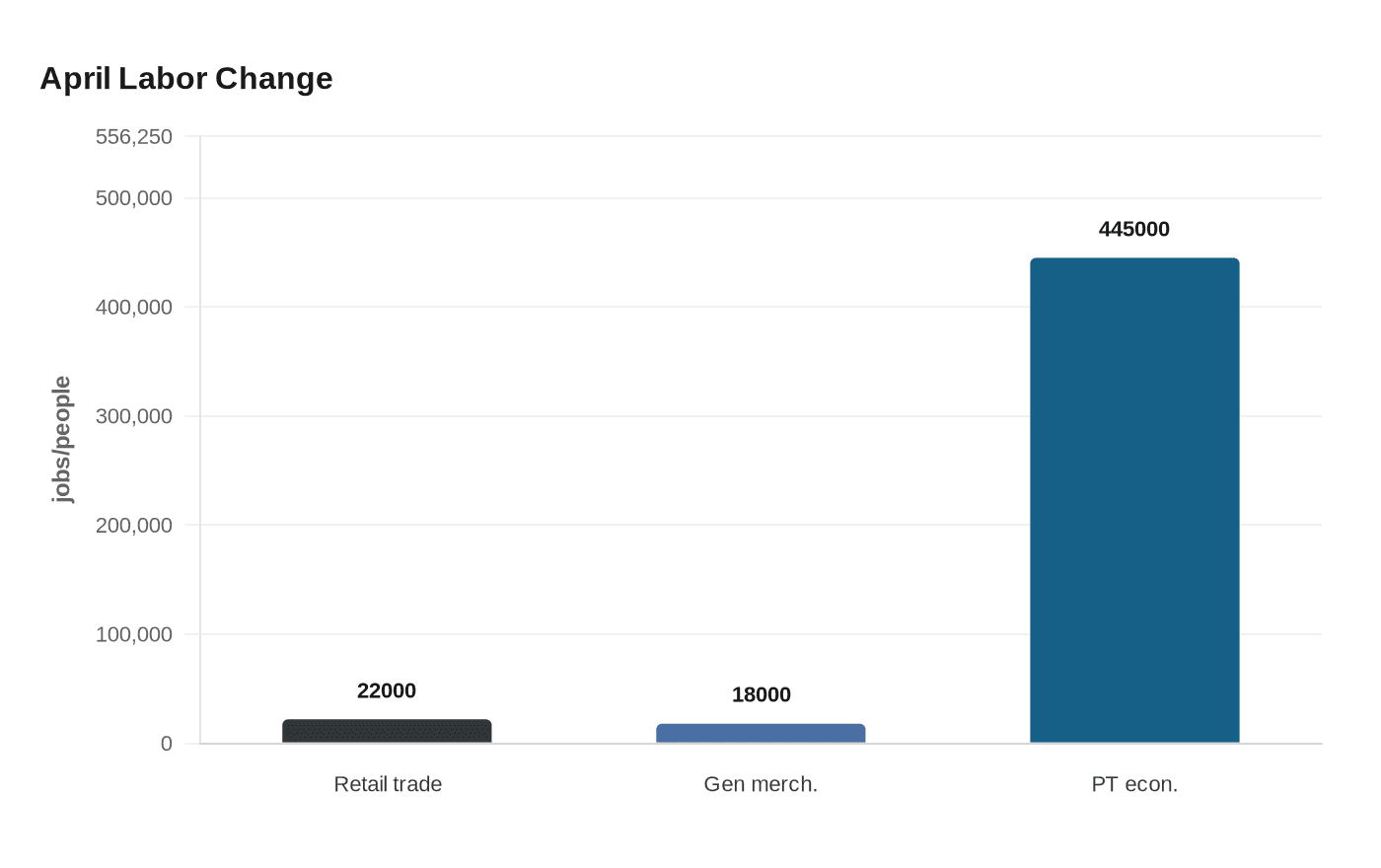
The strongest signal in the April jobs report is not that retail is booming, but that it is still hiring in the places that matter to store workers. Retail trade added 22,000 jobs, and warehouse clubs, supercenters and other general merchandise retailers added 18,000 of them. That is enough to tell you the market is not frozen, even if it does not feel generous once you are staring at a short schedule.

The caution flag is just as important. People working part time for economic reasons rose by 445,000 in April to 4.9 million, which is another way of saying a lot of employers are still trying to run lean. For a Big Lots associate, that usually translates into a familiar gap between hiring and hours: stores may need dependable people, but managers may still be reluctant to hand out the extra shifts that workers want.
Why Big Lots is a special case
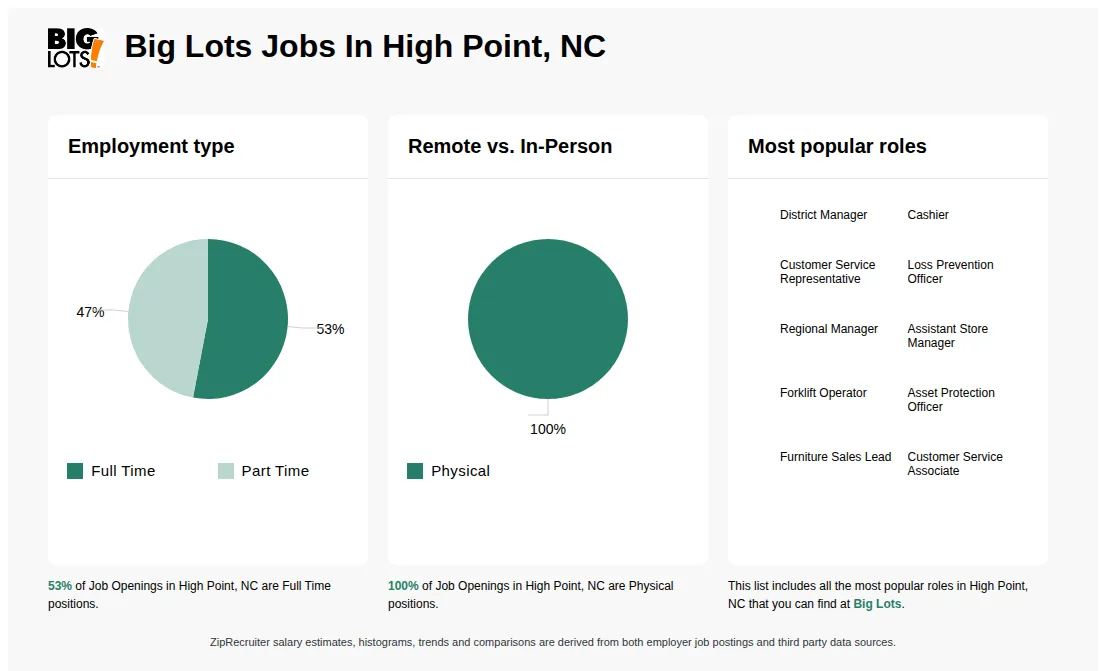
Big Lots is not just another retailer in a soft labor market. The company filed for Chapter 11 bankruptcy on September 9, 2024, and court records say the cases were filed in the U.S. Bankruptcy Court for the District of Delaware. Around that time, reporting put the chain at more than 1,300 stores in 48 states with about 27,700 employees, a scale that made the collapse feel sudden in the communities where it had been a fixture.
The shutdown plan was severe. Court documents said about 295 stores had already started closing sales by September 2024, and coverage said roughly 250 more locations were slated to begin shutting down in late September, with a full closure no later than January 15, 2025. That history matters for workers because it explains why hours feel so guarded now: after a chain goes through that kind of shrinkage, every shift carries more weight, and managers tend to treat labor like a cost to be protected rather than a resource to be expanded.
The reopening changes the equation, but not the uncertainty
Big Lots is not simply disappearing. The company said it was purchased out of bankruptcy in 2025 by Variety Wholesalers, and the revived chain is being built around a different footprint than the pre-bankruptcy business. Variety Wholesalers says the new Big Lots will operate 219 stores in 15 states across the Midwest, Southeast and Mid-Atlantic, a much smaller footprint than the one that existed before the bankruptcy.
That restart creates opportunity and risk at the same time. Variety Wholesalers announced in April 2025 that it would reopen 219 Big Lots stores, beginning on April 10, 2025, and rolling them out in waves through early June. The first reopening wave included nine stores in six states, and additional reopenings were scheduled in places including North Carolina, Alabama, Florida, Georgia, Ohio, Michigan, Pennsylvania, South Carolina and West Virginia. For workers, that means the brand has life, but the number of jobs, the number of stores, and the amount of labor each store can support are all more limited than they were before bankruptcy.
How to read your own leverage right now
If you want more hours, a transfer, or a raise, the labor data points to a simple rule: lead with proof, not frustration. A manager is more likely to listen if you can show that you open and close the register, keep your department straight, handle freight, move quickly with customers, and step in when a truck is late or a coworker calls out. In a market where retail is still adding jobs, that kind of reliability has value.
The April report also suggests that employers are still operating carefully, which means you should expect a tight response even when the store is hiring. If your schedule is thin, the best time to ask for more is when you can point to a specific need, such as a delivery week, a seasonal reset, or a stretch when the store has been running short. Big Lots’ new structure makes it especially important to show that you are useful across tasks, because the revived chain is smaller and more likely to rely on flexible employees who can cover more than one role.
When to ask for more hours, and when to watch your footing
There are three practical moves that fit this market:
- Ask for more hours when you can tie your request to a real business need, not a general complaint. If you have been covering freight, training new hires, or taking extra customer load, say so directly.
- Ask about a transfer if your current store is chronically short on labor but another nearby Big Lots location is busier or has more consistent scheduling. A smaller 219-store chain means openings will be uneven, so a nearby store may have a very different staffing picture.
- Test the market if you want a stronger bargaining position. Retail is still hiring in the categories that overlap with Big Lots work, especially general merchandise, so it is worth knowing whether a nearby employer is paying more, offering steadier hours, or both.
The point is not to assume every store can suddenly hand out more shifts. The jobs report shows employers are still adding workers, but the rise in part-time work for economic reasons shows they are also holding back where they can. That is exactly the kind of environment where a worker with good attendance, broad skills, and a reputation for getting through busy shifts can make a stronger case than someone who just asks for better treatment in the abstract.
What Big Lots workers should take from the moment
Big Lots now sits at the intersection of two realities: a retail labor market that is still creating jobs, and a company that has been cut down, bought out, and rebuilt into a smaller chain. That means there are still ways to move up, move around, or move on, but none of those choices should be made on autopilot.
For workers on the sales floor, in stockrooms, or at the register, the lesson is straightforward. If your store needs you to do more, make that visible. If your schedule is tight, compare it against what similar retail employers are offering. And if your local Big Lots feels too constrained to grow with you, treat the current market as proof that retail is still open to people who can show up, learn fast, and cover the work others cannot.
Know something we missed? Have a correction or additional information?
Submit a Tip