OSHA urges Big Lots to strengthen safety training for young workers
Big Lots managers who rush teens into stockroom work, box cutters or pallet jacks risk OSHA exposure, injuries and staffing hits. The fix starts with six supervisor checks.
In 2015, falling boxes of patio furniture at a Massachusetts Big Lots store struck an employee and caused hospitalization, leading OSHA to cite the retailer, which faced $66,000 in fines for recurring hazards. Big Lots stores do not lose money only when sales slip. They also lose it when a new hire gets hurt, a shift falls apart, or OSHA finds that a supervisor treated a first-job employee like a seasoned stock associate. Employers are responsible for creating conditions where young workers can do their jobs without avoidable hazards.
For Big Lots supervisors, the question is whether the person you just scheduled for the sales floor or back room has been trained for the actual work, watched closely enough to do it safely, and kept away from tasks that should not be handed to an inexperienced worker in the first place. OSHA’s young-worker materials and CDC National Institute for Occupational Safety and Health, or NIOSH, retail guidance identify common store hazards such as slips, trips and falls, cuts from box cutters and other tools, lifting and moving merchandise, and violence or robbery-related dangers.

What supervisors should check before the first shift
1. Match the job to the worker, not the staffing hole
Before you slot a teen or first-job employee into a shift, look at the tasks that shift will actually require. Stocking, pricing, recovery, moving product, cleaning spills, and navigating a crowded back room all carry different risks, and a young worker may not yet know how fast a routine task can turn hazardous.
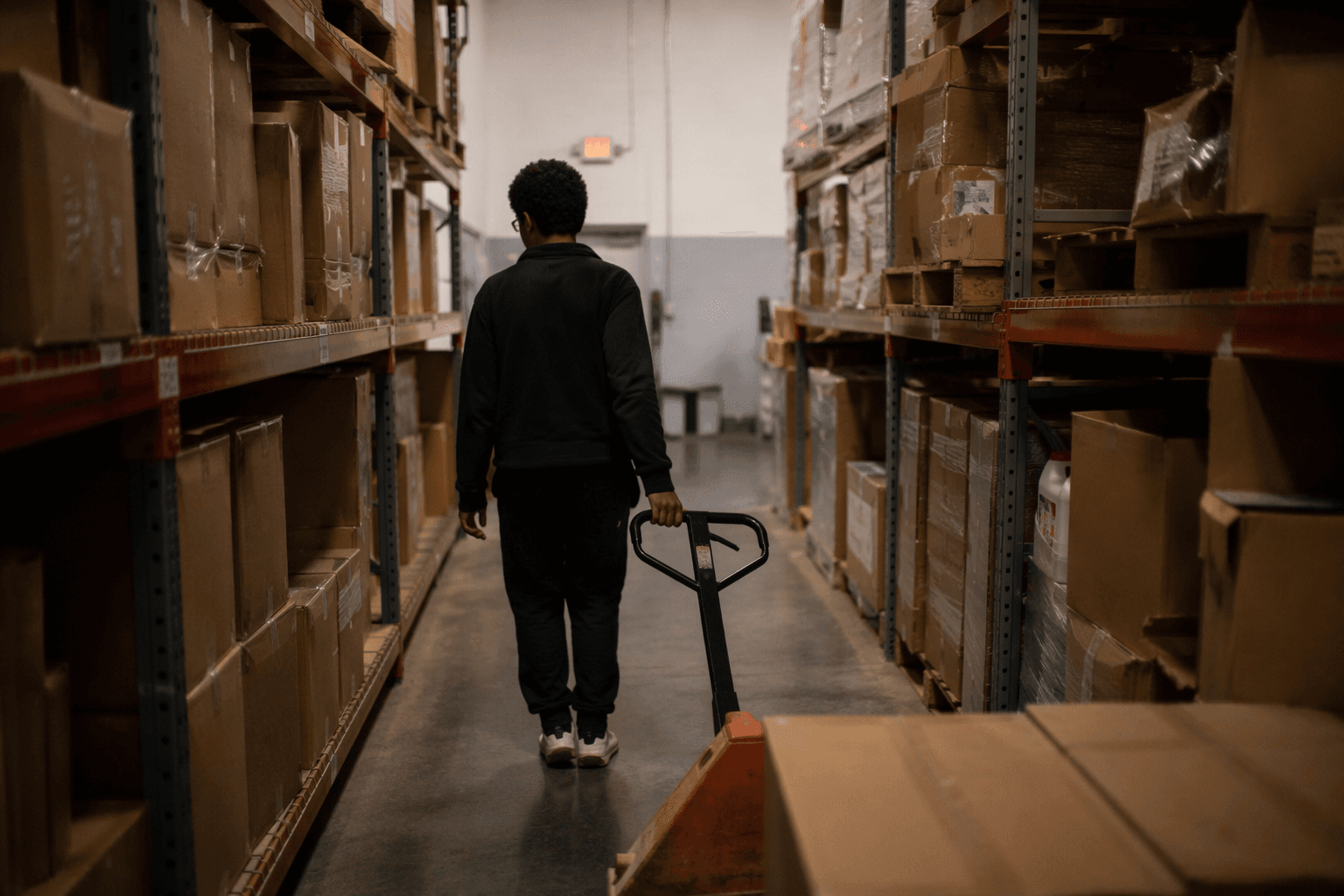
Recurring hazard zones include stockrooms, knives and box cutters, forklifts and pallet jacks, and the rush of busy shifts. If a task involves powered equipment, unusual force, or a level of hazard the worker has not been trained and authorized to handle, it belongs with someone else or needs another layer of control.
2. Train for the job they will actually do
General safety talk is not enough. Young workers need instruction tied to the real tasks they perform, not a generic reminder to “be careful.” At Big Lots, that means showing exactly how to stock safely, how to move merchandise, how to use cutters without cutting toward the body, how to deal with spills, and how to work around the traffic patterns of a busy retail floor.
The first few shifts are where shortcuts do the most damage. Young workers may not yet know what they do not know, so initial training, refresher coaching, and on-the-spot correction all matter. A supervisor who assumes a new associate will figure it out is gambling with injuries and attendance problems that can ripple through the whole schedule.
3. Supervise more closely than you would a veteran associate
A young worker usually needs more check-ins, especially when handling a task for the first time or moving between the sales floor and the back room. That does not mean hovering every second, but it does mean making supervision active, visible, and frequent enough to catch mistakes before they become injuries.
If a manager is too stretched to watch a new hire and too casual to correct unsafe habits, the risk shifts from the worker to the whole operation. A preventable cut, strain, or fall can take one associate off the floor and leave everyone else covering the gap.
4. Keep the high-risk equipment and tasks on a tight leash
Some of the most obvious hazards in retail are also the most overlooked in a rush. Common risks for young workers include box cutters, lifting and moving merchandise, forklifts, pallet jacks, and hazardous stockroom conditions. That makes equipment control a supervisor duty, not just a loss-prevention issue.
At Big Lots, that means being deliberate about who gets access to what, where tools are stored, and when a worker can be assigned to a back-room job. If an employee is inexperienced, the safer answer may be to pair them with an experienced team member, limit the task, or move the assignment to someone who can handle it without added risk.
5. Treat floors, aisles, and stockrooms like active hazard zones
Retail injuries often start with something as ordinary as a wet floor, cluttered aisle, or box left in the wrong place. Slips, trips and falls are a common retail hazard, and simple housekeeping is part of safety management, not a side task.
When the store is busy, fast traffic changes how people move and how quickly hazards get missed. If your young worker is expected to clean up spills, move stock, or recover a crowded aisle, they need clear instructions on what to do first, who to alert, and when to stop and ask for help. A slip that might seem minor in the moment can still lead to a lost-time injury, workers’ compensation claim, and an unplanned hole in the schedule.
6. Make sure the worker knows their rights before the job starts
Young workers have the right to say no to dangerous work, report unsafe workplaces, and be trained in working safely on the job. In OSHA’s video “OSHA: Young Workers’ Rights,” the agency’s direct message is simple: “You have rights!”
In a retail store, young employees are often the least likely to challenge a task that feels wrong. If a supervisor creates a climate where questions are welcomed and unsafe work can be paused without retaliation, the worker is more likely to speak up before a mistake becomes an injury.
Big Lots’ scale and federal scrutiny
Small management lapses scale quickly across a company of Big Lots’ size. In a 2023 Firstup video, Julie Holbein, Big Lots’ vice president of talent development, said the company has more than 1,400 stores and 30,000 employees. In a system that size, one supervisor’s habit of skipping training or overloading a first-job worker can become a chain of injuries, missed shifts, and avoidable turnover.
In July 2022, the U.S. Department of Labor said increases in child labor violations and young workers’ injuries had prompted enhanced outreach and strong enforcement.
OSHA’s 2024 annual injury summary estimates that 2.7 million U.S. workers have experienced workplace injuries and illness each year, on average, since 2015.
This article was produced by Prism’s automated news system from verified source data, official records, and press releases, then run through automated quality and moderation checks before publishing. The system is built and supervised by the people who set the standards it runs under. Read our full AI policy.
Did this article answer your question?