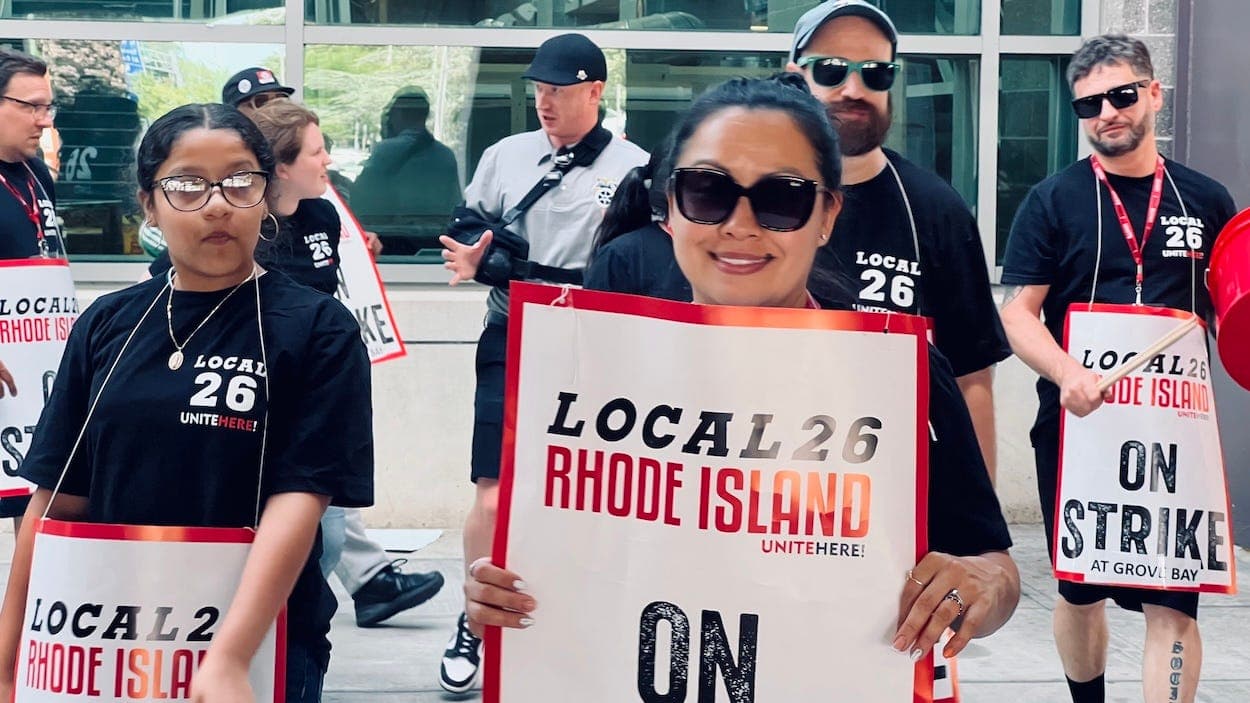
Chipotle workers have federal rights to discuss pay and conditions
Chipotle workers can talk pay, safety, schedules, and petitions with coworkers, but managers still can discipline misconduct and false attacks.

At Chipotle, a conversation at the prep table about pay, hours, safety, or other working conditions can be protected federal activity. Workers can do that with or without a union, and even one employee can be covered when carrying a group complaint or preparing group action.
What the law protects on the line
The key question for Chipotle employees is whether the conversation is aimed at mutual aid or protection. Protected examples include two or more employees addressing pay, discussing safety concerns, circulating a petition for better hours, refusing unsafe work together, or joining coworkers to speak directly to management, a government agency, or the media about workplace problems. A single employee can also be protected when acting with the authority of others, bringing a group complaint, trying to induce group action, or preparing for group action.
Employees can lose protection if they are egregiously offensive, knowingly and maliciously false, or publicly disparaging the company’s products or services without tying the complaint to a labor dispute. Managers, meanwhile, cannot threaten, interrogate, spy on, or promise benefits to shut down protected concerted activity. They also cannot retaliate by cutting hours, changing shifts, or otherwise punishing workers for acting together.
Why the Chipotle pay ladder makes this especially practical
A Georgetown Journal on Poverty Law & Policy article put the chain at nearly 3,000 locations, $8.63 billion in annual sales, and nearly 100,000 workers, with starting pay then ranging from $11 to $18 an hour. Chipotle says its leadership path can take as little as 18 months, with 90% of restaurant management roles filled internally. Its posted total rewards values list Crew, Full Time at $45,900, Kitchen Leader at $50,700, Service Leader at $54,100, Apprentice at $73,100, General Manager at $93,100, and Restaurateur at $116,100, all based on average compensation data as of April 2024.
A Crew member comparing starting pay with a Kitchen Leader, a Service Leader, or an Apprentice is not just swapping numbers. Actual compensation varies by performance and other factors, so the same title can look different from one store or market to another. One Chipotle frontline-role posting lists “Digital Tips” among the rewards, which means tip-related pay can sit alongside base wages, bonuses, tuition help, and promotion opportunities in the same shift conversation.
The Augusta lesson: safety complaints can become protected organizing
At Chipotle’s Augusta, Maine, store, workers walked off the job over unsafe conditions that included understaffing, excessive hours, and orders to falsify work records. The store was the first Chipotle location in the chain to try to unionize, and it closed hours before an NLRB hearing on the election. Later, the company was hiring at another location in Auburn, Maine, about 45 minutes away, and organizer Brandi McNease applied there.
The law does not treat a shared safety complaint as disloyalty. If you and coworkers say the line is too short, the prep load is unsafe, or the schedule is forcing repeated clopens, that can fall inside protected concerted activity. The boundary is conduct, not the subject itself: a worker can push hard for better staffing or safer shifts, but not by making false claims or engaging in abusive conduct that strips away protection.
Schedules, sick time, and local enforcement can overlap with federal rights
Chipotle’s 2024 Seattle settlement involved scheduling and sick-time allegations. Seattle’s Office of Labor Standards said Chipotle agreed to pay $2,895,716.73 to 1,853 employees and $7,308.63 to the city to resolve allegations at eight locations. The allegations included failing to provide schedules on time, failing to pay for schedule changes, failing to provide paid sick and safe time accrual correctly, having a deficient written sick-and-safe-time policy, and retaliating against an employee for calling out sick. Seattle’s Secure Scheduling Ordinance applies to retail or food-service employers with more than 500 employees.
The best evidence is usually mundane. Save the posted schedule, every text about a shift swap, every message about being sent home early, and every write-up tied to sick time or availability. If your store changes your hours after you and coworkers complain about understaffing, those before-and-after records can matter as much as the complaint itself. The same is true if you work a premium shift, such as an overnight or closing schedule with differential pay, because any written policy on that premium should be preserved with the schedule that triggered it.

Digital tips, tip pools, and what to check when the screen asks for more
Tip screens have become part of the fast-casual world. A Chipotle service-leader posting lists Digital Tips among the rewards, and the broader restaurant environment now includes point-of-sale kiosks that prompt customers for tips even when there is no table service. If a store collects tips into a mandatory pool, managers and supervisors cannot keep them, and the employer generally must fully redistribute the tips within the pay period while keeping records of how the pool works.
Digital tipping is a records issue for workers as well as customers. Cash tips of $20 or more in a month must be reported to the employer, and employees must report all tips on their federal return. If you rely on tips, keep screenshots of the payment screen, tip summaries from the app or register, and the pay stub that shows how the money was handled. If a manager cannot explain whether the money was pooled, distributed directly, or simply tracked as a digital gratuity, that is a reason to ask for the written policy before the shift ends.
If you think retaliation is coming
When protected activity starts drawing heat, document everything. Write down the date, time, and location of the complaint; who joined it; who heard it; what was said; and what changed afterward. Save texts, group chats, photos of schedules, copies of write-ups, tip statements, clock-in records, and any email that mentions your hours, performance, or role. If a manager questions you about who else complained, whether you signed a petition, or whether you spoke to coworkers about better hours, note the exact words and who was present.
The NLRB can fight to restore rights that were unlawfully taken away if workers are fired, suspended, or otherwise penalized for protected group activity, and the agency says more than 90% of meritorious unfair labor practice cases are settled at some point. Chipotle cases can stretch across months or years, as the Lansing, Michigan, docket shows: case 07-CA-325791 was filed on September 6, 2023, and the docket lists a conformed settlement agreement dated April 8, 2026.
This article was produced by Prism’s automated news system from verified source data, official records, and press releases, then run through automated quality and moderation checks before publishing. The system is built and supervised by the people who set the standards it runs under. Read our full AI policy.
Did this article answer your question?