Chipotle’s AI bets gain relevance as restaurant tech stumbles mount
Restaurant AI is only useful if it eases the rush. Chipotle’s pilots show where automation can cut hiring delays, prep bottlenecks and wasted clicks.
After Starbucks backed away from AI inventory counting, McDonald’s slowed voice AI tests, and Pizza Hut’s order-management system blew up into a costly mess, the test for Chipotle is simple: does a tool make a shift run smoother, or does it just add another screen to stare at?
What separates a useful system from a failed pilot
The working standard is no longer novelty. Oliver Ostertag of Par Technology said the question is whether the technology is “enterprise-grade, proven, and backed by deep data,” because AI performs better when it can read inventory, labor and sales together instead of doing one narrow task in isolation. That matters on a Chipotle line, where one bad forecast can turn into an understaffed rush, too much prep, or a stack of digital orders that nobody has the bandwidth to absorb.
In the first quarter of 2026, the company said revenue rose 7.4% to $3.1 billion, digital sales made up 38.6% of total food and beverage revenue, and labor costs climbed to 26.1% of revenue from 25.0% a year earlier. In the fourth quarter of 2025, digital sales still accounted for 37.2% of total food and beverage revenue, and full-year revenue reached $11.9 billion, up 5.4%.
Chipotle has already tested the restaurant uses that matter most
Chipotle started this experiment years ago with Chippy, an autonomous AI kitchen assistant announced in March 2022 to make tortilla chips with Miso Robotics. By September 2022, the company said Chippy had moved from the Cultivate Center into in-restaurant operational testing, which is the difference between a demo and a tool that has to work beside real employees during service. Chipotle later extended that approach through Cultivate Next, its venture fund focused on restaurant innovation, automation and other operational bets.
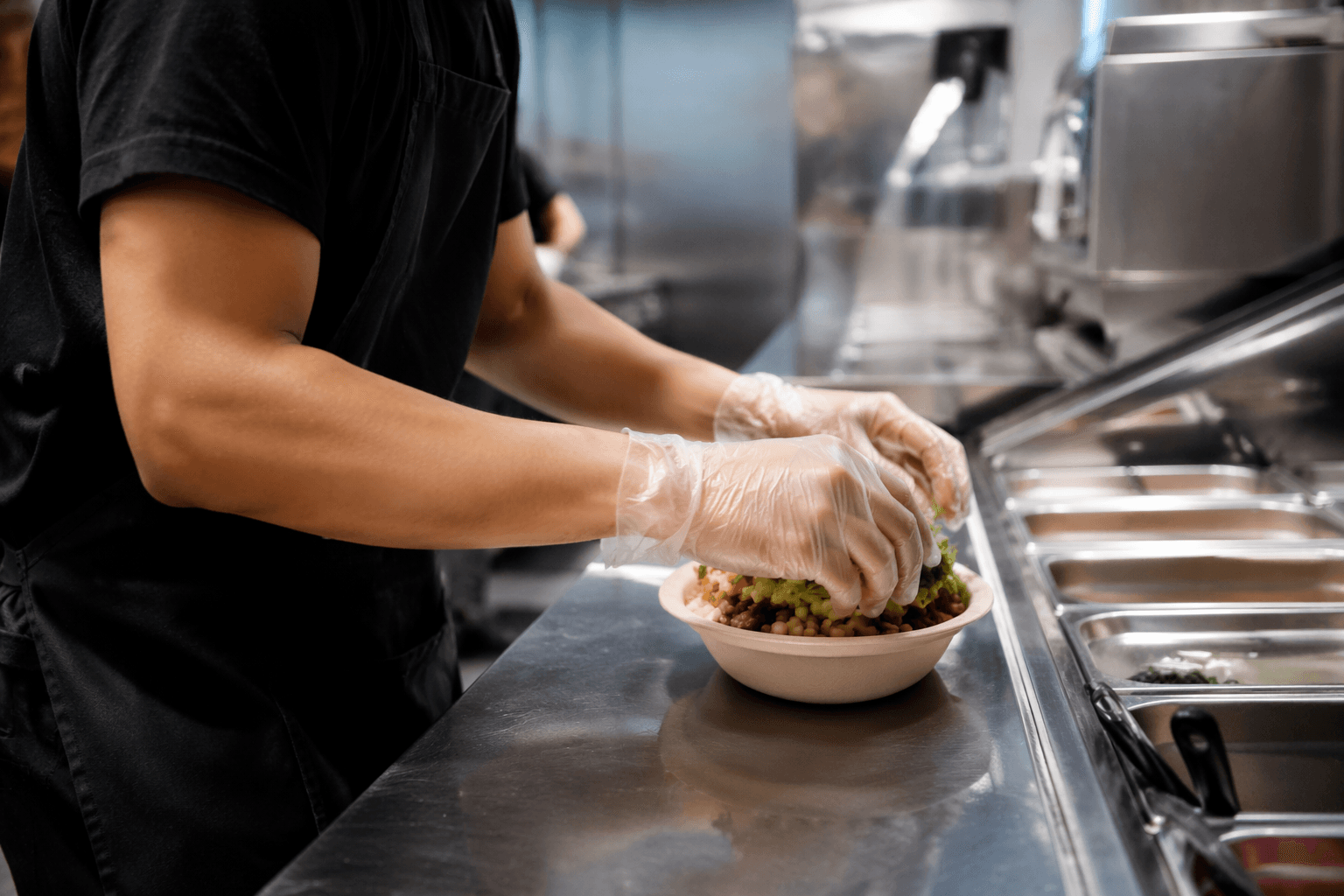
The next wave was more directly tied to line work. In October 2023, Chipotle began testing an automated digital makeline with Hyphen at its Cultivate Center in Irvine, California. In September 2024, it introduced Autocado and the Augmented Makeline in restaurants for the first time: Autocado cuts, cores and peels avocados in Huntington Beach so crew can focus on other prep and hospitality tasks, while the Augmented Makeline builds bowls and salads in Corona del Mar while employees stay on burritos, tacos, quesadillas and kids’ meals. Curt Garner said these cobotic devices could help build “a stronger operational engine” while preserving the company’s culinary standards.
Hiring AI is where the worker impact shows up first
The clearest near-term win is Ava Cado, Chipotle’s AI hiring assistant introduced in October 2024. The system chats with candidates, answers questions, collects basic information, schedules interviews and sends offers once managers make selections. Chipotle said the platform was being rolled out across more than 3,500 restaurant locations and could cut time-to-hire by as much as 75%. It also said Ava Cado is multilingual, able to converse in English, Spanish, French and German.
In February 2025, Chipotle said it was hiring 20,000 additional employees for Burrito Season, its busiest stretch from March through May, and said the average time from application to starting on the job had fallen to four days. The company also said crew members can reach Restaurateur in as little as three and a half years, with a total compensation package of about $100,000, while five Regional Vice Presidents started as crew.
More than 80% of Chipotle’s managers are promoted from Crew, and current crew postings still promise tuition assistance of up to $5,250 a year, medical and dental coverage, and vacation and sick time that accrues based on state law.
The numbers show why the stakes are operational, not cosmetic
Chipotle’s scale makes the difference between a useful tool and a failed pilot expensive. As of December 31, 2025, the company operated 4,056 restaurants, and in 2024 it said it had more than 120,000 employees. With that many stores and that much labor moving through the system, a tool that actually connects staffing, prep and sales can affect how many people are on the line, how much food gets wasted, and whether a digital surge overwhelms the kitchen.
Chipotle’s current job postings show city-specific management ranges, including $53,000 to $74,000 for a General Manager in Glen Allen, Virginia, and $58,000 to $82,000 in Chicago. The company’s careers site still promotes a $15 average wage and a path to six-figure compensation in about three years.
This article was produced by Prism’s automated news system from verified source data, official records, and press releases, then run through automated quality and moderation checks before publishing. The system is built and supervised by the people who set the standards it runs under. Read our full AI policy.
Did this article answer your question?

.jpg&w=1920&q=75)