OSHA says Costco forklift operators need training and daily checks
Costco’s forklift pace only works when the basics do: OSHA says inspect every truck, train every operator, and pull unsafe equipment before it becomes a hazard.
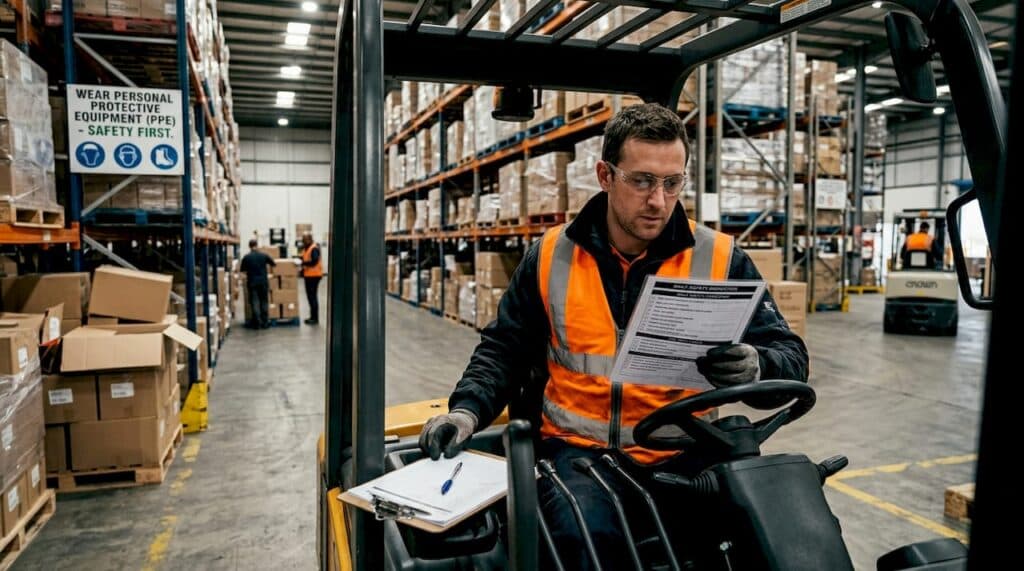
In a Costco warehouse, speed can look like strength, but OSHA’s message is simpler: the job starts with training and ends with control. For stockers, forklift operators, and anyone moving through receiving or back-of-house, the agency says employers must build a training program around safe truck operation, the types of vehicles in use, the hazards of the workplace, and the general safety requirements that go with them.
That matters because forklift work is never just about moving a pallet from point A to point B. OSHA says initial instruction has to cover operating instructions, warnings, truck controls, and other relevant topics, which is a reminder that a quick walk-through is not enough for a machine that can hurt people, break product, or shut down a shift in seconds. In warehouse terms, the basics are not paperwork. They are the difference between a clean unload and a preventable incident.
Daily checks are supposed to happen before the first load moves
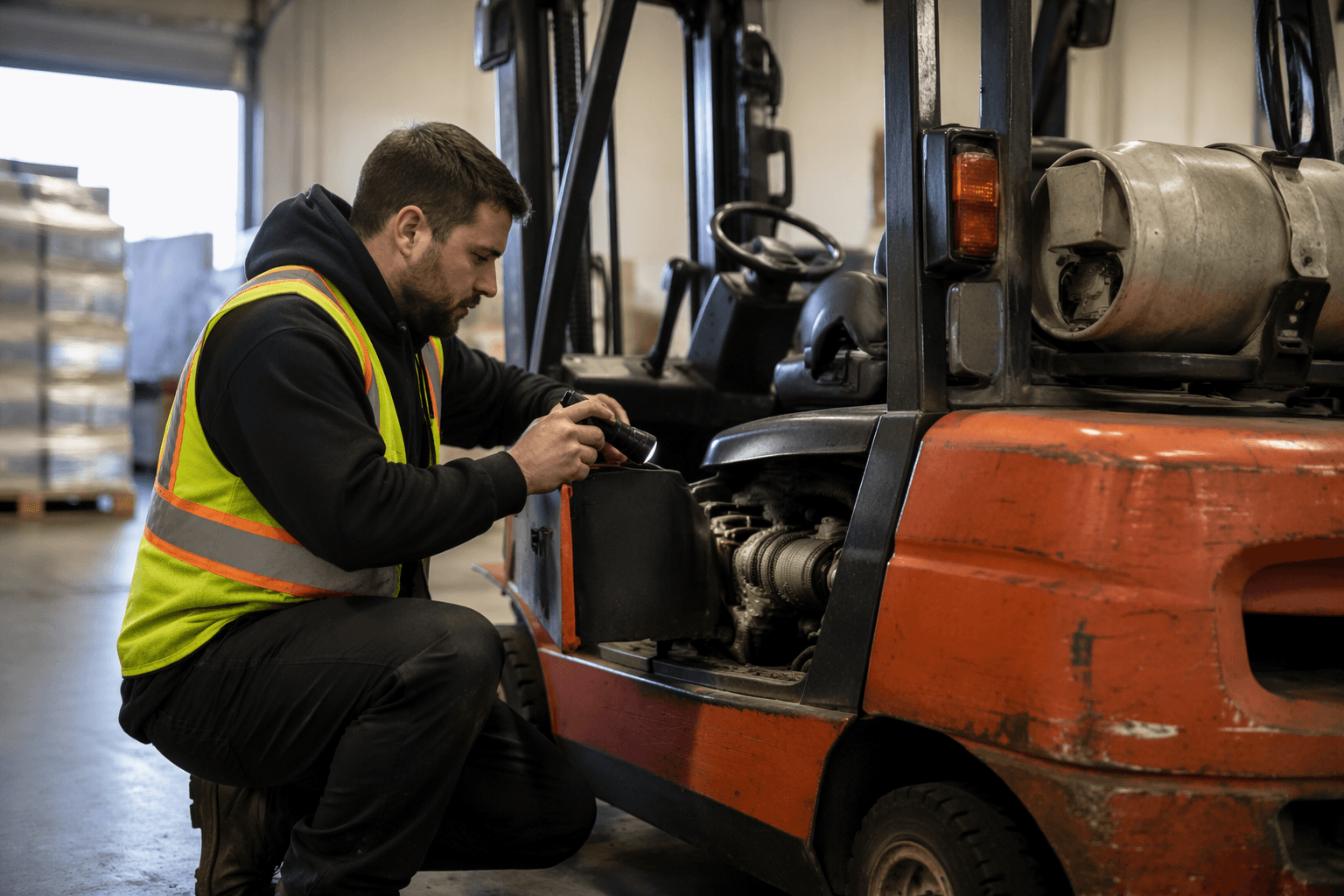
OSHA’s guidance on pre-operation checks is specific for a reason. Operators should begin with a pre-start visual inspection with the key off, then follow with an operational check once the engine is running. If those examinations show the vehicle may not be safe to operate, it should not go into service.
That instruction is more than a checklist item. It is a daily decision point that can keep a bad battery connection, a damaged tire, a steering issue, or another hidden problem from becoming a bigger event on the floor. OSHA also says its sample daily checklists are meant to help train workers on powered industrial truck standards, but they are not a substitute for the standard itself. In plain warehouse language, the checklist is a tool, not permission to rush.
A useful way to think about it is simple:
- Check the truck before it checks your day.
- If something looks off, stop the truck.
- Report it immediately instead of trying to make the shift work around it.
That approach saves more time than it costs. A truck taken out of service early may delay a pallet by a few minutes; a truck kept in service when it should not be there can delay an entire receiving flow, damage freight, and put coworkers at risk.
Costco’s warehouse layout makes speed tempting, and risky
Costco’s own careers page shows why this advice lands so hard in its environment. A forklift operator in Omaha, Nebraska, operates an electric stand-up forklift to move pallets of merchandise and equipment throughout the warehouse and hand-stacks product from partial pallets onto full pallets. That is a job built around constant motion, tight handoffs, and frequent transitions between tasks.
Costco also says its distribution system serves over 900 locations in its global operations, which gives a sense of the scale behind the scenes. At that volume, a rushed turn, a missed visual check, or a careless stop does not stay local for long. It can create damaged product, slow down replenishment, and complicate work for everyone else in the building, from receiving to the sales floor.
For warehouse managers, that is the operational lesson. Uptime and safety have to coexist. A serious pre-shift check is not a drag on productivity; it is part of keeping freight moving without turning the floor into a liability. For stockers working around equipment, the same logic applies. Visibility, awareness, and communication are not soft skills in a warehouse. They are working tools.
OSHA’s operating rules are about control, not bravado
OSHA’s powered industrial truck guidance stresses three basics that sound simple and are easy to overlook when the floor is busy: maintain control, keep a proper lookout, and travel at safe speeds for workplace conditions. That is the myth-busting part of this story. Speed is useful only when the operator has the truck, the load, and the aisle under control.
In a high-volume warehouse, safe speed is not the same thing as slow speed. It means matching movement to the surface, traffic, visibility, and the kind of truck being used. OSHA notes that powered industrial trucks, commonly called forklifts or lift trucks, are used in many industries to move materials, and that each type of truck brings different hazards. The message is that every warehouse has its own risk profile, and Costco’s back-of-house traffic, narrow routes, and constant pallet movement make those differences matter in real time.
The consequences of shortcuts are not theoretical
OSHA’s accident reports show what can happen when the fundamentals break down. In one 2008 Costco case, an employee’s foot was injured after being pinned between forklifts while pallets were being moved from a loading dock to the sales floor. In a 2013 Costco case in La Mesa, California, a worker suffered foot injuries after being struck by a forklift at a warehouse. And a 2024 report describes a worker who was killed when struck by a forklift, with the person found pinned between a rack cross beam and a stand-up forklift.
Those cases make the cost of shortcuts plain. An unsafe move can injure a coworker, damage freight, and send a warehouse into cleanup, investigation, and retraining mode. It can also create liability that reaches well beyond the original incident. The point of daily checks, training, and controlled driving is not to slow work for its own sake. It is to keep the building open, the freight moving, and the people in it going home in one piece.
When safety concerns need to move up the chain
Costco’s employee website also provides channels for confidential employee complaints and inquiries, which can matter when workers want to flag safety problems internally. That option is important in a warehouse culture where people often feel pressure to keep moving, even when a truck looks questionable or a process feels rushed. Safety concerns do not get smaller because the shift is busy.
For Costco workers, the lesson is straightforward. Daily checks, proper training, and controlled operation are not extra steps around the job. They are the job. In a warehouse built on volume and precision, the safest operators are usually the fastest in the long run because they do not spend their time recovering from preventable mistakes.
This article was produced by Prism’s automated news system from verified source data, official records, and press releases, then run through automated quality and moderation checks before publishing. The system is built and supervised by the people who set the standards it runs under. Read our full AI policy.
Know something we missed? Have a correction or additional information?
Submit a Tip