Dollar General Dumpsters Spark Outrage as Edible Food Gets Thrown Away
Crystal Harper's TikTok showing edible chips, dog food, and Hostess cupcakes in a Dollar General dumpster has 15,900 likes. The company has said nothing.
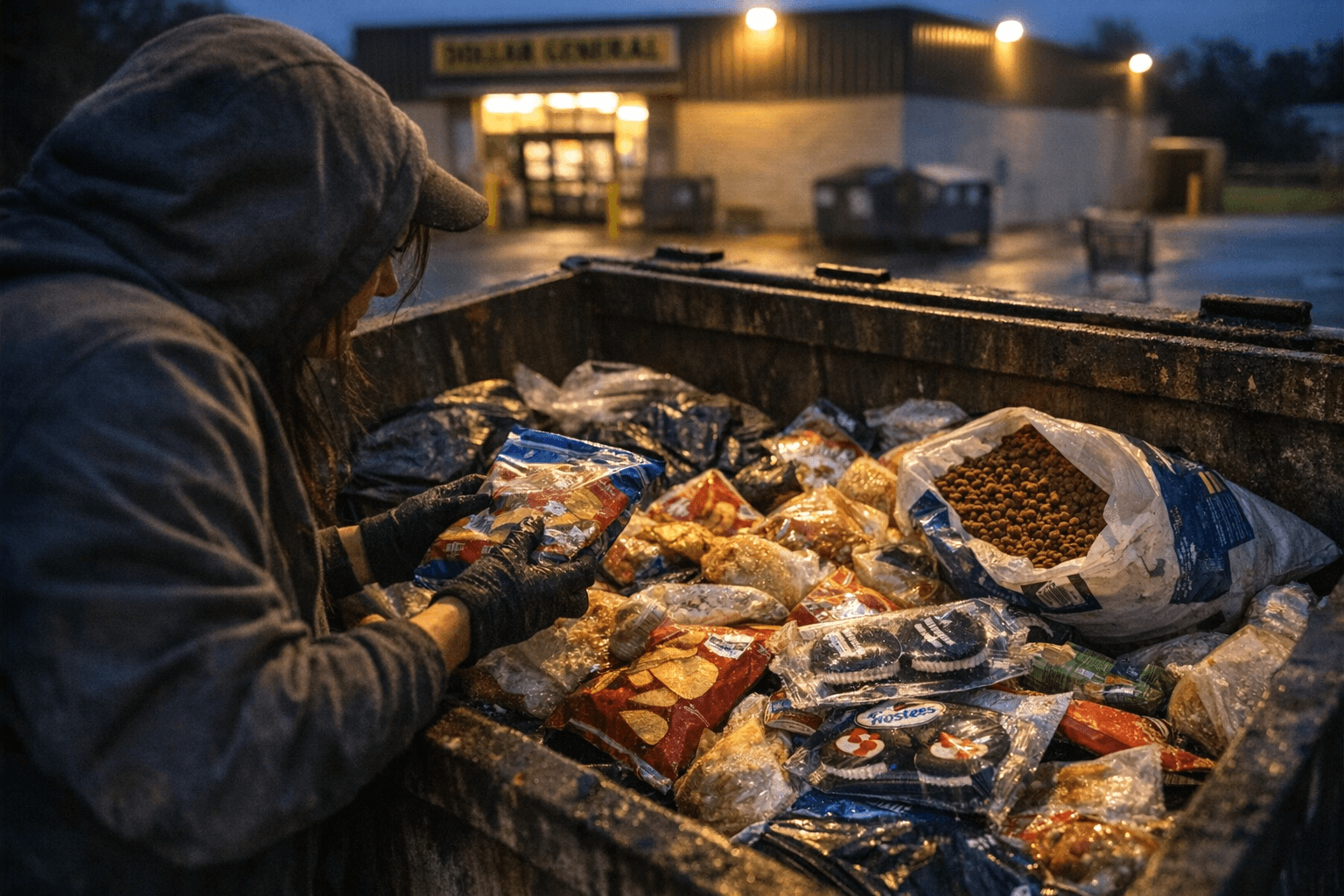
Crystal Harper pulled chips, canned dog food, Nutella, Hostess cupcakes, and energy drinks out of a Dollar General dumpster and posted the footage to TikTok on November 19, 2024. Her video, shared under the handle @westgeorgiamama, collected at least 15,900 likes and 605 comments within weeks, most of them expressing disbelief or outrage. Dollar General has issued no public statement explaining why it discards rather than donates unsold food.
The video is not an isolated find. A couple posting under @trash.monsters4 on TikTok recovered a haul worth approximately $600 from behind a single Dollar General location. A Dollar General employee posted photos to the r/DollarGeneral subreddit showing discarded Hostess snack cakes with expiration dates stretching back to May, writing "This is what we threw away on Monday." A separate Redditor found a dumpster nearly full of frozen food after a Dollar General Market appeared to clean out its entire freezer section, calling the discovery "painful to watch."
For store teams, the dumpster footage represents more than a public relations problem; it signals a breakdown in standard merchandise disposition protocols. When unsellable food reaches a dumpster without being logged, the store forfeits any chance of recovering value through vendor credits or chargebacks. The correct sequence begins with a damage log entry, escalation to the store manager, and, where appropriate, notification to the district manager. Undocumented disposal of large quantities of merchandise, whether damaged packaging, discontinued product, or near-expiration stock, creates a shrink variance the store cannot explain and a paper trail it cannot produce if Loss Prevention later investigates.
Donation is a legitimate disposal option with robust legal protection. The Bill Emerson Good Samaritan Food Donation Act, signed by President Clinton on October 1, 1996 and strengthened by the Food Donation Improvement Act in 2022, provides federal civil and criminal liability protection for businesses that donate food in good faith, including food past its sell-by date. All 50 states carry additional protections on top of that federal floor. Despite that shield, Dollar General's own workers have described a company culture that treats donation as the wrong answer. In Mineral Point, Wisconsin, former store manager Trina Tribolet and her entire team quit in 2024, citing a policy requiring employees to trash near-expiration and discontinued items rather than donate them. Tribolet told local news station WKOW that the team had been labeling items as "damaged" to reroute them to donation, until management directed them to stop.
An open, unsecured dumpster containing edible merchandise also creates a direct safety exposure. Dumpster diving is legal in all 50 states, though county-level ordinances vary, meaning anyone climbing into that container after closing is operating within the law. An unlocked or unscreened dumpster creates slip-and-fall risk, potential injury from broken packaging or sharp edges, and contamination exposure if non-food waste is co-mingled with consumables. Store managers who discover unauthorized disposal of product should notify their district manager and Loss Prevention contact immediately, document what was discarded and the timeframe, and ensure dumpster access is secured going forward. The absence of documentation following an injury at an accessible dumpster significantly compounds the store's liability exposure.
In Florida, Mary Gundel claims Dollar General fired her after she posted TikTok videos alleging the company treated employees unfairly and created unsafe working conditions. Her case, combined with the Wisconsin walkout and the wave of dumpster footage circulating on TikTok and Reddit, illustrates how disposal practices that stay off the corporate record still end up on social media.
Dollar General's annual "Serving Others" ESG report commits to a 15% reduction in greenhouse gas emissions by 2026. Food decomposing in a landfill releases methane at rates far exceeding carbon dioxide, and the FDA identifies food as the single largest category of material placed in U.S. municipal landfills. American retail stores generate approximately 16 billion pounds of food waste annually, roughly 30% of everything stocked on store shelves. For a company operating thousands of locations nationwide, the distance between that ESG commitment and an unlocked dumpster full of Nilla wafers and dog treats is becoming very difficult to explain away at 15,900 likes a video.
Know something we missed? Have a correction or additional information?
Submit a Tip