Dollar General employees' rights primer explains NLRA basics and protections
OSHA excerpts require posters, training and committees; Dollar General policy fragments show timekeeping, anti-discrimination and vendor-reporting rules, several key documents and an OSHA “Respondent” identity remain to be confirmed.
1. Why an evergreen primer matters
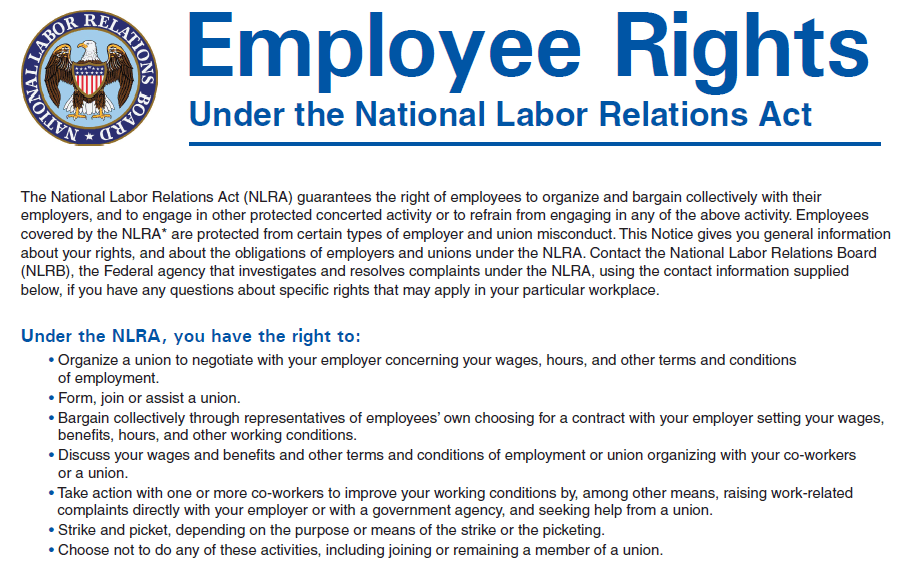
Worker rights and NLRA protections are treated as durable guidance: "Why this is included as evergreen: Worker rights and NLRA (National Labor Relations Act) protections do not change daily in the same way that promotions or local store events do; however, up‑to-date guidance is essential to employees considering concerted activity, unionization, or other collective", the excerpt is truncated, but it explains the purpose of keeping rights guidance current for employees weighing collective action. Because the source text is incomplete, readers should treat this as context rather than a full legal summary and seek primary NLRA materials for legal detail.
2. What the OSHA excerpt requires (timing, posters, training)
The Settlement Agreement excerpt sets specific timing and posting obligations: "Within 10 days of the Effective Date, Respondent shall post copies of the OSHA Job Safety and Health: It’s the Law poster, in both English and Spanish (OSHA 3165-English; OSHA 3167 – Spanish), as well as the OSHA Fact Sheet: Your Rights as a Whistleblower, in both English and Spanish, in conspicuous places at all Covered Stores and in locations where notices to employees are" (truncated). It also requires training "to begin within 30 days of the Effective Date" and monthly refreshers: "receive safety and health training at the time of hire and a monthly refresher on safety issues", these are concrete deadlines in the excerpt, but the Effective Date itself is not provided here and needs confirmation from the full settlement.
3. Safety-and-health training details spelled out in the excerpt
Training content specified in the excerpt includes hazards covered by the settlement and employees' rights: training must include "the hazards covered by the Settlement Agreement, employee rights to a safe and healthy workplace under the [...] employee rights to a safe and healthy workplace under the OSH Act (including complaints or reports to the employer, to OSHA, or to other government agencies about unsafe or unhealthful working conditions or hazards in the workplace without fear of retaliation), and their role under Respondent’s safety and health program." The excerpt also states training is at "Respondent’s expense" and must be provided to "non-managerial store employees" at hire and monthly thereafter.
4. Safety and Health Committee requirements
The excerpt directs creation of a workplace committee: "Respondent shall establish a safety and health committee composed of both managerial and non-managerial employees." It specifies that "Non-managerial employees must represent at least 50 percent of the committee’s membership." The committee is described as advisory only and limited in authority: "The committee shall be advisory only and shall not have among its responsibilities or authority the negotiation of or agreement to any terms 9 or conditions of employment, [...]", note the trailing "9" appears to be a transcription artifact and the sentence is truncated, so the full limits on authority must be reviewed in the complete document.
5. Anti‑retaliation language and artifacts to verify
The excerpt contains a direct anti-retaliation sentence but with a likely artifact: "Respondent will maintain a policy that prohibits 20 retaliation against employees that engage in protected activity, including exercising their rights under the OSH Act." The number "20" appears within the text as provided and should be treated as a likely pagination or transcription artifact until you obtain the full settlement language. The excerpt also repeats that employees may make "complaints or reports to the employer, to OSHA, or to other government agencies ... without fear of retaliation."
6. Wage-and-hour and timekeeping guidance from Dollar General fragments
Dollar General internal-policy excerpts emphasize accurate reporting and manager duties: "Those of us paid hourly must do our part by correctly reporting our hours and confirming we are being paid what we were told we would earn. Similarly, managers must ensure that those hourly (non-exempt) employees who report to them properly record their work time. For details on our wage and hour policies, consult our Employee Handbook or your manager." A timekeeping Q&A uses real names and a concrete scenario: Q: "Kendra clocks in 15 minutes before the start of her scheduled shift and sits in the break area. Her manager, Jodi, knows that Kendra is a hard worker and wouldn’t try to cheat. Can Jodi just reduce Kendra’s time by 15 minutes?" A: "No, Jodi may not alter Kendra’s clock-in time or deduct the 15 [...]", the answer is truncated, so the full policy explanation and any exceptions must be retrieved from the Employee Handbook.
7. Anti-discrimination and harassment policy language
The company excerpt lists protected characteristics in full and defines harassment in principle: the policy covers decisions "based upon the person’s race, color, national origin, religion, sex, age, disability, marital status, veteran status, citizenship status, sexual orientation, gender identity, genetic information or other characteristic protected by law or listed in our Employee Handbook." It continues: "Harassment is any unwelcome conduct that is based on another’s protected characteristic and has the purpose or effect of creating an intimidating, offensive or hostile work environment. Harassment also includes situations where employment decisions are conditioned on an employee’s submission to unwelcome conduct by [...]", that definition is useful but truncated; employees should confirm reporting channels, investigation steps and remedies in the full Harassment policy.
8. Vendor compliance, Internal Audit and Law Department references
Policy fragments make clear vendor concerns and reporting obligations: employees must notify Internal Audit if they "suspect a vendor is not complying with these criteria," and "Failure to notify the Internal Audit Department is a violation of our Code. Depending upon the situation, Dollar General may discontinue the relationship." The excerpt closes by directing employees that "These topics are addressed in other Dollar General policies and procedures, as well as our Employee Handbook. You are expected to be familiar with significant laws or regulations governing your job function. Contact the Law Department", a direct pointer to internal channels for clarification.

9. What is missing or ambiguous in the excerpts (what you must verify)
Several critical items are incomplete or ambiguous and require the full records: the identity of "Respondent" in the OSHA excerpt is not named, the "Effective Date" that triggers the 10‑day and 30‑day deadlines is absent, numeric artifacts appear ("20" and "9") in anti-retaliation and committee clauses, and multiple sentences end with truncation "[...]" or are cut off. The research notes explicitly advise: "Do not publish any claim that the OSHA Settlement Agreement applies to Dollar General unless you have one of: (a) the full settlement naming Dollar General as Respondent; (b) an official statement from OSHA linking the settlement to Dollar General; or (c) an official statement from Dollar General acknowledging the settlement obligations."
- Check the employee notice area for posted materials that match the excerpt: "OSHA Job Safety and Health: It’s the Law poster, in both English and Spanish (OSHA 3165-English; OSHA 3167 – Spanish)" and "OSHA Fact Sheet: Your Rights as a Whistleblower, in both English and Spanish."
- Review your Employee Handbook and ask your manager for the full wage-and-hour policy and the complete answer to the Kendra/Jodi Q&A; the handbook is repeatedly cited: "For details on our wage and hour policies, consult our Employee Handbook or your manager."
- If you suspect vendor noncompliance or other Code issues, follow the excerpted requirement to notify Internal Audit; remember the text: "Failure to notify the Internal Audit Department is a violation of our Code."
- For safety concerns or retaliation, the excerpted training language emphasizes employees' ability to make "complaints or reports to the employer, to OSHA, or to other government agencies ... without fear of retaliation."
10. Practical steps store employees can take now
11. Who to contact and document requests journalists and employees should pursue
The research suggests specific records and contacts to confirm the excerpts: request the full Settlement Agreement (to confirm Respondent identity and Effective Date) from OSHA or the regional office; ask Dollar General Law Department, Internal Audit, HR or Corporate Communications for the Employee Handbook, training materials, the full Harassment policy, timekeeping rules, and evidence of any required postings or committee formation. The notes include recommended outreach language such as: "Please identify the Respondent, the Effective Date, the list of Covered Stores, and any enforcement mechanisms or reporting requirements."
12. How this intersects with NLRA basics (what the excerpts do and do not show)
The Original Report fragment frames the evergreen purpose but does not provide NLRA text: "Worker rights and NLRA (National Labor Relations Act) protections do not change daily ... however, up‑to-date guidance is essential to employees considering concerted activity, unionization, or other collective", the excerpt ends there. Because the provided materials do not contain NLRA definitions, protections, or examples, obtain NLRA guidance directly from the NLRB or labor-law counsel before drawing conclusions about concerted activity, employer conduct, or organizing protections in specific situations.
- Obtain the full OSHA Settlement Agreement and confirm whether it names the company as Respondent and the Effective Date.
- Request the complete Employee Handbook and Code sections for timekeeping, harassment, complaint channels, and vendor reporting.
- Ask Corporate Communications or HR for proof that required OSHA posters and whistleblower fact sheets were posted "in conspicuous places at all Covered Stores" and for training rollout evidence.
- Get clarification on the committee selection process, records of any Safety and Health Committee meetings, and the senior leadership quarterly review process described as "senior leadership shall review Respondent’s compliance with the Settlement Agreement on a quarterly basis."
13. Next reporting and verification priorities (checklist)
Closing note This primer compiles every explicit phrase, poster number and time frame from the provided excerpts so you know what to look for in company documents and government records: exact poster IDs (OSHA 3165-English; OSHA 3167 – Spanish), the Kendra/Jodi timekeeping scenario, the non-exhaustive protected-classes list, and the repeated use of "Respondent" in the OSHA text. Wherever the excerpts are truncated or contain artifacts ("20", "9", "[...]"), treat those as verification flags and obtain the full texts before acting on or citing them.
Know something we missed? Have a correction or additional information?
Submit a Tip