Dollar General store growth signals jobs, promotions, and community impact
A new Dollar General store can mean a shorter drive for shoppers and a wider career map for workers, but also more staffing pressure and local competition.
What Dollar General growth really means on the floor
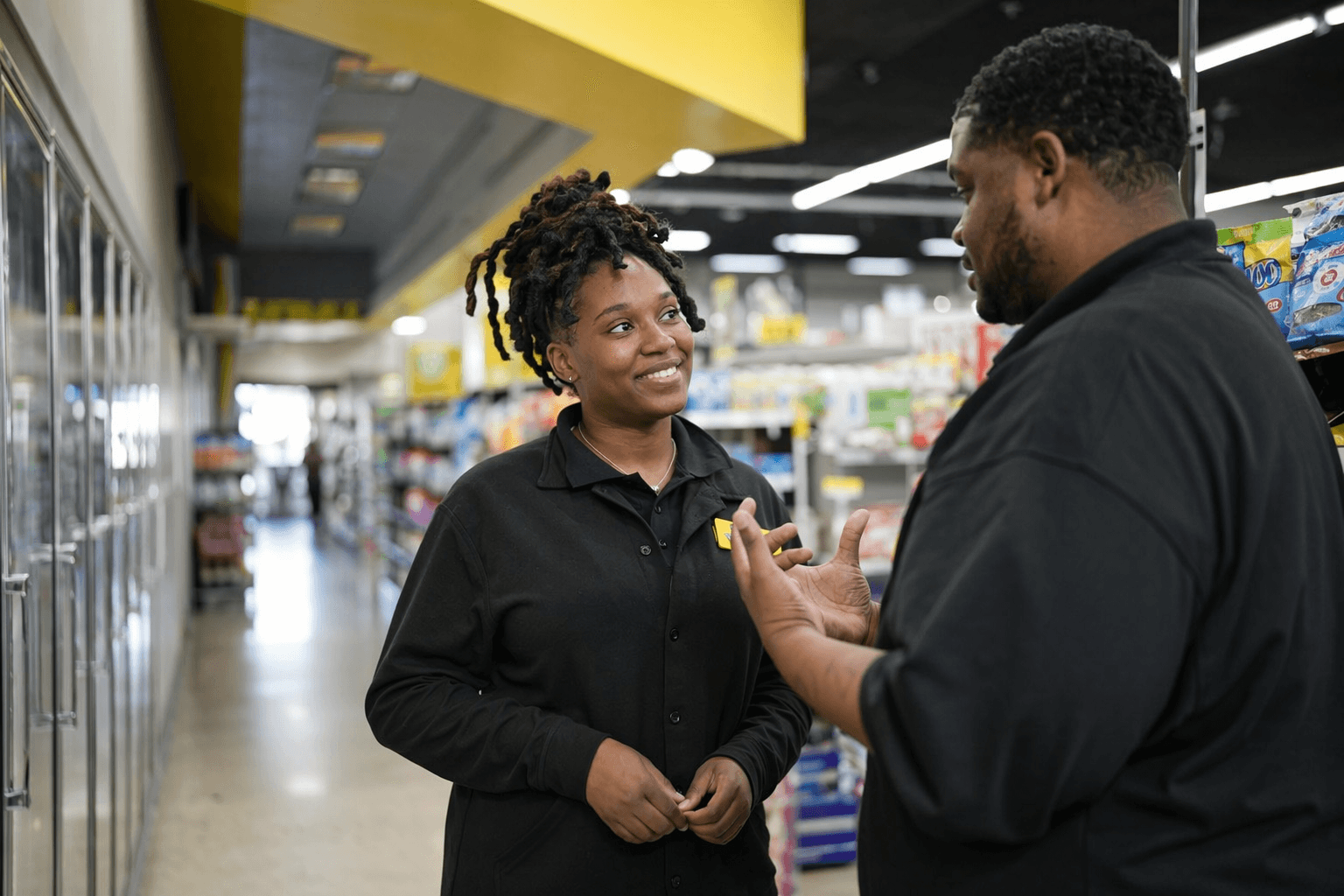
A new Dollar General store is not just another dot on the map. For employees, it can change traffic patterns, staffing pressure, transfer options, and who gets the next shot at advancement. The company’s real-estate logic is supposed to serve customers first, but it also decides where the busiest jobs will be, where labor will be tightest, and which locations become better stepping-stones for a career.
How the company picks a site
Dollar General says it weighs a number of factors before opening a new store, and the company’s own language is blunt: it carefully evaluates each potential location to make sure it can meet customers’ price, value, and selection needs. That matters because site choice is not abstract strategy. If the store lands in a rural crossroads or a growing suburban pocket, it can pull in more traffic, more deliveries, and more pressure on the team to keep shelves full and lines moving.
The company was founded in 1939 and is now headquartered in Goodlettsville, Tennessee. As of January 31, 2025, it said it operated 20,594 stores across the United States and Mexico, with the greatest concentration in the southern, southwestern, midwestern, and eastern United States. That footprint tells you where the company sees demand, but it also tells workers where opportunity is likely to cluster next.
Why a new store can reshape careers
For associates, store growth can open paths that do not exist in a slower market. A new location usually means hiring, training, and new layers of responsibility, from associate roles to assistant managers and district-level support. In practical terms, that can create a faster route to a promotion if you are willing to take on more, learn a new store, or move into a busier market.
That same growth can also change the calculus around transfers. A store opening near a current location may make it easier to move laterally for a better schedule, a shorter commute, or a store with more volume. The opposite is true too: if the new location becomes the stronger traffic store, it may be the one that builds the toughest but most visible track record for someone trying to stand out.
What growth means for staffing and day-to-day pressure
A new Dollar General store can shorten the drive for customers who were previously traveling farther for essentials, but it also creates a new hiring pipeline and new scheduling demands. That is where the site-selection logic becomes a workforce story. A store placed in a dense rural area may draw steady volume with limited local labor, while a suburban location can bring more competition from other retailers and a different rhythm of traffic.
For district managers, the challenge is not just opening the doors. Growth has to be balanced with training, operational consistency, and local community relationships. A store that opens too fast or too thin can become a churn point for labor, while a well-staffed opening can become the kind of location that gives reliable performers a clearer shot at a lead role or a transfer to a higher-volume market.
The company is expanding, but it is also pruning
Dollar General’s strategy is not pure expansion anymore. In fiscal 2024, the company initiated a store portfolio optimization review to identify stores for closure or re-bannering based on store performance, expected future performance, and operating conditions. That is a major signal for workers: the company is looking harder at productivity, not just store count.

In other words, a location is not guaranteed to stay open simply because it exists, and a new store is not automatically a safe harbor. The company is sharpening its focus on which stores can keep delivering. For employees, that means mobility, performance, and adaptability matter even more, because the best opportunities may increasingly sit in the stores and markets the company believes can produce stronger results.
Why local grocers and rural markets are part of the story
Dollar General’s expansion also has a wider effect on the retail ecosystem that employees live inside. A 2024 study from the U.S. Department of Agriculture Economic Research Service found that when a dollar store opened in a census tract, independent grocery retailers were 2.3 percent more likely to exit, employment at independent grocery stores fell 3.7 percent, and sales declined 5.7 percent. The study found those effects were stronger in rural census tracts than in urban ones, and that the urban effects tended to fade after about five years while rural impacts continued.
That helps explain why a Dollar General opening can feel like relief to one household and pressure to another business owner. For workers, it also means the company’s growth is tied to communities where it can become the main convenience stop, not just another retailer. The store may fill a gap, but it can also intensify the debate over what happens to the local grocery base around it.
The civic pitch behind the footprint
Dollar General does not present its growth story only as retail math. The company links its business model to affordable products, career opportunities, and literacy and education support, and it has built that identity around the Dollar General Literacy Foundation. The foundation was created in 1993 to honor co-founder J.L. Turner, whom the company says had only a third-grade education and was functionally illiterate.
By May 2024, the foundation said it had helped more than 20 million individuals achieve their educational dreams, and by fall 2024 it said it had donated more than $254 million to literacy programs. Dollar General and its foundations also said they donated more than $27 million to local and national efforts in fiscal 2024. The company says that broader community work includes food insecurity relief, disaster recovery, reforestation, literacy, education, and public-library support.
That matters because it frames the company as part of local infrastructure, not just a place to buy detergent and snacks. The same store network that creates jobs and promotion paths also carries a public message about how the company wants to be seen in the towns it serves.
What employees should read in the growth map
Dollar General’s footprint now spans 20,594 stores and a logistics network that includes 20 distribution centers for non-refrigerated products and 10 cold storage distribution centers. The scale helps explain why store growth can change so much at the local level: a single opening can shift traffic, labor needs, and the odds of an internal move, while a closure or re-bannering can redraw those same opportunities just as quickly.
For employees, the real lesson is simple. A store location is not just where the company sells products. It is where careers get built, where markets get tougher or easier to manage, and where the company decides which communities get the next layer of access, jobs, and advancement.
Know something we missed? Have a correction or additional information?
Submit a Tip