Dollar General urges calm de-escalation, reporting suspected theft, safety risks
Dollar General workers are told to step back from danger, report misconduct, and leave enforcement to managers. The company’s safety record and shrink concerns show why that line matters.
When a customer turns volatile, distance is the first safety tool
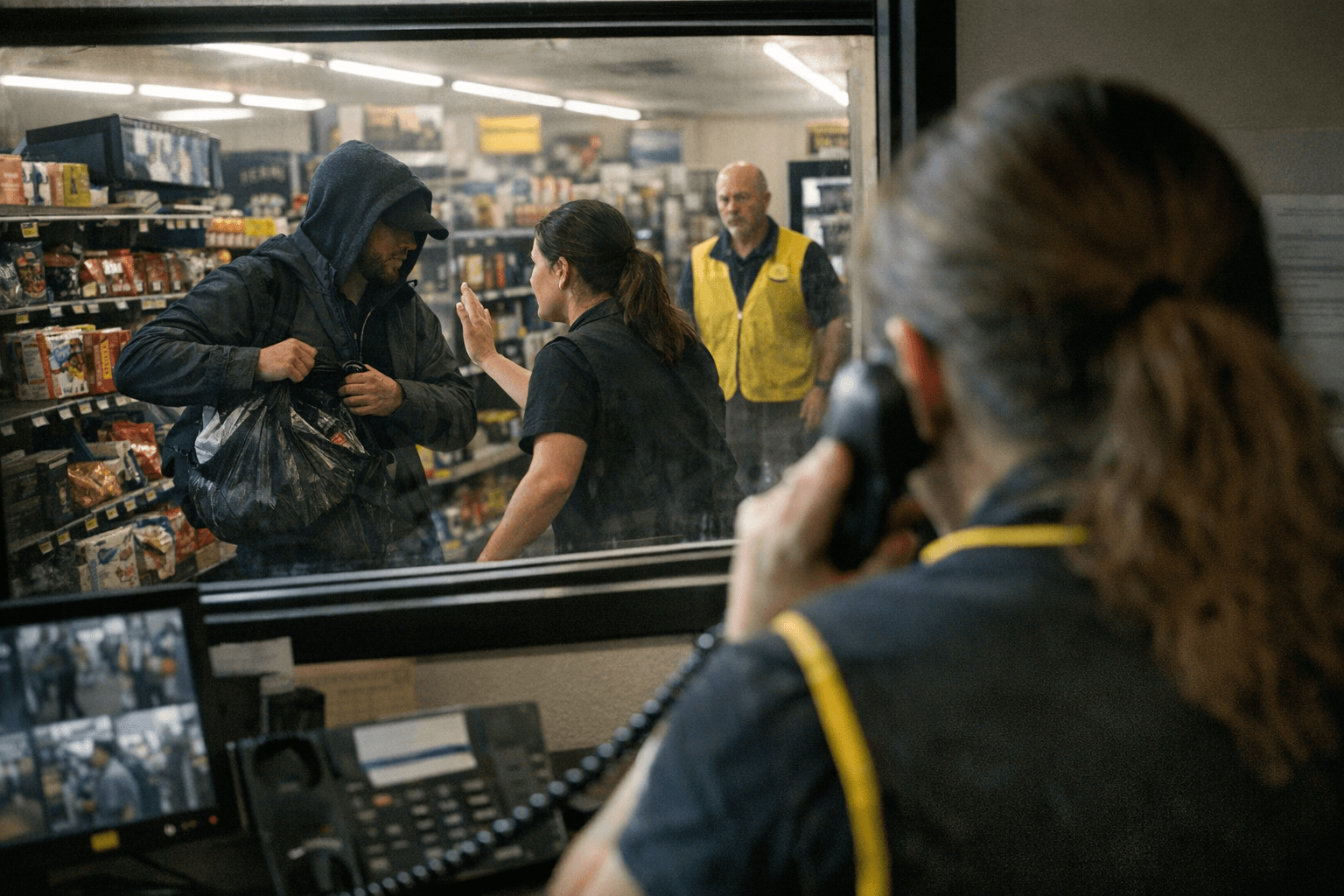
At Dollar General, the safest response to conflict is usually the least dramatic one: stay calm, keep your voice level, and do not let a tense exchange turn into a physical confrontation. If the issue is beyond your role, call a manager. If the situation feels threatening, step back and get help right away.
That is not avoiding responsibility. It is doing the job correctly. Associates are expected to protect themselves, protect customers, and keep the store functioning, not to “win” every argument or take on a confrontation alone. No sale is worth an injury, and no one on the sales floor should be pressured to act brave when a customer is escalating.
The company’s own code backs up reporting, not reckless intervention
Dollar General’s Code of Business Conduct and Ethics says employees should act with “honesty, fairness and respect.” It also says workers have a duty to report known or suspected misconduct and that they will not be retaliated against for making a report.
That matters when a conflict crosses into a possible policy issue, a customer complaint becomes harassment, or a situation starts to look unsafe. The right move is to use the chain of command and the reporting process, not to improvise. The code also points employees to listed resources when an issue is not clearly covered, which is a reminder that workers are not expected to solve every problem alone on the sales floor.
When suspected theft or shrink enters the picture
Suspected shrink is one of the clearest moments when a Dollar General associate should slow down and avoid taking matters into personal hands. The company’s 2025 annual report said higher rates of inventory shrinkage and damages, or higher security costs to fight theft, could hurt operating results and financial condition. In its fiscal 2025 results, Dollar General said inventory shrink improved significantly from prior elevated levels, while damages remained elevated.
That financial pressure does not change the most important frontline rule: follow store policy and leave enforcement to the proper chain of command. Physically intervening can turn a property issue into a safety issue very quickly. If something looks suspicious, document what you saw, notify the manager, and let the process work.
- keep your distance from any confrontation
- avoid accusing or chasing a customer
- record details for leadership after the situation is over
For store teams, that usually means three things:
Shrink is a business problem, but it becomes a worker problem the moment someone is pushed into a face-to-face fight. The safest employees are the ones who know where their responsibility ends.
Safety hazards should be treated as urgent, even when they look minor
The same rule applies to store hazards. A spill, broken fixture, unstable stack, or blocked exit should never be shrugged off as something to fix later. If you can safely correct the problem, do it. If not, report it immediately and keep people away from it until it is handled.
That is especially important at Dollar General, where OSHA and the U.S. Department of Labor said a July 11, 2024 corporate-wide settlement resolved contested and open federal inspections involving blocked emergency exits, blocked electrical panels, blocked fire extinguishers, and unsafe storage. Under that settlement, Dollar General agreed to pay $12 million in penalties and generally correct blocked-exit, fire-extinguisher, electrical-panel, and improper-storage hazards within 48 hours.
The deal also required the company to create a Safety Operations Center, maintain an anonymous hotline for safety concerns, add safety and health training for both leadership and non-managerial employees, and form a safety and health committee that encourages employee participation. The message to workers is straightforward: a hazard is not “small” just because the store is busy.
Why that urgency is not hypothetical at Dollar General
The federal record explains why these rules were pushed so hard. In July 2023, OSHA said Dollar General had faced more than $21 million in fines since 2017 after more than 243 inspections nationwide. The agency said inspections at Tampa-area stores found blocked exits, electrical hazards, an uncovered restroom sewer drain, and an emergency exit blocked by rolling containers and merchandise.
That history stretches across a company that, at the time of the 2023 OSHA release, operated about 19,000 stores and 28 distribution centers in 47 states and employed more than 173,000 workers. In a business that large, a single blocked aisle or stacked pallet can turn into a repeat problem if no one speaks up early.
For store teams, the practical lesson is blunt: if you are not sure a condition is safe, treat it as a hazard until it is checked. A cluttered aisle or unstable stack can turn into an injury scene in minutes, especially in a store built around fast stocking, tight backrooms, and limited staffing.
What managers should make clear before a problem starts
Training matters because workers need to know what to do before conflict or danger hits. Clear escalation rules reduce hesitation, which is often what makes a bad moment worse. Employees should know whom to call, when to call, and what actions are off limits.
The 2024 settlement’s training and safety-committee requirements reflect that reality. A store team that knows how to respond to an upset customer, a suspected theft, or a blocked exit is less likely to freeze or overreact. The company’s anonymous hotline and Safety Operations Center also give workers another route to raise concerns that might otherwise get buried in the rush of a shift.
Managers should be especially clear about the line between helping and confronting. Associates can de-escalate, document, and report. They should not be asked to detain customers, chase down suspected shoplifters, or move past a hazard they believe is unsafe just to keep the line moving.
The right response protects the store and the worker
At Dollar General, safety is part of the job, not a distraction from it. That means keeping your distance from danger, documenting what you see, and using the reporting process instead of trying to handle every problem yourself. It also means understanding that theft prevention, customer conflict, and hazard reporting all sit behind the same basic rule: protect people first, then the merchandise.
The company’s enforcement history, the OSHA settlement, and the shrink language in its annual report all point to the same reality. In a store where one associate may be asked to do a dozen things at once, knowing when to step back is not weakness. It is the boundary that keeps a routine shift from becoming an emergency.
This article was produced by Prism’s automated news system from verified source data, official records, and press releases, then run through automated quality and moderation checks before publishing. The system is built and supervised by the people who set the standards it runs under. Read our full AI policy.
Did this article answer your question?