Dollar General workers face flat retail growth, but steady openings remain
Retail sales work is flat on paper, but Dollar General’s churn still creates openings for workers who master the basics and move fast.
Flat growth, steady openings
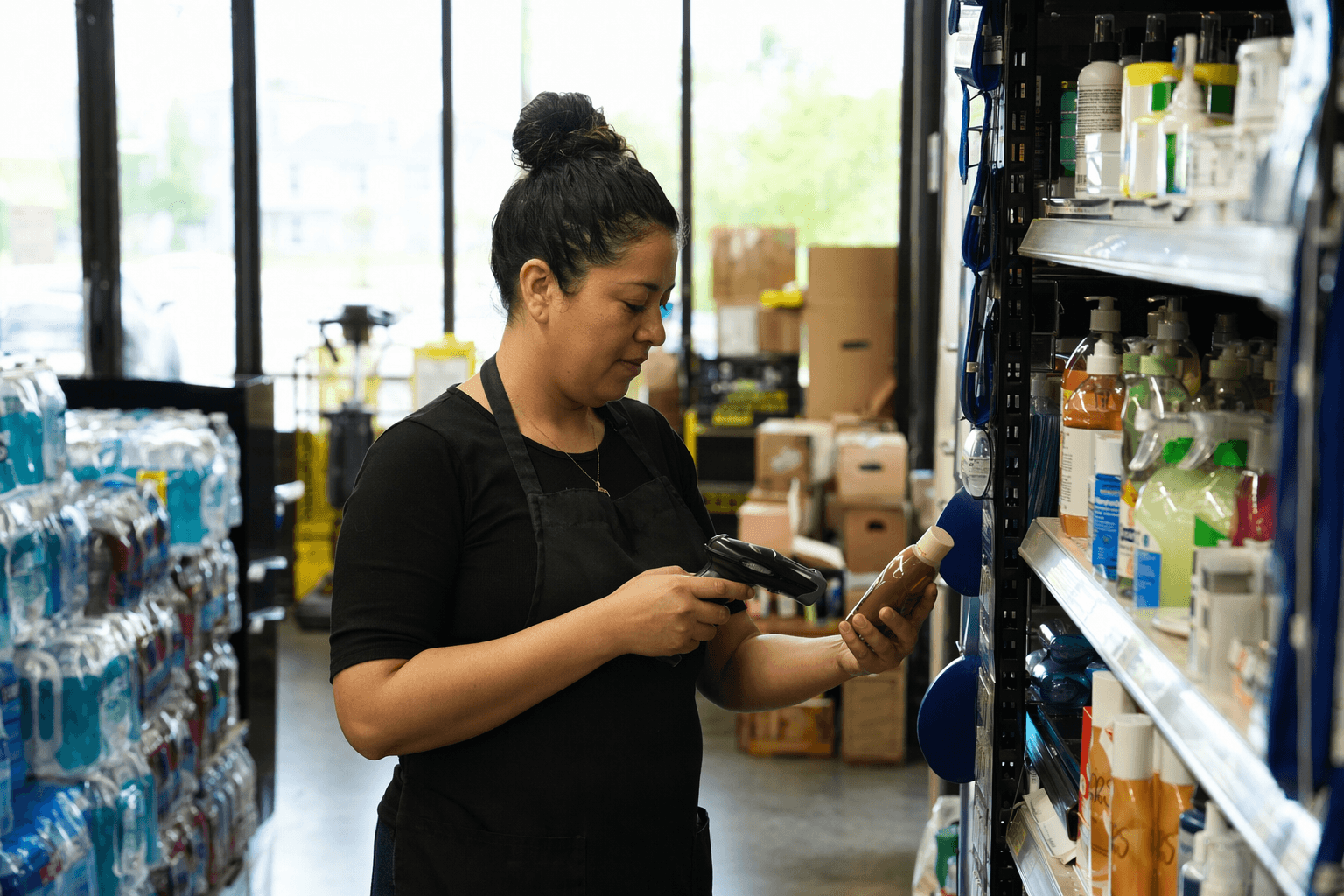
Dollar General workers do not need a booming retail market to find a path forward. The broader retail sales occupation is projected to show little or no change from 2024 to 2034, but the U.S. Bureau of Labor Statistics still expects about 586,000 openings a year, on average, because workers leave and employers must replace them. That is the real story for store associates: not fast growth, but constant turnover, which rewards reliability, speed, and the ability to handle the basics without supervision.
The pay picture is modest, not glamorous. The BLS says retail sales workers had a median hourly wage of $16.62 in May 2024. For a Dollar General cashier, stocker, or lead sales associate, that number matters because it sets the outside market reality the company is hiring against. If you want to move up, you are competing in a field that churns a lot, pays unevenly, and still needs people who can keep a store running when staffing gets thin.
Why Dollar General’s ladder still matters
Dollar General has built its own advancement story around that churn. The company says it is one of the fastest-growing retail companies in the United States, with a promote-from-within culture and award-winning training. It also says it offers a Tuition Scholarship Program, which matters for workers who want to use a store job as a bridge to a degree, a certificate, or a different career path.
The scale is part of the opportunity. In May 2024, Dollar General said it operated across more than 20,000 retail locations, distribution centers, a private fleet, and corporate offices. A year later, the company reported about 194,200 full-time and part-time employees as of Feb. 28, 2025. A workforce that large creates more movement, more openings, and more chances for someone who is already known as dependable.
The company’s internal promotion numbers give that claim some weight. Dollar General said nearly 74% of employees at or above the lead sales position were placed from within, and about 40% of internally placed store managers started as part-time sales associates. That is the clearest signal in the company’s own data: entry-level work is not just a holding pattern. For people who show up consistently and learn the store’s routines, it can be the first step on a longer path.
The jobs that move people up fastest
At Dollar General, the leap from cashier or stocker to something steadier usually comes from proving you can handle the operational work that keeps a small store upright. That means attendance, customer handling, inventory accuracy, shift reliability, and cross-training. The workers who advance are rarely the flashiest; they are the ones who can run a register, recover a messy aisle, unload product, answer a customer without losing patience, and still keep the back room organized.
The BLS description of retail sales work lines up with what DG workers already know: the job is physically active, customer-facing, and repetitive, but it builds transferable skills in communication, cash handling, merchandising, and problem-solving. That combination is why a retail job can lead to more than one outcome. It can become a stable store career, a route into assistant manager or store manager work, or a stepping-stone into distribution, private fleet, or corporate roles inside the same company.
Dollar General’s own training story has shifted in that direction. The company said its 2024 coaching initiatives were designed to improve employee engagement and retention, and Training magazine reported that Dollar General launched new coaching efforts in the first and second quarters of 2024 across supply chain, retail, and corporate units. That included a year-long Leadership Journey designed to develop more than 1,200 leaders in distribution centers and private fleet. For workers, the practical lesson is simple: the company is not just filling shifts. It is trying to keep future managers in the pipeline.
What the Store Manager Ladder really signals
One of the most important pieces of Dollar General’s internal development structure is the Store Manager Ladder, a year-long program meant to prepare store managers for responsibility beyond one store and, eventually, district manager roles. That is a meaningful distinction. It suggests the company is looking for managers who can think past day-to-day coverage and understand labor, inventory flow, and store execution across multiple locations.
Two employee examples show how that ladder can work in practice. Jenniffer V., now a store manager in Hastings, Florida, joined Dollar General as a sales associate in 2004 and later graduated from the Store Manager Ladder. Montana B. started as a sales associate in Thaxton, Mississippi while pursuing a journalism degree at the University of Mississippi, then moved through lead sales associate, assistant store manager, and store manager roles. Those paths matter because they show the company’s most realistic advancement model: start on the sales floor, build trust, and keep taking on more operational responsibility.
That is also the unvarnished message behind the internal promotion numbers. Nearly three out of four workers at or above lead sales were hired from within. Roughly 40% of store managers who were placed internally began as part-time sales associates. In a store environment where coverage is often tight, that kind of promotion pattern rewards workers who can handle the hard parts of the job without constant direction.
What to do in the next 30 to 90 days
If you want to move from cashiering or stocking into a steadier role, the next few months matter more than the next few years. The workers who get noticed usually make themselves useful in ways the schedule sheet can see.
- Show up on time and stay consistent. Attendance is the first filter in retail because missed shifts create immediate problems for managers and coworkers.
- Learn the front end and the back room. Cross-training on register work, stocking, recovery, and basic inventory tasks makes you harder to replace.
- Keep inventory accurate. Mis-scans, bad counts, and sloppy recovery create work for everyone else and make you look unreliable.
- Handle customers calmly. A worker who can de-escalate a problem or answer a question without calling for help every time becomes valuable fast.
- Ask for the work that exposes you to more responsibility. Opening duties, closing duties, receiving, planograms, and leadership coverage all show you can do more than one task.
- Use tuition help if school is part of your plan. Dollar General says it offers a Tuition Scholarship Program, and it also points to access to debt-free degrees and tuition reimbursement through its employee development efforts.
Over 30 days, the goal is to become known as dependable. Over 60 days, it is to become cross-trained. By 90 days, you should be able to show a manager that you can run part of the store with less supervision than before. That is how retail jobs stop being dead ends and start becoming leverage.
What the bigger picture means for DG workers
Dollar General was founded in 1939, and its business has long depended on entry-level retail work turning into supervision, management, and broader company roles. That model is still alive. The company said it was continuing a store portfolio optimization review in late 2024, while also signaling that it planned to keep expanding its store base. In other words, the company is reshaping parts of the business while still creating movement in others.
For workers, that combination is the key point. Retail may not be a fast-growth industry, but Dollar General remains a place where openings keep coming, managers keep moving, and the people who learn the store’s systems fastest still have the best shot at moving up.
This article was produced by Prism’s automated news system from verified source data, official records, and press releases, then run through automated quality and moderation checks before publishing. The system is built and supervised by the people who set the standards it runs under. Read our full AI policy.
Did this article answer your question?