Dollar General Workers Share Steps to File a Workplace Injury Claim
Filing a workers' comp claim at Dollar General requires calling the 24/7 Risk Management Hotline at 800-456-9446, reporting to your manager, and documenting everything from day one.
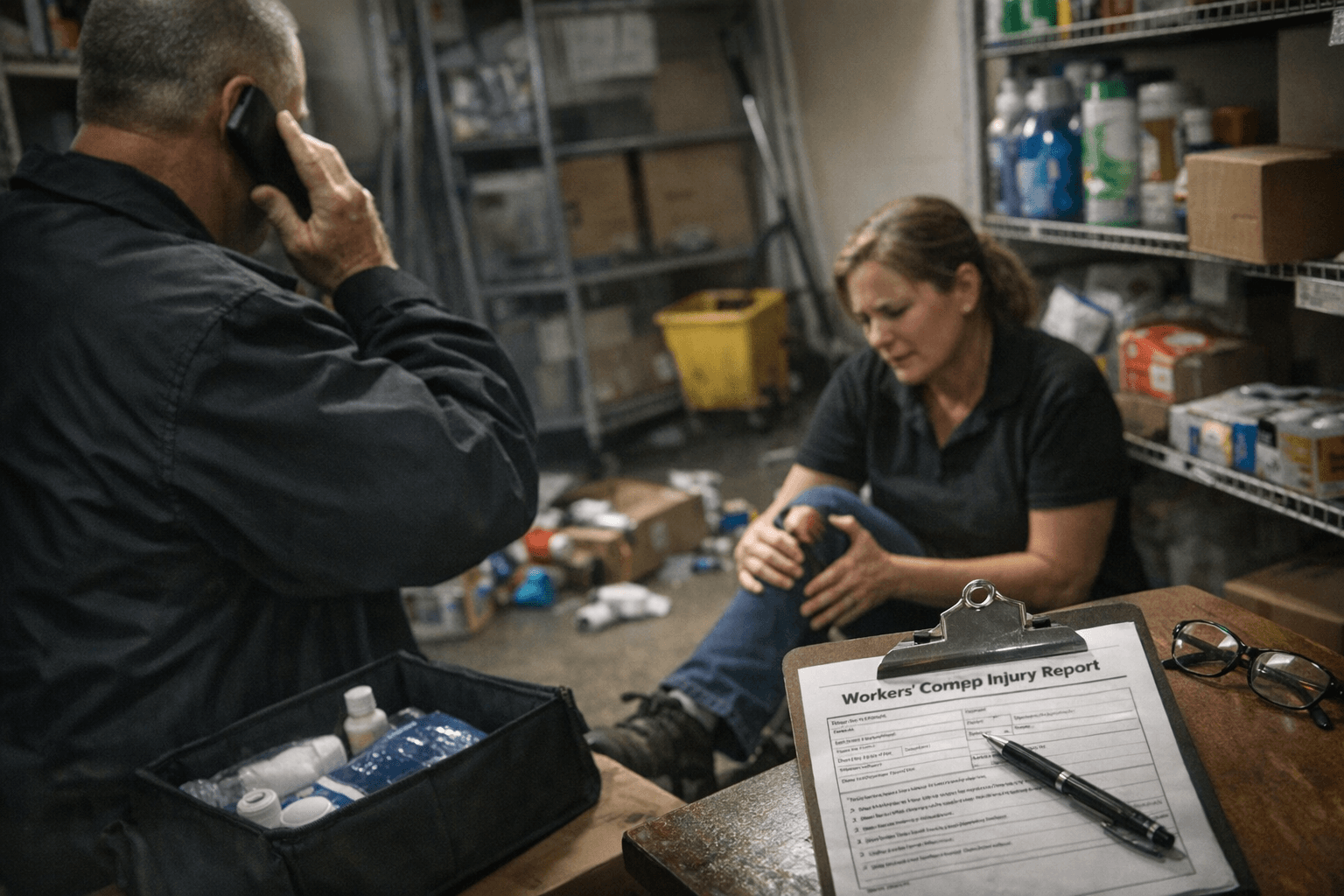
Getting hurt on the job at Dollar General is not a remote possibility. With over 19,000 stores across the United States, more than any other retailer in the country, workplace injuries happen with real frequency. OSHA has repeatedly cited Dollar General for blocked emergency exits, unsafe merchandise storage, and stacked boxes that create struck-by hazards in backrooms. Heavy lifting, slip and trip hazards, repetitive motion, and occasional violent incidents at the register are all documented injury risks for store associates, many of whom work alone or severely understaffed.
What determines whether an injured associate receives medical care and wage replacement is not just the injury itself; it is whether the right steps were taken in the right order, starting from the moment something goes wrong.
Step 1: Get Medical Attention First
If an injury is life-threatening, call 911 immediately. For non-emergency injuries, still seek appropriate medical attention without delay. Do not wait until the end of your shift to inform your manager. Continuing to work can make even minor injuries worse, and if you slip and fall, your manager should be made aware of the hazard so it can be addressed to protect others in the store.
One critical detail many associates miss: Dollar General may have a designated medical provider network, and following those instructions when feasible helps preserve coverage. When you call the Risk Management Hotline, you will likely speak with a triage nurse who will give you instructions about what medical provider to see. Going outside that network without authorization can create disputes over reimbursement, so clarify your options before choosing a clinic or hospital if your situation allows.
Step 2: Report to Your Supervisor Immediately
Notify your employer about your injury promptly. In Georgia, for example, failure to notify your employer within 30 days can jeopardize your ability to receive workers' comp benefits. Most states have similar deadlines, though timelines vary. The safest approach is to report on the same day, and to do so in writing whenever possible, whether via email or a completed incident form, so there is no dispute later about when or whether you reported at all.
Many jurisdictions have firm deadlines for reporting workplace injuries that directly affect eligibility for benefits. Waiting, even by a few days, can give an insurer grounds to dispute a claim. If your manager is unavailable, go up the chain or contact the store's HR contact directly.
Step 3: Call the 24-Hour Risk Management Hotline
After notifying your manager, call the Dollar General Risk Management Hotline at 800-456-9446 as soon as possible. This number operates 24 hours a day, seven days a week. Write down what time you call, who you speak with, and the specific instructions you receive, such as which medical provider to see. You risk losing the right to workers' compensation benefits if you fail to follow these steps.
Calling the hotline is what creates an official company record of the incident. Relying only on a verbal conversation with a manager, especially in a single-associate store where communication can be informal, is not enough. The hotline call timestamps your report and routes it into Dollar General's Risk Management system, making it significantly harder for the claim to be disputed or delayed.
Step 4: Complete the Incident Form and Preserve All Evidence
Your manager should have you fill out an accident report as part of the workers' compensation process. If 911 was called for a medical emergency, a responding officer will also provide a police report number, which should be preserved.
Beyond the official forms, the evidence you collect independently matters enormously. Document:
- Photographs of the scene, including any hazard that caused the injury, such as a blocked aisle, wet floor, or unsafe merchandise stack
- Names and contact information of any witnesses
- A written timeline noting exact dates and times of the injury, the report, and every communication with Dollar General or its insurer
- All medical records, doctor's notes, diagnoses, and receipts
Seek immediate medical care; ensuring you receive treatment not only addresses your health but also provides crucial documentation for your workers' comp claim. Medical records that tie your diagnosis directly to the workplace incident are often the most important evidence in a disputed claim.
Step 5: File Through Your State's System If Necessary
Every state except Texas makes it mandatory for large employers like Dollar General to have workers' compensation insurance. If the employer's carrier does not promptly accept the claim, you can file directly through your state's workers' compensation system.
Texas is a significant exception. Dollar General does not participate in Texas's workers' compensation program and is classified as a non-subscriber. This has significant implications for injured employees, who may need to pursue a separate legal avenue to recover damages. If you work in Texas, consulting a workplace injury attorney at the outset, rather than waiting to see how the claim unfolds, is strongly recommended.
Protecting Your Rights After Filing
Once a claim is filed, the process does not end. OSHA has repeatedly flagged serious safety issues at Dollar General stores, and in some limited circumstances, if employer actions were willfully or grossly negligent, an injured worker may be entitled to damages beyond standard workers' compensation. Dollar General agreed to pay $12 million in OSHA penalties and implement corporate-wide safety improvements following a federal settlement over blocked emergency exits, blocked electrical panels, and unsafe storage practices.
That regulatory history matters for your claim. If the hazard that injured you had been previously cited, documented, and left unaddressed, that context can strengthen your position considerably.
On retaliation: if you experience any adverse action after filing a workers' compensation claim, including a sudden schedule reduction, disciplinary write-up, or termination, contact your state labor board and consult an employment attorney. Retaliation against workers who file compensation claims is illegal in virtually every state.
For questions about wage replacement during recovery, light duty assignments, or return-to-work timelines, speak with HR directly and request written confirmation of every offer or restriction. Verbal agreements have a way of being forgotten or disputed. Getting things in writing is not a sign of distrust; it is how you protect a claim that took discipline to build.
The dollar amount you recover, and whether you recover anything at all, often comes down to the decisions made in the first hours after an injury. A phone call to 800-456-9446, a written report to your manager, and a photograph of what caused the fall can be the difference between a straightforward claim and a months-long dispute.
This article was produced by Prism’s automated news system from verified source data, official records, and press releases, then run through automated quality and moderation checks before publishing. The system is built and supervised by the people who set the standards it runs under. Read our full AI policy.
Did this article answer your question?