Dollar General's $15 Million Settlement Targets Shelf-Price Overcharge Practices
Dollar General's $15M price-overcharge settlement puts $6.5 million into store-level operational fixes — here's what the new audit cadence looks like for managers and associates.

Dollar General reached a $15 million class-action settlement resolving claims the chain regularly overcharged customers at checkout above posted shelf prices, with the alleged conduct spanning nearly a decade, from October 10, 2016 through November 19, 2025. The case, filed as Braun v. Dolgencorp LLC in the Superior Court of New Jersey, Middlesex County, received preliminary court approval on December 15, 2025. Dollar General did not admit liability.
The settlement splits into two distinct pieces. An $8.5 million consumer fund covers payouts for shoppers who can document an overcharge: either $10 or the exact overcharged amount, whichever is higher, capped at $20 per household, with a $3 in-store discount voucher available to all class members regardless of documentation. The claims deadline is April 13, 2026. The remaining $6.5 million, designated as injunctive-relief value, is earmarked not for customers but for operational changes, and that figure carries the most direct weight for anyone working a Dollar General shift.
At store level, $6.5 million in mandated operational investment is likely to fund refreshed price-marking procedures, updated shelf-tag formats, revised markdown workflows, and handheld scanner protocols for on-floor price verification. Stores will almost certainly be required to document proof of compliance with whatever revised procedures emerge, converting informal pricing habits into auditable records that district and corporate teams can track over time.
The settlement puts new pressure on how associates handle the frontline moment when a price mismatch surfaces at checkout. When a customer sees a scanned price exceed the shelf tag, the fastest path to resolution is immediate acknowledgment, a price override matched to the posted shelf price, and a logged note for the store manager to locate and fix the source discrepancy. Under formalized procedures the $6.5 million is designed to fund, that sequence is expected to carry explicit training and documentation requirements rather than relying on individual associate judgment.
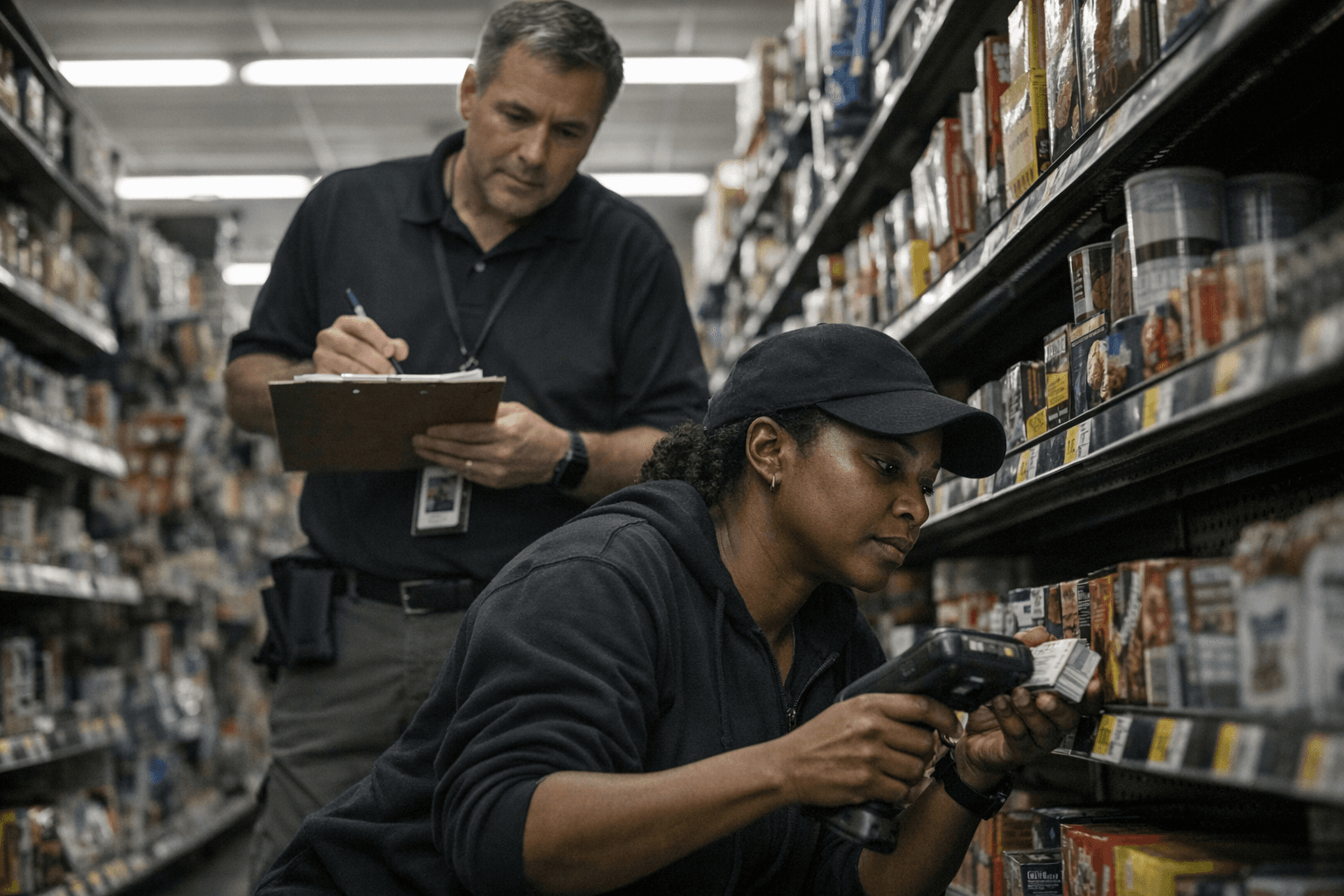
A practical check cadence for managers starts with a daily sweep of high-turnover sections: end caps, seasonal displays, and recently restocked aisles where scan data and shelf tags are most likely to fall out of sync. A weekly cross-reference of planogram compliance against current handheld scan data adds a second verification layer. Each corrected mismatch, logged with the item, location, and date, builds the compliance record the settlement's operational provisions are likely to require.
Stores running on single-associate coverage, a structural reality across much of Dollar General's roughly 20,000-store footprint, face the sharpest workload pressure during the rollout. Layering price-auditing tasks onto simultaneous restocking during high-traffic periods strains coverage that is already thin, and district teams should treat the implementation window as a scheduling decision, not just a training calendar item.
Reducing chronic pricing errors also has a quieter benefit: fewer checkout disputes mean fewer confrontational moments for cashiers and fewer asset-protection escalations. For a customer base that depends on Dollar General's posted prices as a reliable household budget signal, accuracy at the shelf is not just a compliance checkbox; it is the transaction's first promise.
This article was produced by Prism’s automated news system from verified source data, official records, and press releases, then run through automated quality and moderation checks before publishing. The system is built and supervised by the people who set the standards it runs under. Read our full AI policy.
Did this article answer your question?