Historic Pennsylvania Homes Demolished for Dollar General Stores, Sparking Backlash
Viral images of a demolished Pennsylvania home beside a Dollar General sign are fueling a sharp debate over whether small towns are trading historic character for discount retail.
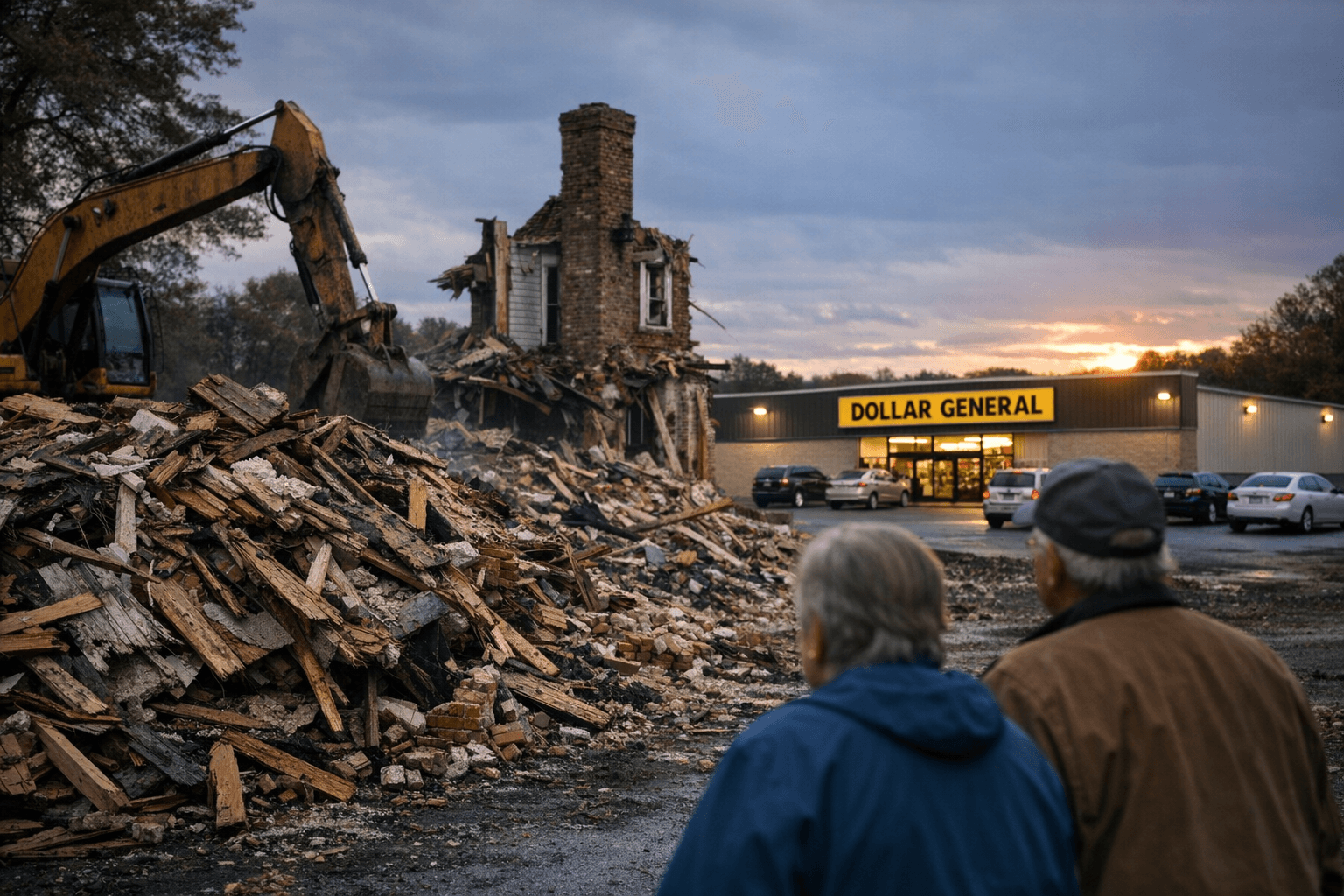
A viral post circulating online is putting Pennsylvania small towns at the center of a heated argument over what gets torn down to make way for discount retail expansion. The image at the heart of the controversy shows a demolished house with a Dollar General sign visible in the background, a stark visual that has prompted widespread engagement and sharp criticism directed at local officials who approved the demolitions.
The post frames the destruction as a pattern: historic homes in small Pennsylvania communities cleared to make room for DG locations. Critics argue the approvals represent a failure of local planning priorities, sacrificing irreplaceable architecture and neighborhood character for a store format that critics say could be built on vacant or commercially zoned land instead.
Dollar General has aggressively expanded its footprint across rural and small-town America over the past decade, targeting communities with limited retail options. That strategy has made the chain a fixture in places where grocery stores and pharmacies have pulled out, giving local governments real economic justification for approvals. But the Pennsylvania cases illustrate the tension that emerges when that expansion collides with existing structures that carry historical or cultural weight.
The debate playing out in comment sections and shares touches on a genuine gap in how many small municipalities handle historic preservation. Zoning boards and planning commissions in rural communities often lack the resources, legal infrastructure, or political will to push back against development proposals, particularly when a retailer can point to job creation and tax revenue. Historic designation processes that might slow or block demolition in larger cities frequently do not exist or are not enforced at the local level in smaller towns.
What makes the viral post land as hard as it does is the specificity of the image: not an abstract policy debate, but a pile of rubble next to a corporate sign. That juxtaposition has become a symbol for critics who argue that Dollar General's expansion model, however economically rational from a corporate standpoint, is leaving a visible scar on the built landscape of rural Pennsylvania. Whether local officials revisit those approval processes in response to the public pressure remains to be seen.
Know something we missed? Have a correction or additional information?
Submit a Tip