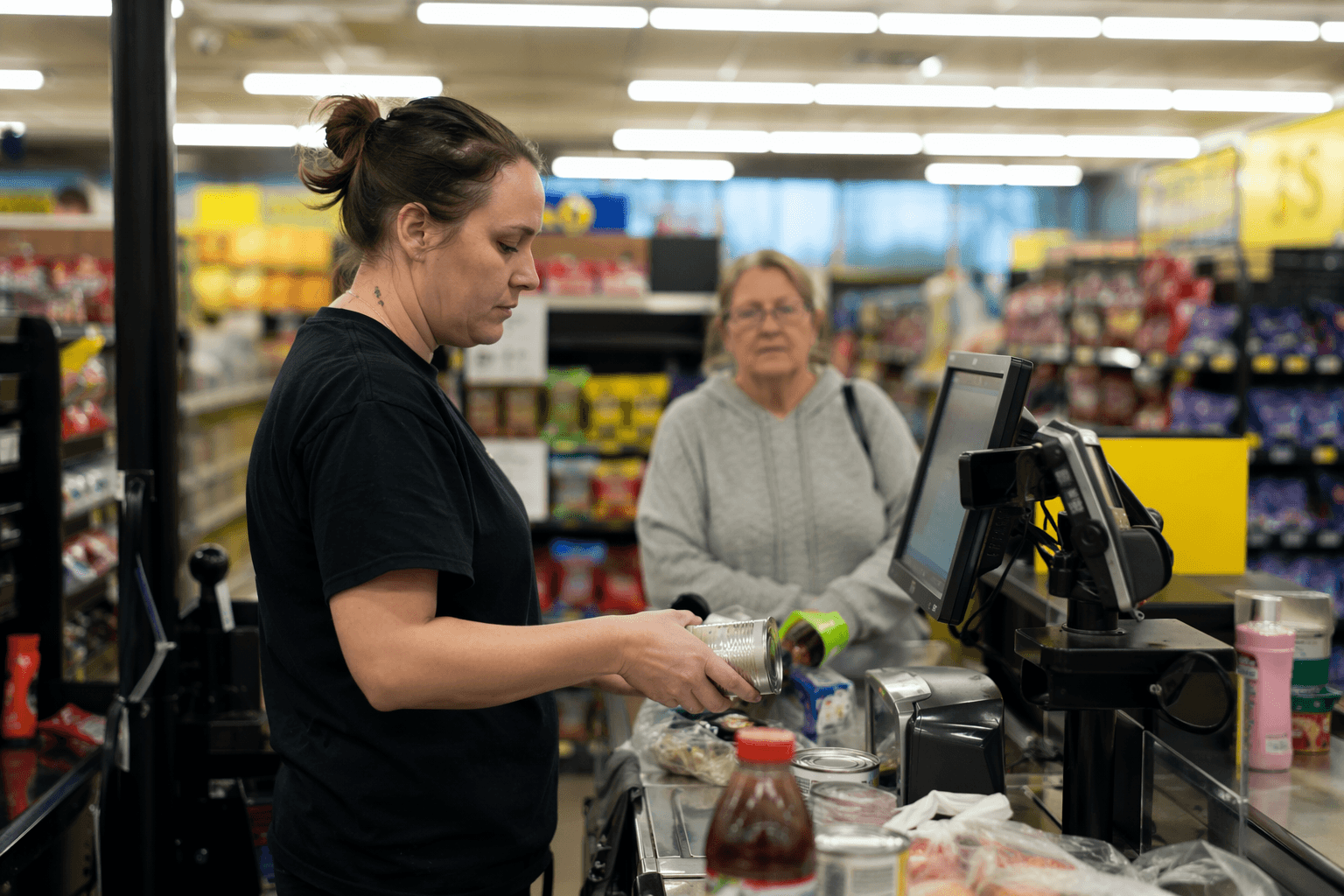
NLRB outlines Dollar General workers' union rights and employer limits
Dollar General workers can talk union, hand out flyers on breaks, and wear union gear. Managers cross the line when they spy, threaten, or punish protected organizing.
At a Dollar General, the difference between a lawful store rule and an unlawful anti-union move can show up in the middle of an ordinary shift. The National Labor Relations Board protects workers’ right to talk about a union, pass out literature, sign authorization cards, and discuss wages, hours, and working conditions with co-workers. Supervisors and managers, meanwhile, are barred from spying, coercively questioning, threatening, bribing, or punishing employees for protected activity.
What workers can do on the job
Those rights do not depend on whether a formal organizing campaign is already underway, so a cashier talking with a stocker about pay or safety is not waiting for permission from management to have that conversation. Workers can also wear union buttons or shirts in most settings, and they can distribute union literature or ask co-workers to sign authorization cards unless unusual special circumstances apply.
On a Dollar General shift, that can mean a conversation in the break room about short staffing, a flyer passed to a co-worker in the parking lot after clock-out, or a union button worn on the sales floor. Employers can maintain non-discriminatory rules that limit solicitation and distribution during working time, but they must still allow those activities during non-work time in non-work areas such as break rooms or parking lots.
Where managers have room to enforce rules
Dollar General managers do have authority to keep the store running. They can enforce neutral policies that keep solicitation and literature distribution out of active working time, especially when employees are ringing customers, stocking shelves, or handling a rush at the front end. A district manager or store leader can tell workers to stay on task during a busy shift, as long as the rule is applied evenly and is not aimed at union activity.
If one worker is told to put away a union flyer while others are allowed to hand out Little League sign-up sheets or church notices, that is the kind of unequal treatment the NLRB watches closely. The same is true if a manager begins asking who is meeting with organizers, who signed a card, or who brought the flyers in.
What unlawful interference looks like in a Dollar General store
Supervisors cannot spy on workers or make it look like they are spying, and they cannot threaten, bribe, interrogate, or punish employees because they are supporting a union. In practice, that can mean a manager shadowing employees in an aisle to see who is talking politics or labor rights, asking pointed questions about who is behind a petition, or hinting that schedules, hours, or store assignments will improve if organizing stops. Workers also cannot be fired, disciplined, demoted, or penalized for protected activity.
At Dollar General, where turnover and bare-bones coverage are common complaints, a casual conversation about wages or a break-room discussion about safety can become the first step toward organizing.
Why the Barkhamsted case still hangs over the company
In the Barkhamsted, Connecticut case, United Food and Commercial Workers Local 371 filed a petition in September 2021 to represent store employees. On July 17, 2023, NLRB Administrative Law Judge Arthur Amchan found the company violated federal labor law by firing a pro-union worker, surveilling and interrogating employees, and threatening to close the store.
Dollar General’s Rapid Response Team kept a daily presence at the store for more than four weeks before the election. The judge ordered reinstatement of the fired worker and nationwide notice posting, and the agency called the conduct “blatant hallmark unfair labor practices.”
Safety, staffing, and wages are part of the same conversation
On July 11, 2024, the U.S. Department of Labor announced a corporate-wide OSHA settlement that required Dollar General and its retail subsidiaries to pay $12 million in penalties and make system-wide changes. Those changes included hiring additional safety managers, reducing inventory to prevent blocked exits and unsafe storage, training both managers and non-managerial employees, creating safety committees, and correcting certain hazards generally within 48 hours.
The settlement also carried monetary assessments of $100,000 per day of violation, up to $500,000. Dollar General has about 20,700 stores in the United States and an average of eight employees per store.
How the organizing pressure has spread beyond one store
Worker activism around Dollar General has widened beyond formal union election cases. Step Up Louisiana said more than 200 Dollar General workers and customers protested the company’s annual shareholder meeting in 2024, and New Orleans protests focused on alleged retaliatory store closures that worsened food access in New Orleans East. The group said it had spent years organizing around safer stores, and by 2025 that work had helped win raises in local stores after about 18 months.
This article was produced by Prism’s automated news system from verified source data, official records, and press releases, then run through automated quality and moderation checks before publishing. The system is built and supervised by the people who set the standards it runs under. Read our full AI policy.
Did this article answer your question?