Rhode Island sets first self-checkout staffing law for grocers
Rhode Island now requires one staffed lane for every three grocery self-checkouts, plus an ADA-compliant lane. If others copy it, Dollar General managers could face tighter front-end coverage.

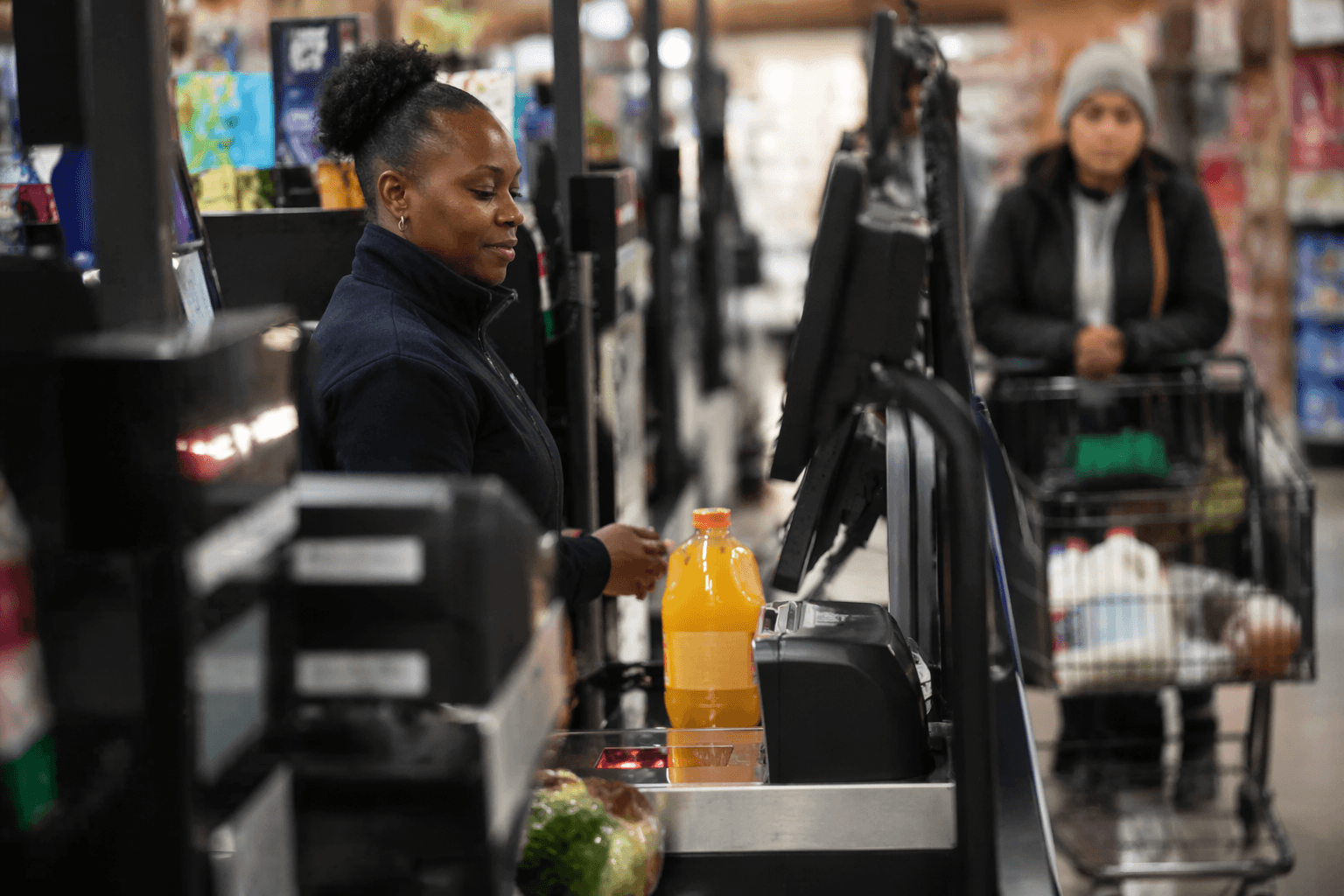
Rhode Island made self-checkout staffing a legal requirement at UFCW Local 328 offices in Providence on June 25, when Governor Dan McKee joined Senate President Valarie J. Lawson and Rep. Megan L. Cotter for a ceremonial signing. The law requires grocery stores with self-checkouts to keep one staffed checkout open for every three self-service stations, keep one staffed lane that meets Americans with Disabilities Act standards, and free the employee monitoring self-checkout from other duties, including running a manual register. For Dollar General workers, the practical shift is easy to see: if other states copy the rule, managers would have less room to use one associate as a catch-all for register coverage, customer help and self-checkout fixes.
The bill also moves the issue from store policy into enforcement. The Rhode Island text says the Department of Labor and Training has primary authority to write rules and penalties, and it exempts stores during off-peak hours before 8 a.m. and after 8 p.m., as well as during declared emergencies and severe weather. That matters on the floor because a rule like this does not just ask whether a store wants more coverage, it tells managers when they can and cannot stretch a thin front end. In a tight labor market, that can change how shifts are built, how often a cashier is left to juggle multiple tasks, and how long customers wait when a machine jams or a transaction needs a supervisor.
Union supporters cast the measure as a response to overburdened workers and shrinking cashier jobs. UFCW called it the first statewide self-checkout staffing ratio in the country and said retail theft cost Rhode Island $17.1 million in lost sales taxes in 2022, with thefts 16 times more likely at self-checkouts than at employee-managed cash registers. Cotter has been pushing that message for years: in January 2023, she said the bill was meant to start a conversation about corporations’ increasing use of self-checkout lanes to reduce cashier employment.
Dollar General’s own annual report shows why the Rhode Island model is worth watching outside groceries. The company says a typical store staff generally includes a store manager, one or more assistant store managers and four or more sales associates, with staffing levels varying by store volume and operating hours. Dollar General also says labor needs are shaped by competition for personnel, unemployment and wage rates. A self-checkout mandate like Rhode Island’s would push against that kind of lean scheduling and make front-end coverage a fixed expectation, not a flexible task list.
This article was produced by Prism’s automated news system from verified source data, official records, and press releases, then run through automated quality and moderation checks before publishing. The system is built and supervised by the people who set the standards it runs under. Read our full AI policy.
Know something we missed? Have a correction or additional information?
Submit a Tip