Walmart cuts 1,000 corporate roles, signaling leaner retail structures
Walmart’s 1,000-job cut hit corporate and tech roles, not stores, and it points to a retail shift toward fewer layers, tighter ownership and more centralized control.

Walmart’s elimination of about 1,000 roles is a reminder that the biggest pressure in retail is now falling on corporate and technology jobs, not the hourly store workforce. The company said the changes were meant to simplify how work is organized, make ownership clearer and align roles with the work and skills it wants going forward.
The cut lands inside a company that employs about 2.1 million people worldwide, about 1.6 million in the United States, and says 92% of its U.S. workforce is hourly. That is the point Dollar General employees should notice: even at massive scale, retail leaders are still stripping out overlap and pushing more decision-making into a smaller, more centralized core. Some affected Walmart employees were asked to relocate to Bentonville, Arkansas, or Northern California, a sign that the work the company still wants is being pulled toward key hubs.

For Dollar General, the most exposed jobs are the ones that sit between strategy and the store aisle: analysts, planners, merchandising support, systems teams, and operations roles that duplicate work across regions. The more durable skills are the ones that keep stores moving when the computer systems, labor model and inventory plan do not line up perfectly: labor scheduling, inventory control, problem-solving, and the ability to use the company’s digital tools without adding another layer of delay. Dollar General’s own corporate office is called the Store Support Center, a naming choice that reflects how aggressively retailers now frame headquarters as a service layer for stores, distribution centers and fleet rather than as a standalone bureaucracy.
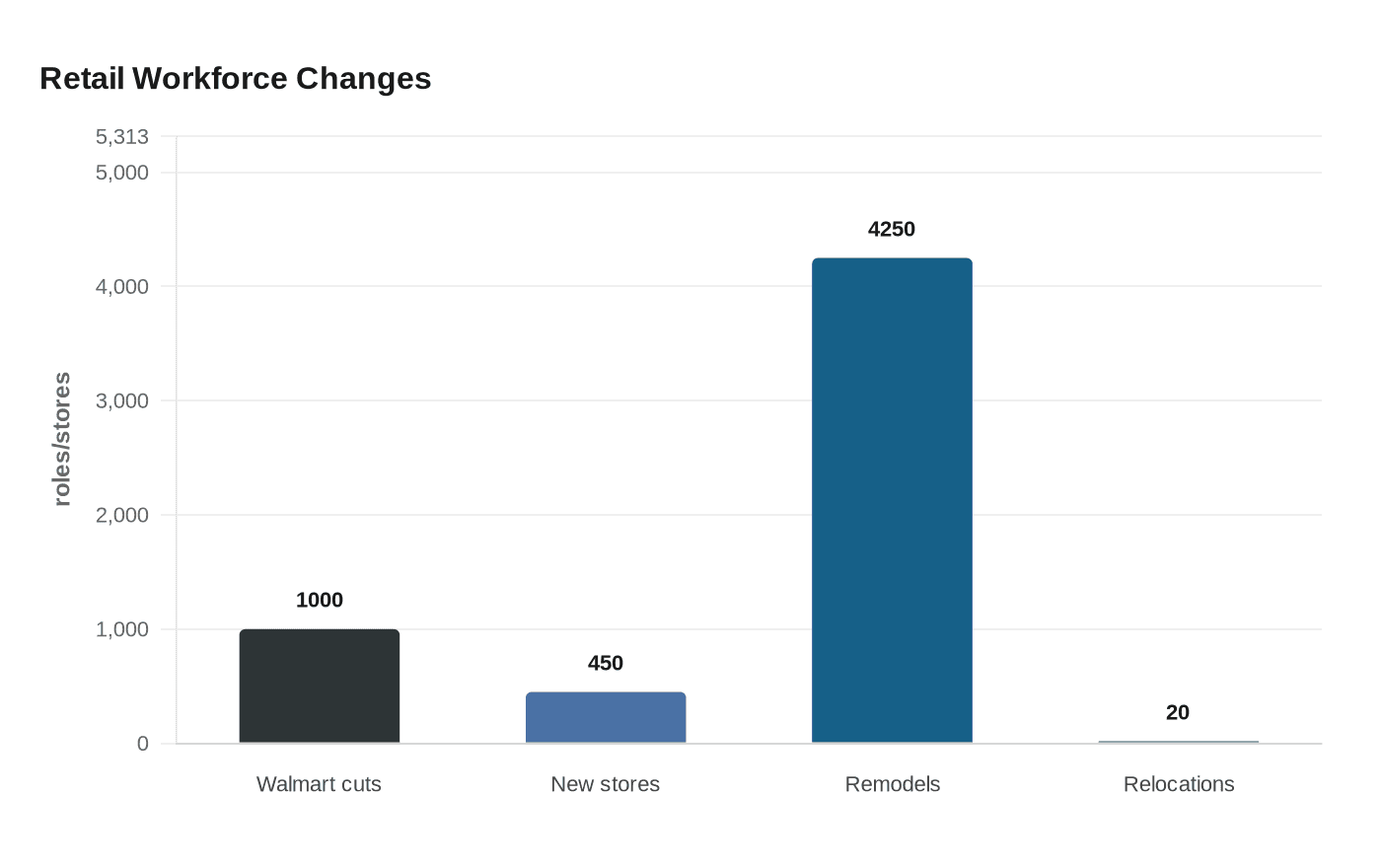
That matters because Dollar General is still expanding while it tightens the technology side of the business. The company said it operated 20,893 stores as of Jan. 30, 2026, after reporting fiscal 2025 net sales of $42.7 billion, and it said on March 12 that it planned to open nearly 450 new stores, remodel about 4,250 locations and relocate about 20 others in fiscal 2026. It also created a new senior vice president of AI optimization role on Nov. 4, 2025, and hired Travis Nixon, a former Dropbox, Meta and Microsoft leader, to focus on merchandising, supply chain and store operations.
That combination is the warning sign. When a retailer grows its footprint but keeps investing in AI, centralized platforms and leaner support teams, the risk usually lands first on the work that can be standardized, merged or automated. For Dollar General employees, the safest jobs are the ones that stay close to store execution and hard operational judgment.
Know something we missed? Have a correction or additional information?
Submit a Tip